Algeria
 Egypt
 Libya
 Morocco
 Sudan
 Tunisia
 Benin
 Burkina Faso
 Cabo Verde
 Côte d'Ivoire
 Ghana
 Guinea
 Guinea-Bissau
 Liberia
 Mali
 Mauritania
 Niger
 Nigeria
 Senegal
 Sierra Leone
 The Gambia
 Togo
 Cameroon
 Central African Republic
 Chad
 DR Congo
 Equatorial Guinea
 Gabon
 Republic of the Congo
 São Tomé and Príncipe
 Burundi
 Comoros
 Djibouti
 Eritrea
 Ethiopia
 Kenya
 Madagascar
 Malawi
 Mauritius
 Mozambique
 Rwanda
 Seychelles
 Somalia
 South Sudan
 Tanzania
 Uganda
 Angola
 Botswana
 Eswatini
 Lesotho
 South Africa
 Zambia
 Zimbabwe
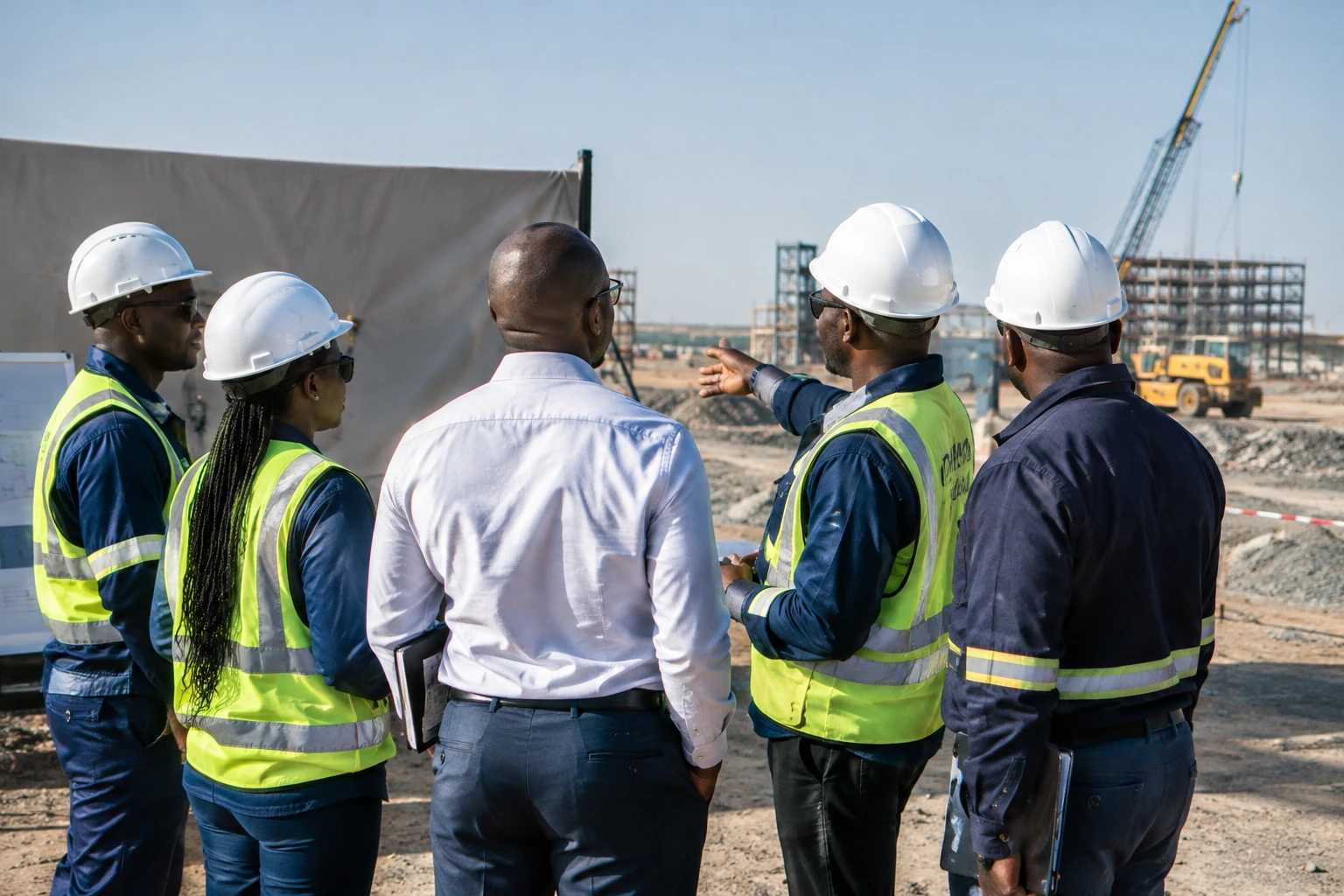
For Namibia, the launch of a uranium mine will not be measured solely by its announced production. It will also depend on skilled jobs, local procurement and the ability to turn an exported resource into lasting benefits for the country.
The Etango project has just crossed the threshold separating preparatory work from a full-scale construction site. But its timetable remains a forecast: first production is targeted for 2028, and several construction and commissioning stages remain to be completed.
A project long held back by markets and financing
Located in the Erongo region, Etango is part of a mining basin where Namibia already operates several uranium deposits. The country is a member of the Southern African Development Community (SADC), a regional organisation for economic and political cooperation. Its mining sector is therefore linked both to global supply chains and to infrastructure and employment issues in southern Africa.
The sector’s trajectory is a reminder, however, that prices and demand can change plans. Following the fall in prices after the Fukushima nuclear accident in 2011, the Trekkopje mine was placed on care and maintenance in 2013 and Langer Heinrich in 2018. The Namibian Uranium Association says Langer Heinrich resumed production in 2024. This history explains why investors scrutinise financing and markets as closely as the wealth of the subsoil.
On 23 October 2026, Etango’s joint venture took a final investment decision, or FID: formal approval to finance and begin full construction. Australian company Bannerman Energy holds 55% of the joint venture; CNNC Overseas Limited (CNOL), a subsidiary of Chinese nuclear group CNNC, owns 45%. Together, the partners hold 95% of the project; the remaining 5% belongs to the One Economy Foundation.
Capacity announced, financing now structured
The selected plan provides for average production of about 3.5 million pounds of uranium oxide (U₃O₈) a year over a 15-year reference period. Commissioning and first production are targeted for 2028. The pre-production budget is estimated at $353 million, with an announced margin of uncertainty of 10%. About $64 million had already been spent on preliminary work by the end of September.
The decision is based on a financing structure intended to fund construction without project debt. CNOL finalised a $320.4 million investment in the joint venture in September. The company also plans to buy 60% of Etango’s production on market terms. The agreement secures a major outlet, but also concentrates a sizeable share of future sales with a single partner.
The financing removes a major obstacle, but does not eliminate execution risks. Staying within budget, infrastructure availability and the plant’s ramp-up will determine whether the 2028 date holds. Etango is not an operating mine: the FID marks the move into construction, not the completion of the project.
Local benefits remain to be measured
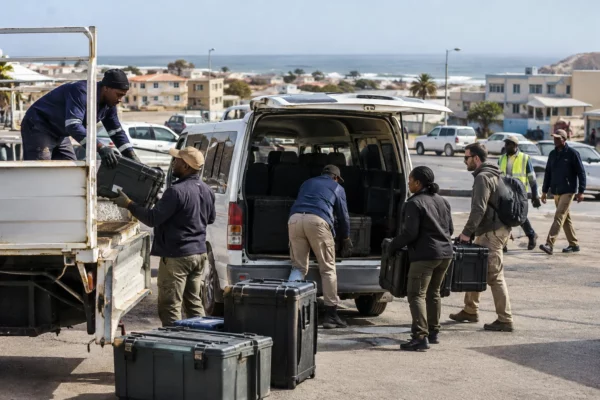
In the short term, activity is concentrated in Erongo, around the site and the contractors brought in. In March 2026, more than 560 subcontractor workers were present, according to information reported by the Namibian press. This figure describes an earlier stage of the project; it is neither a count of the current workforce nor a measure of expected permanent employment.
Bannerman has set a target of more than 80% Namibian recruitment for its own teams, while making clear that this target does not cover all workers employed by contracting companies. The distinction matters: construction jobs are temporary, while operating roles require technical skills that involve training and recruitment over several years.
The question of local benefits therefore goes beyond the number of jobs. Procurement from Namibian companies, public revenues, water and energy management, and environmental monitoring will all weigh in the assessment. Discussions on these issues will take place mainly in areas close to the site, while Windhoek and national authorities will monitor tax revenues and the mine’s role in the country’s mining policy.
What comes next will play out on site and in the region
Etango joins a trend of recovery and expansion in Namibia’s uranium industry. The sector’s professional association reported increased production at Rössing and a gradual recovery at Langer Heinrich in 2025. It also highlights expansion and exploration projects under way. These figures come from an industry organisation; they shed light on activity but do not replace consolidated public statistics.
At the SADC and continental levels, the project illustrates the place of African producers in nuclear fuel supply at a time when several countries are restarting or developing their nuclear capabilities. It also highlights the growing presence of Asian investors and buyers in African mining assets. For Namibia, the challenge will be to retain room to negotiate sales and ensure that a greater share of the benefits of extraction accrues to the local economy.
The next indicators will be tangible: construction progress, spending compared with the budget, Namibian recruitment and adherence to the commissioning schedule. It is these results, more than the announcement of the investment decision, that will determine Etango’s significance for Namibia’s people and economy.
Key references: announcement of the investment decision on 23 October 2026 ; details of the financing and joint venture ; industry data from the Namibian Uranium Association ; Etango’s announced local employment target.