Algeria
 Egypt
 Libya
 Morocco
 Sudan
 Tunisia
 Benin
 Burkina Faso
 Cabo Verde
 Côte d'Ivoire
 Ghana
 Guinea
 Guinea-Bissau
 Liberia
 Mali
 Mauritania
 Niger
 Nigeria
 Senegal
 Sierra Leone
 The Gambia
 Togo
 Cameroon
 Central African Republic
 Chad
 DR Congo
 Equatorial Guinea
 Gabon
 Republic of the Congo
 São Tomé and Príncipe
 Burundi
 Comoros
 Djibouti
 Eritrea
 Ethiopia
 Madagascar
 Malawi
 Mauritius
 Mozambique
 Rwanda
 Seychelles
 Somalia
 South Sudan
 Tanzania
 Uganda
 Angola
 Botswana
 Eswatini
 Lesotho
 Namibia
 South Africa
 Zambia
 Zimbabwe
In Nairobi, weaving is once again a mark of distinction
In a capital such as Nairobi, where urban fashion moves fast and images travel even faster, some designers choose the opposite: taking the long view. This choice is no mere curiosity. It speaks to the place of craftsmanship in a Kenyan economy seeking to move upmarket, add value to its raw materials and make design a productive sector in its own right. Kenya estimates that its creative economy contributes more than 5% of GDP, and the state sees it as a driver of growth and jobs.
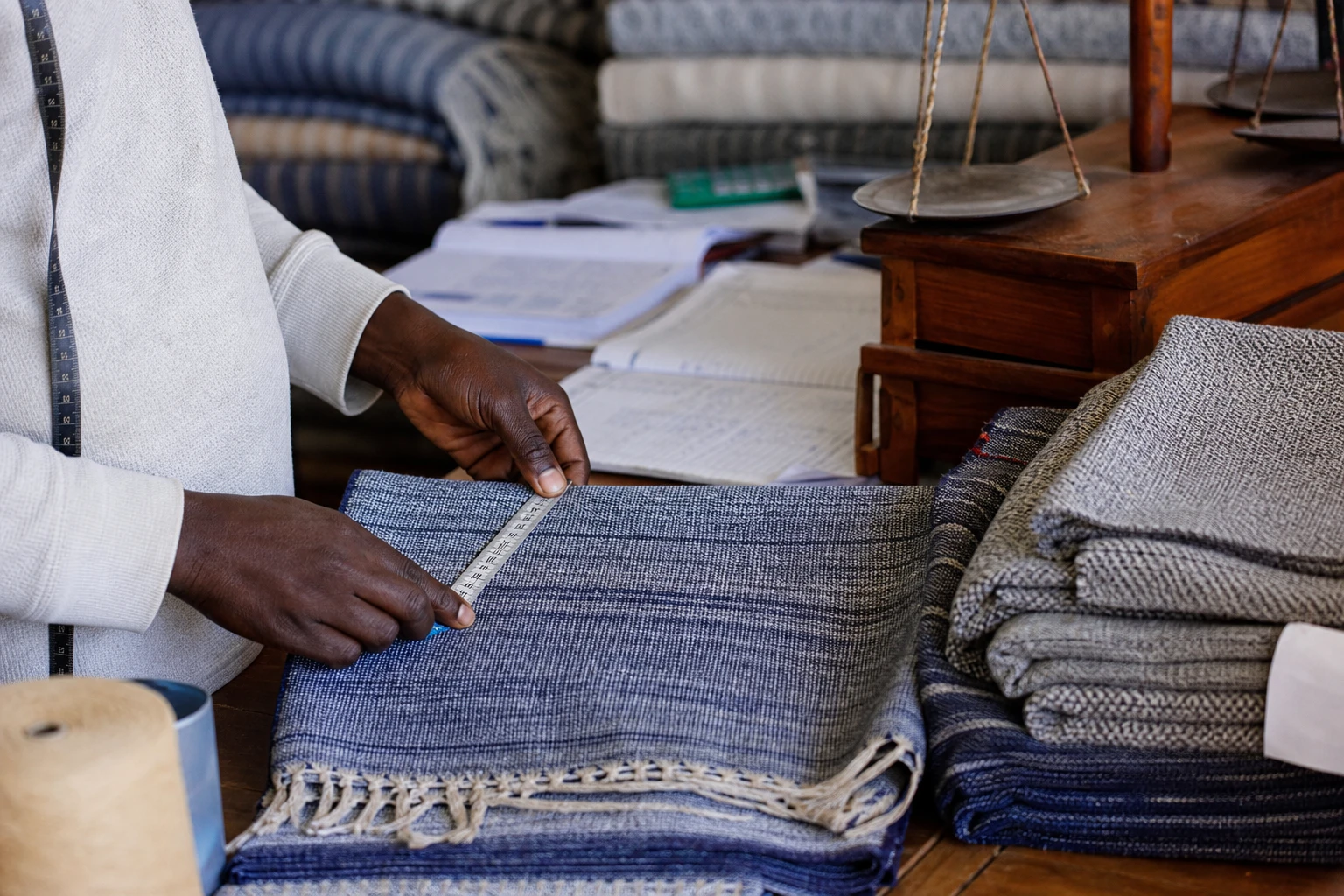
It is in this context that Nairobi-based young designer Hillary Mukabwa has built his studio around the handloom. His studio turns handwoven cotton into clothing, bags and other made-to-order pieces. The principle is simple, but runs counter to standardised production: each piece takes time, involves a learned skill and bears a signature visible in the material itself.
A craft in step with Kenya’s cultural policy
The issue goes beyond a single studio. In Kenya, cultural authorities present the arts, crafts and fashion as part of the national creative economy. The ministry responsible for culture notes that these sectors are among the fastest-growing, while public investment-promotion initiatives also point to a structured textile and apparel sector with long-term industrial ambitions. In other words, handloom weaving does not exist on the fringes of economic debate; it is part of it.
This perspective takes on even greater meaning in Nairobi, a city where studios, markets, universities, emerging brands and young customers converge. Kibera, where Mukabwa grew up, is not merely a backdrop for a news report. It is a place where informal activity, the circulation of skills and small creative initiatives coexist. There, fashion can be a means of passing on skills as well as a source of income. The fact that the studio also works with young people and women from the neighbourhood illustrates this dual role: production and training.
The facts: a slow process, unique pieces and local customers
Hillary Mukabwa began experimenting with weaving in 2024, while still studying fine arts and design. He moved on to professional production in 2025. The studio first made tote bags, then expanded into clothing and other accessories. Most orders are made to measure. Customers often choose the colour and material, and sometimes the final design, making the purchase a collaborative process rather than a simple visit to a shop.
This approach meets a specific demand. In a market saturated with mass-produced clothing, some buyers are looking for pieces that are more durable, more local and more distinctive. A customer quoted in information corroborated by the local press says she favours these creations for their organic cotton, quality and uniqueness. This point matters: handloom weaving is not just a heritage craft, but also a selling point.
The process itself remains demanding. The yarn is prepared and measured, then stretched on the loom. The weaver then works by hand, sometimes for several days, depending on the size and complexity of the fabric. This slowness is deliberate. It serves as a reminder that an object can be worth more than its price when it leaves the studio. In Kenya, it also connects contemporary design with a technical heritage that has never entirely disappeared.
Why this choice matters for Kenya and East Africa
The Mukabwa story is part of a wider regional trend. The East African Community has for several years been supporting small and medium-sized enterprises, artisans and textile value chains. Its cotton-textile-apparel strategy aims to build a more competitive industry that creates more jobs. In this context, a Nairobi studio may seem modest. Yet it illustrates precisely the kind of move up the value chain that regional institutions are seeking: more local value added and less dependence on standardised imported products.
There is also an issue of cultural sovereignty. Handlooms alone cannot solve the problems facing the textile industry or youth employment. But they show that an old skill can once again be profitable, visible and desirable without losing its roots. This is where the story’s pan-African significance lies: in several countries across the continent, textiles, dyeing, tailoring and crafts are increasingly seen as sectors for innovation, not simply relics of the past. UNESCO also notes in its work on African textiles that artisanal production has continued despite industrial dominance.
For Nairobi, the immediate challenge is practical: to turn a neighbourhood studio into a sustainable business, able to pay its artisans fairly, broaden its customer base and provide training without straying from its identity. For Kenya, the challenge is broader still: to make fashion and crafts a serious economic sector, connected to markets in East Africa and beyond, rather than a folkloric showcase. That is what Mukabwa is aiming for when he imagines his pieces circulating in London, New York or Paris, without abandoning the handloom at the heart of his work.