Algeria
 Egypt
 Libya
 Morocco
 Sudan
 Tunisia
 Benin
 Burkina Faso
 Cabo Verde
 Côte d'Ivoire
 Ghana
 Guinea
 Guinea-Bissau
 Liberia
 Mali
 Mauritania
 Niger
 Nigeria
 Senegal
 Sierra Leone
 The Gambia
 Togo
 Cameroon
 Central African Republic
 Chad
 DR Congo
 Equatorial Guinea
 Gabon
 Republic of the Congo
 São Tomé and Príncipe
 Burundi
 Comoros
 Djibouti
 Eritrea
 Kenya
 Madagascar
 Malawi
 Mauritius
 Mozambique
 Rwanda
 Seychelles
 Somalia
 South Sudan
 Tanzania
 Uganda
 Angola
 Botswana
 Eswatini
 Lesotho
 Namibia
 South Africa
 Zambia
 Zimbabwe
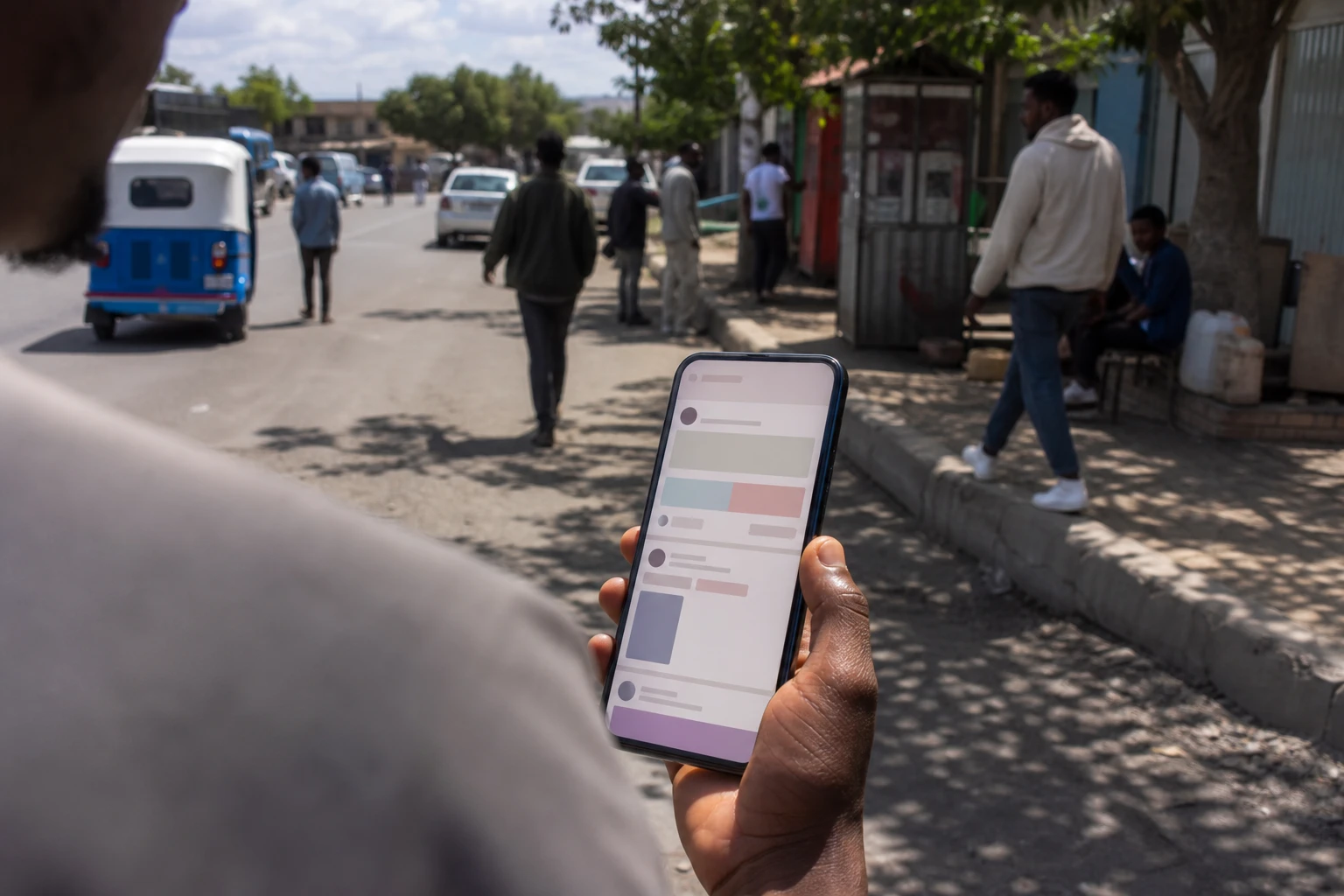
In Mekelle, fears of a return to fighting intrude on daily life
In northern Ethiopia, a drone strike is never seen as a mere military incident. In Mekelle, the capital of Tigray, it revives still-fresh memories, disrupts civilian life and is a reminder of how incomplete peace remains in a region where political and security balances are fragile. On 20 August 2026, Tigrayan authorities said a strike had hit a residential area in the Daero neighbourhood, injuring at least 13 people and damaging several homes. A hospital in the city confirmed it had received the injured.
The shock is all the greater because Mekelle, like the rest of Tigray, has already paid a heavy price in the 2020-2022 war. Since then, the region has lived in an armed peace, with recurring accusations, troop movements and drone incidents fuelling mistrust between Addis Ababa and Tigrayan officials. In early August 2026, Tigrayan authorities had already denounced a federal military offensive in the west of the region, while tensions had risen further in recent months.
A peace deal still under pressure
The framework intended to prevent escalation is in place. On 2 November 2022, Ethiopia’s federal government and the Tigray People’s Liberation Front signed a cessation-of-hostilities agreement in Pretoria, under African Union mediation. The agreement ended a two-year war and launched efforts to disarm, restore public services and achieve political reintegration. The African Union subsequently established a monitoring mechanism to verify implementation of the agreement and support the stabilisation of the region.
But on the ground, the letter of the agreement is running up against reality. The AU recently reminded the parties of their obligation to respect the permanent ceasefire and prioritise dialogue. At the same time, its monitoring mechanism reports that implementation of disarmament, demobilisation and reintegration has been stalled since September 2025. In other words, the peace process remains in place, but is progressing slowly amid political disputes and mutual suspicion.
What has been reported in Mekelle
According to Tigrayan officials, the 20 August strike targeted Daero, a residential neighbourhood in Mekelle. They reported partially destroyed homes, shattered windows and roofs torn off. At the same time, local officials referred to another explosion near Mekelle University, without specifying its nature or the toll. Ayder Hospital said it had treated 13 people, including children, with several cases considered serious. These details have been corroborated by consistent reports of injuries and property damage, although responsibility for the attack remains disputed at this stage.
Federal authorities, for their part, have not publicly confirmed the operation in the sources consulted. This lack of direct comment fuels a familiar grey area in recent Ethiopian crises: strikes are reported locally, the injured arrive at hospital and residents see the damage, but the chain of command remains silent or refers to vague military objectives. In this context, claims about responsibility spread faster than independent verification.
What this means for civilians, Addis Ababa and Tigray
For the people of Mekelle, the consequences are immediate. A strike, even one presented as targeting a military objective, does not spare people from collateral effects: injuries, damaged homes, nearby schools or infrastructure exposed to danger, and pervasive fear. In a city that has already endured war, the psychological toll is as real as the material cost. Hospitals, meanwhile, are taking on a fresh burden even as they remain essential institutions, often under considerable strain since the previous conflict.
For the federal government, the Tigray issue remains a major political test. Addis Ababa wants to assert the authority of the state and prevent any armed resurgence in the north of the country. But every strike on an inhabited area, every troop movement and every rumour of a military advance further erodes the political capital of a government already facing other sources of instability, notably in Amhara. The diplomatic cost also matters: Ethiopia presents itself as a regional linchpin, with Addis Ababa as the seat of the African Union, and cannot allow the perception of a ceasefire emptied of substance to take hold indefinitely.
For Tigrayan leaders, the risk is twofold. They seek to denounce what they describe as constant military pressure, but must also maintain their legitimacy among a population exhausted by destruction, displacement and political uncertainty. The region remains scarred by severe consequences. In 2026, the IGAD observation mission noted that Ethiopia’s general election on 1 June had not been held in Tigray for security reasons, a sign that institutional normalisation is incomplete.
A local crisis with regional consequences
Tigray matters beyond Ethiopia. The region is in the Horn of Africa, on the border with Eritrea and close to Sudan. Whenever a strike is reported near Mekelle or other northern towns, the risk of spillover increases: the movement of weapons, population displacement, tensions between armed groups, and pressure on trade routes and humanitarian aid. This is also why the AU is closely monitoring the issue: a fresh outbreak of violence would have consequences far beyond northern Ethiopia.
The continental significance is clear. In Addis Ababa, the African Union’s headquarters is watching a crisis that says much about the limits of peace agreements when political trust is lacking. Tigray also shows that a ceasefire can reduce the intensity of a war without addressing its causes: control of territory, the distribution of power, the presence of armed forces, the status of regional administrations and the return of displaced people. As long as these issues remain unresolved, every military incident becomes a warning signal for the entire region.
The coming days will therefore be decisive, not because a major summit has been announced, but because every new strike, troop movement or public statement by officials could tip the situation. In Ethiopia, Tigray remains a barometer of national stability. And in Mekelle, that barometer still shows high pressure.