Algeria
 Egypt
 Libya
 Morocco
 Sudan
 Tunisia
 Benin
 Cabo Verde
 Côte d'Ivoire
 Ghana
 Guinea
 Guinea-Bissau
 Liberia
 Mali
 Mauritania
 Niger
 Nigeria
 Senegal
 Sierra Leone
 The Gambia
 Togo
 Cameroon
 Central African Republic
 Chad
 DR Congo
 Equatorial Guinea
 Gabon
 Republic of the Congo
 São Tomé and Príncipe
 Burundi
 Comoros
 Djibouti
 Eritrea
 Ethiopia
 Kenya
 Madagascar
 Malawi
 Mauritius
 Mozambique
 Rwanda
 Seychelles
 Somalia
 South Sudan
 Tanzania
 Uganda
 Angola
 Botswana
 Eswatini
 Lesotho
 Namibia
 South Africa
 Zambia
 Zimbabwe
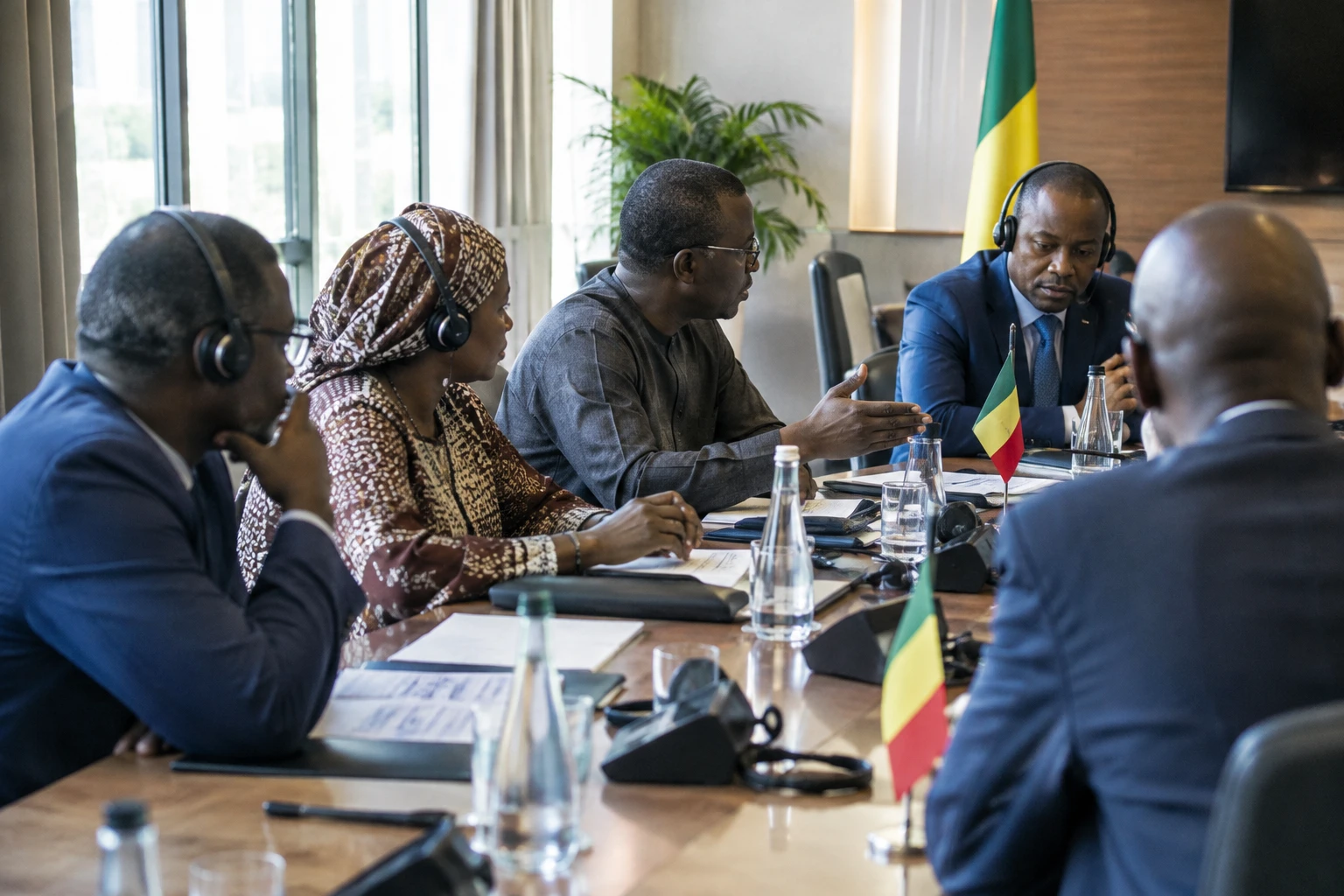
Between Niamey, Ouagadougou and Bamako, Sahelian leaders are signalling their determination to strengthen ties. But behind the official visits, one question remains: what joint decisions can tangibly improve security and cooperation within the Alliance of Sahel States (AES)? The visit by Mali’s transitional president, General Assimi Goïta, has brought this issue back to the centre of discussions.
A confederation built after the break with ECOWAS
Mali, Burkina Faso and Niger founded the AES in September 2023, then adopted the treaty in Niamey on 6 July 2024, turning it into a confederation. The project highlights three priorities: defence and security, development, and diplomacy. It is part of a break with the Economic Community of West African States (ECOWAS), which the three countries left on 29 January 2025. The Nigerien News Agency recounts the adoption of the founding treaty, while ECOWAS confirmed the withdrawal date in its communiqué. The ECOWAS text on the withdrawal of the three states recalls the institutional change in the region.
This new regional architecture does not, by itself, resolve the challenges of coordination. The three governments must align their policies, administrations and resources while maintaining relations with neighbouring countries and external partners. The confederation is therefore both a shared political framework and a work in progress whose tangible results remain to be measured.
Two capitals, a day of consultations
On Thursday 5 November 2026, Assimi Goïta travelled to Niamey and then Ouagadougou. In Niamey, he was welcomed by General Abdourahamane Tiani. The two delegations held a working session focused in particular on security within the confederation and the fight against armed groups. The Nigerien News Agency reports that the meeting took place and that a joint communiqué was issued.
The Malian president then travelled to Ouagadougou, where Captain Ibrahim Traoré, president of Faso and incumbent president of the Confederation, received him. The Burkinabe presidency says their meeting covered development, the fight against terrorism, African integration and international affairs. The official account from the Presidency of Faso confirms the stated topics, without detailing any new decisions.
Public announcements thus outline a shared agenda, but do not yet make it possible to assess the measures adopted. The distinction matters: a high-level meeting can signal political will without, on its own, proving that anything has changed operationally on the ground.
Russia and Algeria: reported discussions, not all confirmed
Another aspect of the discussions concerns external partners. The account behind this information claims, citing people close to the meetings, that Goïta passed on a personal message from Vladimir Putin to his counterparts after the Russia-Africa summit held in Moscow on 28 and 29 October. It presents Russia as a key partner for all three states on defence and security. However, the official communiqués issued about the visits confirm neither the delivery of this message nor its contents. These details must therefore remain attributed and cannot be presented as independently established facts.
The same caution applies to Algeria. According to accounts from people close to the delegations, Tiani is said to have assured Goïta that the rapprochement between Niamey and Algiers was not directed against the AES. This statement does not appear in the official accounts consulted. It comes, however, amid tensions in relations between Algiers and Sahelian countries, including after the destruction of a Malian drone in 2025 and the recall of ambassadors. Diplomatic exchanges between Niger and Algeria have continued since then, giving the issue regional significance without, by itself, establishing a common position among the three AES members.
For Bamako, the balance is delicate. Mali can deepen its security cooperation with Moscow while seeking to preserve relations with its neighbours, including those stepping up contacts with Algiers. For Niamey and Ouagadougou, the priority is to maintain coordination within the AES without giving up their own diplomatic choices. The bloc’s cohesion will depend less on declarations of unity than on the ability to reconcile these interests.
Results expected beyond the summits
The issues vary among the different players. The authorities are seeking to strengthen military and diplomatic coordination. For residents, the significance of these meetings will also be judged by their effects on security, travel, trade and access to services. Businesses, particularly those operating across borders, need predictable rules and functioning routes. As not all decisions discussed at the meetings have been made public, their immediate impact remains difficult to establish.
In West Africa, the AES now operates outside ECOWAS, but the challenges of neighbourhood relations extend beyond the confederation’s borders. The movement of people and goods, the fight against armed groups and relations with Algeria require sustained regional dialogue. For the African Union, consolidating new frameworks for cooperation also raises the question of how they will fit with continental institutions.
The visit on 5 November therefore confirms that consultations between the Malian, Nigerien and Burkinabe leaders are continuing. It does not, however, prove that all disagreements have been resolved or that new mechanisms are already operational. The next indicator will be the publication of specific decisions and their implementation: that is where the AES’s ability to turn summit meetings into lasting cooperation will be measured.