Algeria
 Egypt
 Libya
 Morocco
 Sudan
 Tunisia
 Benin
 Burkina Faso
 Cabo Verde
 Côte d'Ivoire
 Ghana
 Guinea
 Guinea-Bissau
 Liberia
 Mali
 Mauritania
 Niger
 Nigeria
 Senegal
 Sierra Leone
 The Gambia
 Togo
 Cameroon
 Central African Republic
 Chad
 DR Congo
 Gabon
 Republic of the Congo
 São Tomé and Príncipe
 Burundi
 Comoros
 Djibouti
 Eritrea
 Ethiopia
 Kenya
 Madagascar
 Malawi
 Mauritius
 Mozambique
 Rwanda
 Seychelles
 Somalia
 South Sudan
 Tanzania
 Uganda
 Angola
 Botswana
 Eswatini
 Lesotho
 Namibia
 South Africa
 Zambia
 Zimbabwe
In Malabo, a return that tells more than a simple repatriation story
In Equatorial Guinea, the return of a young man tells more than an individual story. It also sheds light on a broader reality: young Africans are being recruited, sometimes through deception, to serve in Russia’s war in Ukraine, far from home and everything familiar. In this case, the issue is not just one of departure. It is about promises made to families, the vulnerability of those seeking exile and the human cost of a conflict that now extends beyond the European battlefield.
The case of Daniel Angel Masie Nchama, a 22-year-old computer science student, is part of a phenomenon already documented by African and international investigations. The All Eyes on Wagner collective recorded 1,417 Africans recruited between January 2023 and September 2025, with more than 300 deaths identified. Reuters, for its part, described in spring 2026 the unease of several African capitals over recruitment networks linked to Moscow.
The facts in the Equatoguinean context
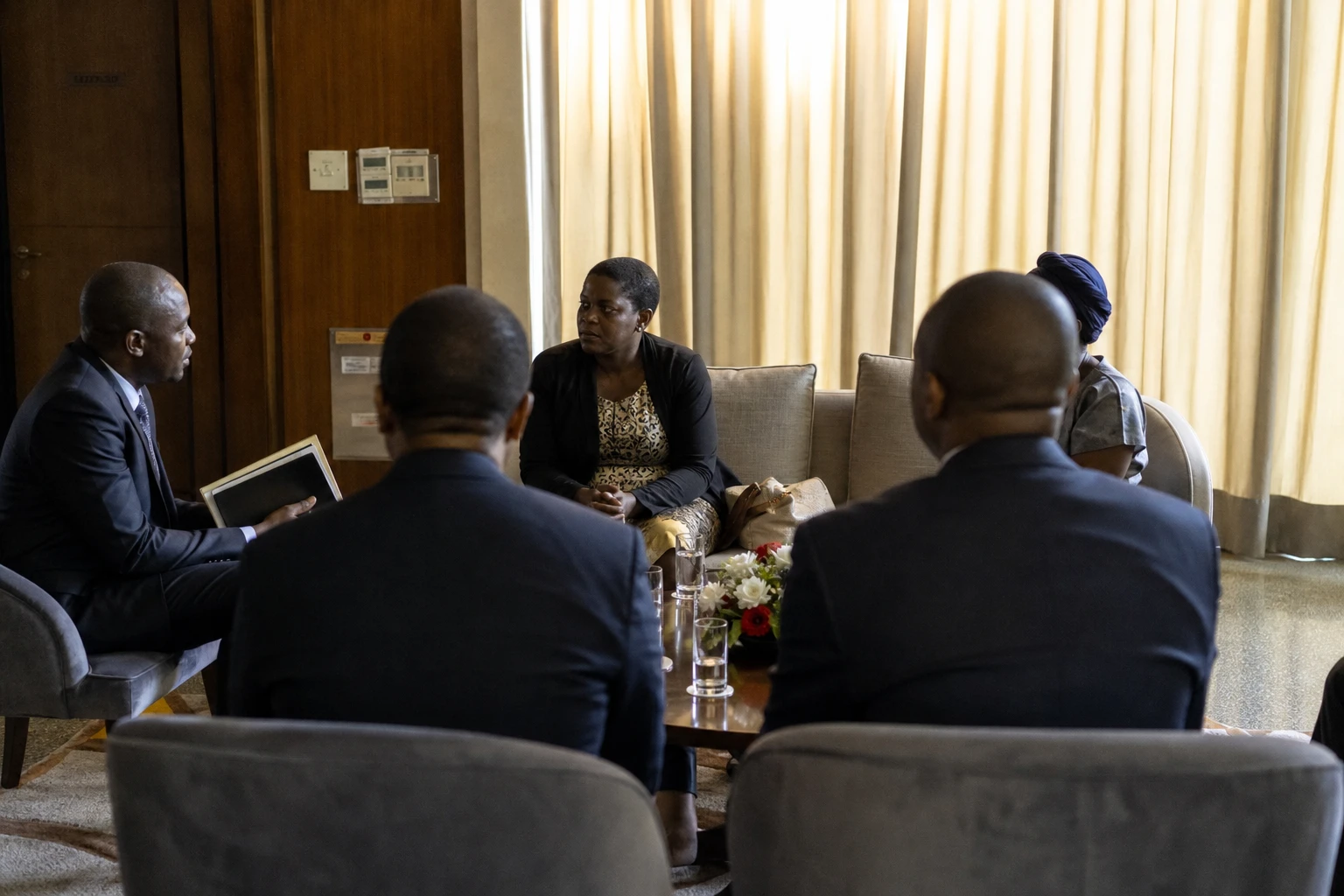
In Malabo, the capital of Equatorial Guinea, the issue took on a political dimension when the young man’s family made his story public. According to information corroborated by several media outlets and AFP, Daniel Angel Masie Nchama left in December 2025 after being promised military training and a job as a bodyguard. He says he was approached by a Cameroonian living in Russia. Once there, he is said to have signed documents in Russian that he did not understand, before his passport was confiscated.
His journey then took a turn towards the Ukrainian front after a brief period of training. He said he was sent into the field instead of receiving the eight months of training he had been promised, and then faced drone fire, cold and hunger. Several witnesses and reports published in 2026 say his father alerted the authorities, prompting a response from the Equatoguinean government, which announced diplomatic efforts to secure his return. Vice-President Teodoro Nguema Obiang Mangue later said he was under the protection of Equatorial Guinea’s embassy in Russia.
The bilateral context helps explain the speed of the official response. In March 2025, the Equatoguinean presidency received Yunus Bek Evkurov, Russia’s deputy defence minister, amid publicly stated cooperation between Malabo and Moscow. Institutional media then recalled the long-standing diplomatic relationship and exchanges linked to defence, security and energy. In other words, the case of an alleged recruiter has not arisen in a diplomatic vacuum; it comes amid a relationship in which Russia is already an acknowledged partner of the Equatoguinean authorities.
What the case reveals about families, the state and recruitment networks
For families, the case points to a familiar pattern in Africa: offers promising a salary, a profession or training that lead to a different reality. The young Equatoguinean’s account also shows the importance of intermediary networks. Recruitment does not always involve a uniform or a visible institution. It can rely on personal connections, regional intermediaries and vague wording that blurs the lines between civilian work and military service.
For the state, the case highlights the difficulty of protecting its citizens while managing foreign relations. Reuters noted in March 2026 that several African governments were avoiding direct confrontation with Moscow, despite pressure from families and worried public opinion. Equatorial Guinea, for its part, chose a quieter but visible course: diplomatic intervention, the young man’s return and limited political communication, without any declared break with Russia. This choice reflects a familiar dilemma in Central Africa: maintaining channels with an external power while responding to a domestic humanitarian crisis.
The case also has a social dimension. In a country where some young people are seeking opportunities abroad, promises of a new life elsewhere remain highly attractive. The young man’s father’s testimony, carried by several media outlets, has now become a warning to families: check contracts, destinations and whether official frameworks exist before any departure. Such caution is particularly important when job offers are mixed with opaque military contexts.
A warning that reaches beyond Malabo
In Central Africa, the case resonates beyond Equatorial Guinea. It also concerns Cameroon, a neighbouring country, since the intermediary mentioned by the family is described as Cameroonian. It is also a reminder of how easily regional mobility can be exploited by transnational networks. In an area where workers, students and people seeking exile are already on the move, the line between opportunity and trap can become very thin.
At continental level, the case says something about current power dynamics. The war in Ukraine is no longer confined to eastern Europe. It is having repercussions in Africa, notably through recruitment, clandestine departures and the diplomatic pressure this places on African capitals. The figures from the All Eyes on Wagner collective offer only a partial snapshot, but they are enough to show the scale of the phenomenon. What happens next will depend on each state’s response, families’ vigilance and how Moscow continues, or does not continue, to manage these mobilisation networks.