Algeria
 Egypt
 Libya
 Morocco
 Sudan
 Tunisia
 Benin
 Burkina Faso
 Cabo Verde
 Côte d'Ivoire
 Ghana
 Guinea
 Guinea-Bissau
 Liberia
 Mali
 Mauritania
 Niger
 Nigeria
 Senegal
 Sierra Leone
 The Gambia
 Togo
 Central African Republic
 Chad
 DR Congo
 Equatorial Guinea
 Gabon
 Republic of the Congo
 São Tomé and Príncipe
 Burundi
 Comoros
 Djibouti
 Eritrea
 Ethiopia
 Kenya
 Madagascar
 Malawi
 Mauritius
 Mozambique
 Rwanda
 Seychelles
 Somalia
 South Sudan
 Tanzania
 Uganda
 Angola
 Botswana
 Eswatini
 Lesotho
 Namibia
 South Africa
 Zambia
 Zimbabwe
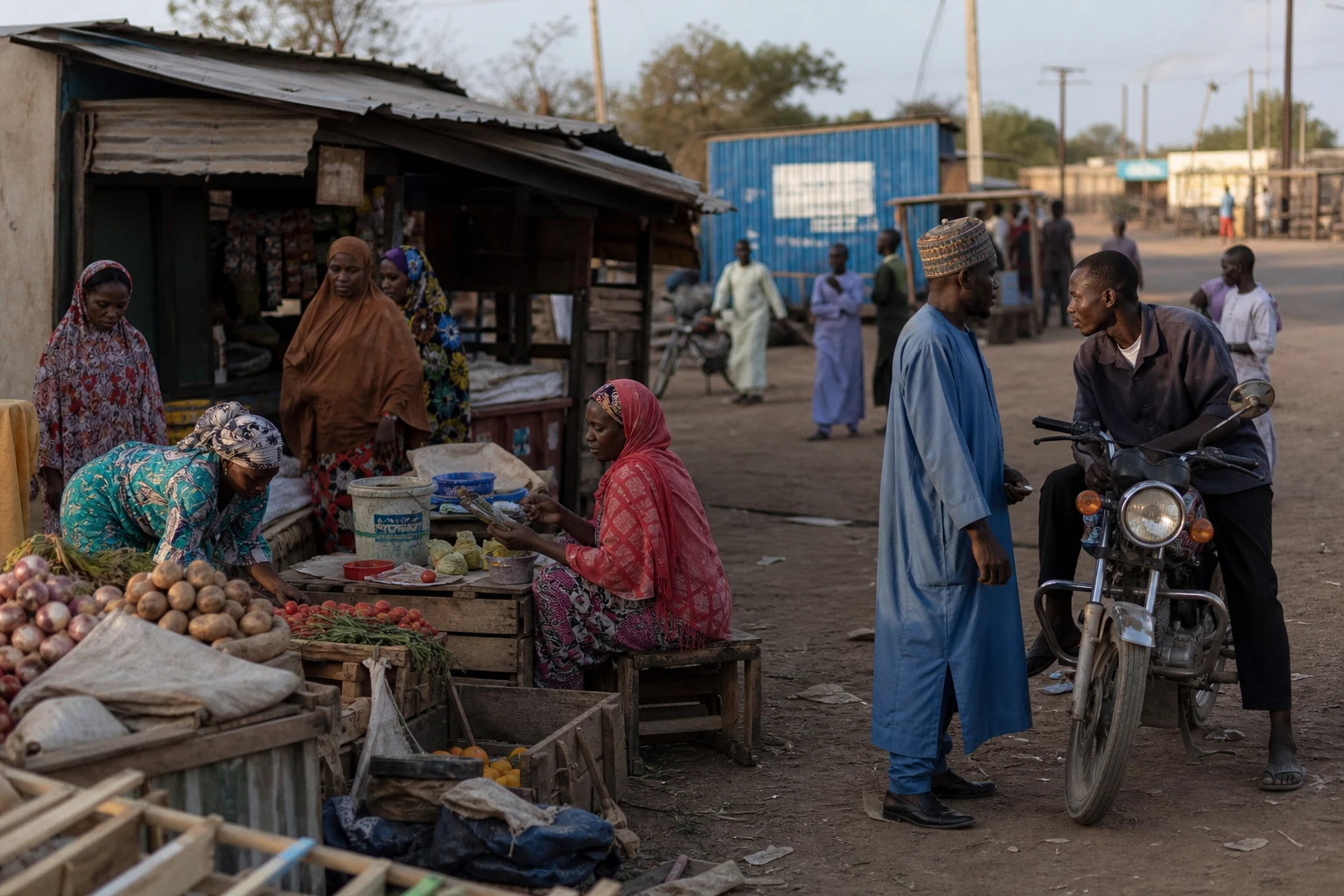
A night of fear on the Lake Chad route
In Cameroon’s Far North, the threat is measured not only in official death tolls. It is also measured by whether a village wakes up after a night of assault. In Madegoua, in the Logone-et-Chari department, the passage of armed groups has left grieving families, wounded people and a simple but weighty question: how can civilians be struck like this in the heart of an area already under security pressure?
The incident took place in an area known for its vulnerability. Logone-et-Chari borders both Nigeria and Chad, two neighbours directly affected by insecurity around the Lake Chad basin. For years, Yaoundé has said that this part of the country is among the areas where Boko Haram and the Islamic State in West Africa Province, or ISWAP, carry out incursions, abductions and attacks on civilians and defence forces. Cameroon also has national and regional security measures in place there, notably the Multinational Joint Task Force, established with countries bordering the lake to contain these armed groups.
What we know about the attack
Accounts from the scene are consistent. In the night between Wednesday 16 and Thursday 17 September 2026, armed men stormed Madegoua at around 2am. They targeted men, tied them up and then executed them, according to local testimonies corroborated by several sources. The initial toll was 13 dead. Two injured people later died at Makary hospital, bringing the total to 15 dead. Three other people were injured. No claim of responsibility was made immediately.
Local authorities and witnesses describe an assault that was brief in its preparation but lengthy in its execution. It lasted more than an hour, with no immediate resistance at the scene, despite a reported forward military post a few kilometres away. Residents have also raised the possibility of a punitive operation, following the discovery by a vigilante committee of a stockpile of ammunition hidden in the village, which was handed over to local authorities. This remains a hypothesis, not an established fact.
Between diffuse insecurity and a political message
The most sensitive issue is the method used. In this border area, jihadist groups do not seek only to kill. They also aim to punish, displace, intimidate and control roads. This, according to villagers cited by the corroborating sources, explains why the attack targeted a route considered strategic towards Makary. If the ISWAP hypothesis were confirmed, it would fit a pattern already seen around Lake Chad: attacking civilians to establish a presence, test local defences and remind people that the state does not permanently control every corner of the territory. But for now, attribution remains tentative.
For local people, the impact is immediate. Markets, night-time travel, farming and movement along tracks all change pace after each attack. For the authorities, the challenge is different: to provide security without emptying villages, increase patrols without creating a lasting rift with communities, and disrupt the arms networks that supply armed groups. The Cameroonian government also stresses the need to monitor the divisions of Mayo-Sava, Mayo-Tsanaga, Mayo-Danay and Logone-et-Chari, while reiterating that the borders with Nigeria and Chad require constant cooperation.
A warning for Cameroon and the region
This tragedy goes beyond the village of Madegoua. It is a reminder that the Lake Chad basin remains one of the most unstable security hotspots in Central and West Africa. Cameroon is not facing the threat alone. It shares the pressure with Nigeria, Chad and Niger, in an area where administrative borders count for little against the movements of armed groups, smugglers and logistical networks. The response cannot be military alone. It also requires cross-border cooperation, local intelligence, the sharing of information and public services in remote areas.
Across the continent, the episode is a reminder of a reality familiar in several African regions: when the state struggles to re-establish its presence in outlying areas, armed groups move in and then impose those areas as their own terrain. In Cameroon, the attack comes as the authorities maintain a message of heightened vigilance across the country, particularly ahead of the start of the school and university years and at a time when security remains a national priority. What happens next will depend on two very concrete things: the response of forces deployed in the Far North and the ability of the states bordering Lake Chad to prevent another community from enduring the same night.