Algeria
 Egypt
 Libya
 Morocco
 Sudan
 Tunisia
 Benin
 Burkina Faso
 Cabo Verde
 Côte d'Ivoire
 Ghana
 Guinea
 Guinea-Bissau
 Liberia
 Mali
 Mauritania
 Niger
 Nigeria
 Senegal
 Sierra Leone
 The Gambia
 Togo
 Cameroon
 Central African Republic
 Chad
 DR Congo
 Equatorial Guinea
 Gabon
 Republic of the Congo
 São Tomé and Príncipe
 Burundi
 Comoros
 Djibouti
 Eritrea
 Ethiopia
 Kenya
 Madagascar
 Malawi
 Mauritius
 Mozambique
 Rwanda
 Seychelles
 Somalia
 South Sudan
 Tanzania
 Uganda
 Angola
 Botswana
 Eswatini
 Lesotho
 Namibia
 Zambia
 Zimbabwe
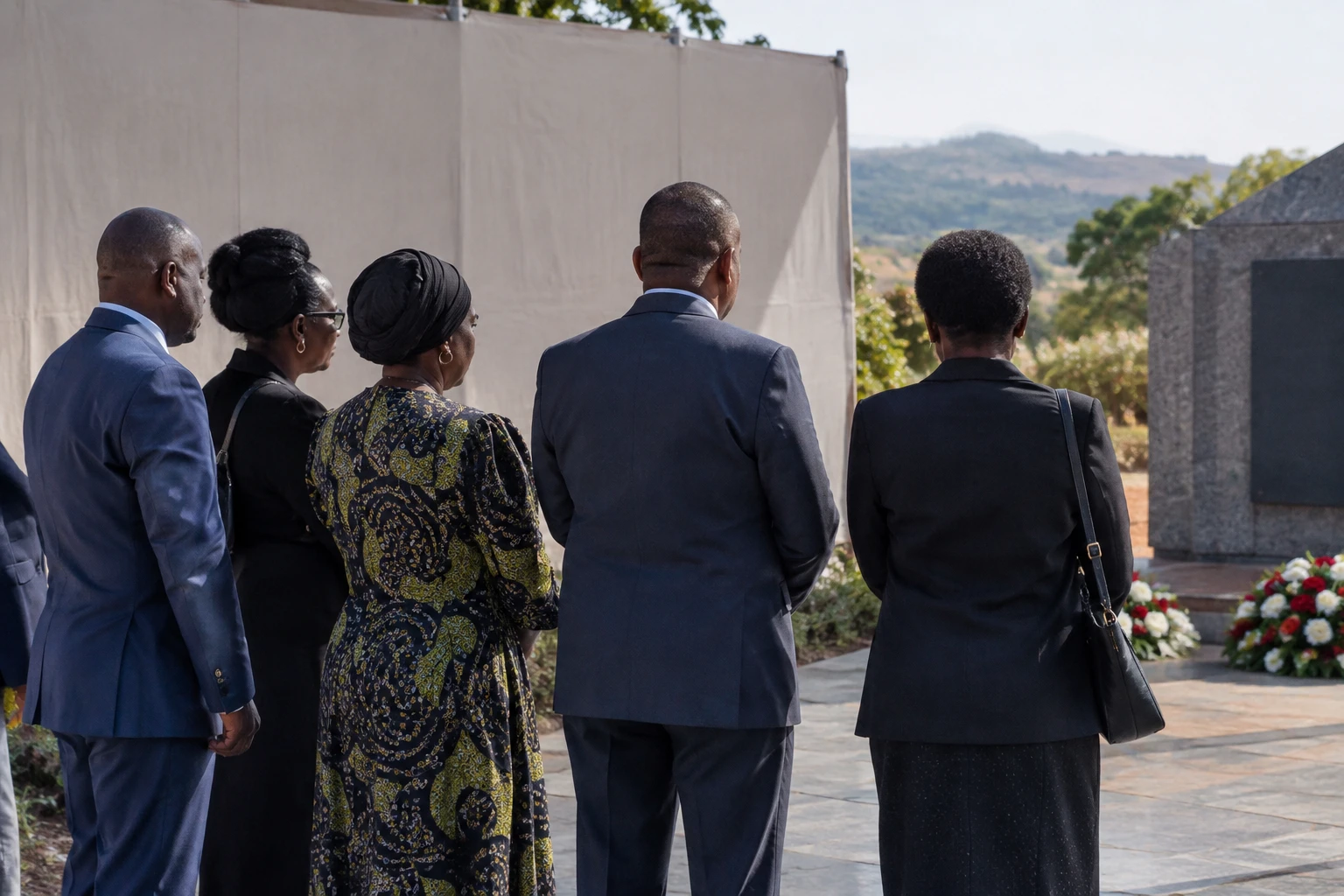
In Mbuzini, the memory of Samora Machel remains tied to a question that has never received a definitive answer: why did the Mozambican presidential aircraft crash in South Africa on 19 October 1986? Forty years later, the commemoration brings together two neighbouring countries, but does not close the case.
A national history shaped by the regional struggle
Mozambique gained independence from Portugal in 1975, after a struggle led by FRELIMO. Samora Machel, who took the helm of the new state, championed regional solidarity with movements fighting the apartheid regime in South Africa and white-minority governments in southern Africa.
This position was part of the work of the Frontline States, a group of countries in the region that coordinated their support for liberation struggles. It also exposed the young Mozambican state to tensions with Pretoria, then governed by the apartheid regime. Mozambique was also plunged into civil war from 1977, which would not end until the 1992 peace agreement.
The Mbuzini crash therefore belongs to a history that goes beyond the death of a head of state. It took place in a region marked by conflicts, alliances and cross-border operations. Machel’s legacy is also that of a political commitment whose consequences weighed on relations between neighbouring states.
The crash and competing conclusions
On 19 October 1986, the aircraft carrying Machel back from a regional meeting in Zambia crashed in the Lebombo Mountains, near Mbuzini, in South Africa’s Mpumalanga province. More than 30 people died with him, including members of his government, journalists and crew members.
A South African commission of inquiry chaired by Judge Cecil Margo attributed the crash in 1987 to pilot error. Soviet experts involved in the inquiry disputed this explanation and put forward the possibility of a misleading radio signal that had diverted the aircraft from its course. The Mozambican government suspected at the time that the apartheid regime had organised the crash. These allegations have not been established as facts.
After the end of apartheid, the South African Truth and Reconciliation Commission also examined the case. It did not decide between the explanations. Its report noted, among other things, questions about the possibility of a false beacon and the failure of the South African authorities to issue a warning, and recommended further investigation. The Truth and Reconciliation Commission report on the death of Samora Machel therefore concludes neither that the crash has been definitively explained nor that an assassination has been proven.
The ceremony held in Mbuzini on Monday 19 October 2026 marks the 40th anniversary of the crash. Mozambican President Daniel Chapo paid tribute to Machel, whom he described as the voice of an independent Mozambique on the international stage. Josina Ziyaya Machel, his daughter, called for the site to be preserved and recalled the link between her father’s journey and the struggle for South Africa’s liberation.
A joint tribute, but no new answers
The presence of officials from both countries gives the commemoration diplomatic significance. It highlights a shared memory of the struggle against apartheid and the victims of Mbuzini. But a joint tribute is not a judicial conclusion: statements made at the ceremony do not, in themselves, change what is known about the causes of the crash.
The memorial site is in South African territory, close to the borders with Mozambique and Eswatini. This geography is a reminder that the crash took place at the heart of a regional space where borders did not prevent the political rivalries of the time. It also gives concrete meaning to exchanges between Maputo and Pretoria: the two states must preserve a site of memory while acknowledging the historical disagreements surrounding it.
For Mozambicans, Machel remains the first president of the independent country and a figure in its national history. For South Africans, his support for anti-apartheid movements is also part of the story of liberation. This recognition erases neither the political responsibility attributed to the regime of the time nor the absence of a definitive conclusion by the South African commission.
The regional significance of the case
Mozambique and South Africa are members of the Southern African Development Community (SADC), the regional organisation that promotes cooperation among its member states. In this region, current political relations are also shaped by the legacy of liberation wars and past cross-border violence. The joint commemoration in Mbuzini shows how a national episode can remain a regional issue for decades.
The case also remains a matter of public trust. Until the questions raised by the Truth and Reconciliation Commission receive documented answers, several interpretations will continue to coexist: pilot error, as determined by the 1987 inquiry; the false-beacon theory advanced by Soviet experts; and Mozambican suspicions directed at the former South African regime. It is essential to distinguish between them: a hypothesis or an accusation is not proof.
Forty years after 19 October 1986, Mbuzini is both a memorial and an unfinished historical case. The ceremony recalls Samora Machel’s regional commitment and the human cost of his journey. It also brings to the fore a demand that remains relevant for both countries: to establish the facts rigorously, without confusing commemoration, political memory and the conclusions of an inquiry.