Algeria
 Egypt
 Libya
 Morocco
 Sudan
 Tunisia
 Benin
 Burkina Faso
 Cabo Verde
 Côte d'Ivoire
 Ghana
 Guinea
 Guinea-Bissau
 Liberia
 Mali
 Mauritania
 Niger
 Nigeria
 Senegal
 Sierra Leone
 The Gambia
 Togo
 Cameroon
 Central African Republic
 Chad
 DR Congo
 Equatorial Guinea
 Gabon
 Republic of the Congo
 São Tomé and Príncipe
 Burundi
 Comoros
 Djibouti
 Eritrea
 Ethiopia
 Kenya
 Madagascar
 Malawi
 Mauritius
 Mozambique
 Rwanda
 Seychelles
 Somalia
 South Sudan
 Tanzania
 Uganda
 Angola
 Botswana
 Eswatini
 Lesotho
 Namibia
 Zambia
 Zimbabwe
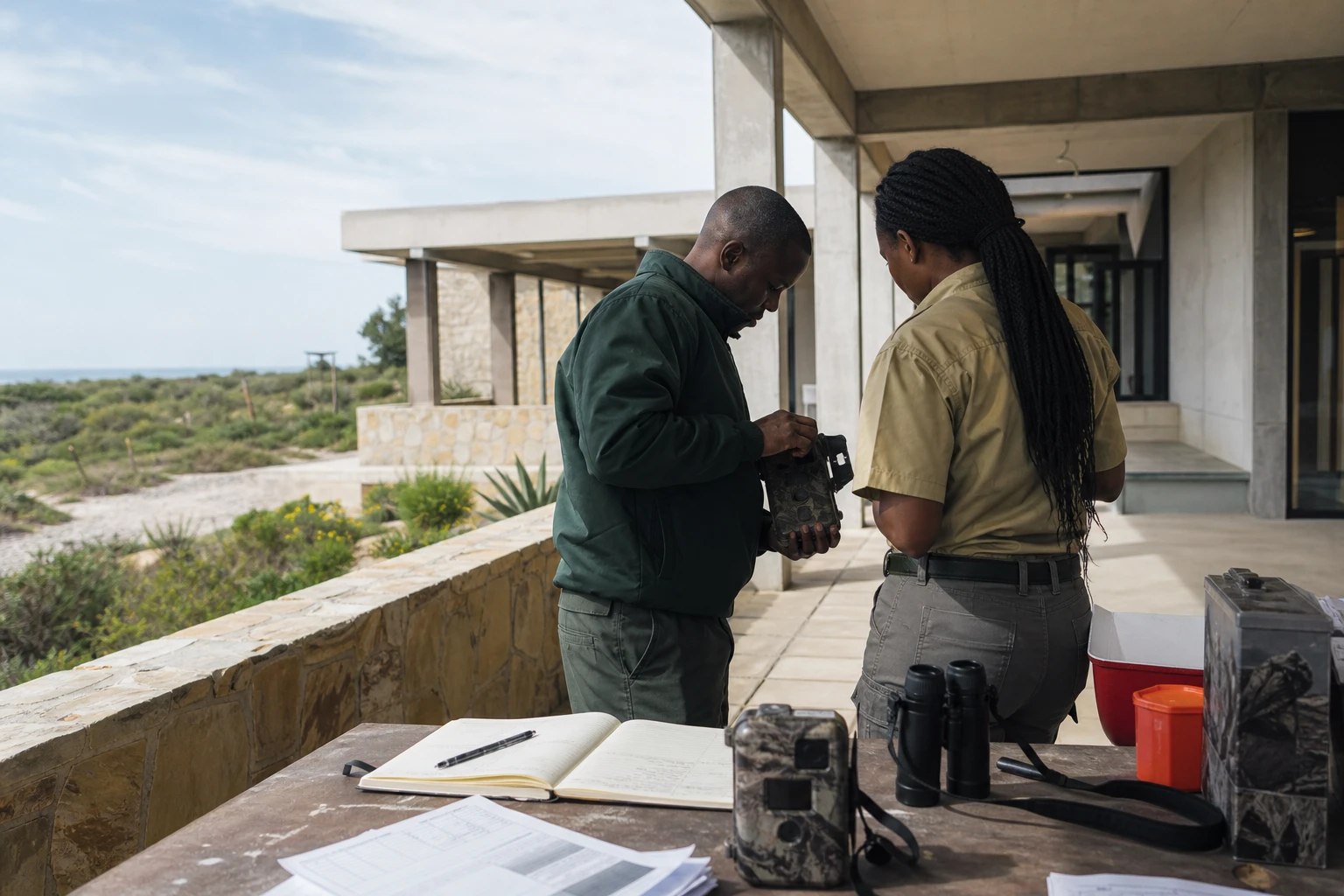
On South Africa’s west coast, the return of the leopard cannot yet be counted in dozens of animals. It involves just a few individuals, including two cubs spotted by camera traps. Even so, their presence is already changing how people think about conservation, farming and the sharing of land in the Western Cape province.
A natural return after more than a century away
The Cape leopard disappeared from the west coast in the 19th century. Hunting, the expansion of farming and the gradual destruction of habitats drove the big cat back until it had vanished completely from the region.
In November 2025, South African National Parks, the public body that manages several of South Africa’s protected areas, confirmed a photograph of a leopard in West Coast National Park. The animal was captured by a camera trap. It was the first documented sighting in the park in about 170 years.
Since then, monitoring on the west coast has identified a group of about seven leopards. Two cubs were also photographed with a female. This breeding confirms that the cats are not merely passing through the area. They are beginning to find favourable conditions there.
Researchers describe this as natural recolonisation, not reintroduction. No animals have been moved by humans. The leopards appear to have spread from the Cederberg mountains and other mountainous parts of the Western Cape, following areas that remain suitable for their movements.
Less fragmented landscapes, but still fragile
This return is part of a gradual change in the landscape. In some areas, a decline in intensive farming has left more room for natural vegetation. Private reserves, ecological corridors and restoration projects have also reconnected habitats that were previously isolated.
West Coast National Park is one of the mainstays of this trend. Situated north of Cape Town, it protects, among other things, the Langebaan Lagoon and valuable coastal environments. Cooperation between South African National Parks, researchers at the University of the Western Cape, landowners and conservation organisations has improved the monitoring of animal movements.
The South African National Parks statement on the first photograph of the leopard attributes this progress to several factors. The expansion of conserved areas matters. South African wildlife protection legislation also plays a role. Above all, the tolerance of some rural landowners is becoming decisive.
This development does not mean the species is out of danger. The leopard remains classified as vulnerable globally. In southern South Africa, populations are often separated by roads, fences, urban development and farmland. Yet a large carnivore needs extensive territory to hunt, reproduce and maintain sufficient genetic exchange.
Good news that worries farmers
The leopard’s presence does not have the same effects for all residents. For biodiversity advocates, it signals that an ecosystem is regaining some of its balance. The predator regulates some prey populations and can limit the pressure exerted by other medium-sized carnivores.
For farmers, the issue is more immediate. A leopard can attack sheep or young cattle. On a family farm, every loss affects income. It can also create considerable tension, especially when farmers are already facing attacks by caracals, smaller cats that are nevertheless capable of killing livestock.
In the Hopefield area, some farmers are therefore concerned that the leopard’s establishment will increase their losses. This concern is not simply a conflict between farming and nature conservation. It also involves the cost of monitoring measures, the value of livestock and the ability of small farms to absorb an unexpected loss.
Organisations working on the ground are seeking to avoid direct confrontation. Their approach combines camera monitoring, animal identification, improved fencing and reducing lethal practices against predators. In some areas, compensation schemes have also been trialled to cover verified losses.
The South African programme focused on coexistence between farmers and leopards includes financial compensation schemes in the Piketberg area. Their aim is simple: to give rural landowners a practical reason to protect an animal that can also pose an economic risk.
The central question: a viable population
Seven leopards and two cubs are an encouraging sign, but not yet a sustainable population. To establish itself, the species needs enough prey, shelter and corridors. It must also be able to avoid traps, poisoning, road collisions and illegal shooting.
The territories required are extensive. Research by Landmark Rewilding Trust shows that Cape leopards can range over very large areas when prey is scarce. A male can cover a territory of several hundred square kilometres. A fence, road or urbanised area can then cut off an essential route.
Protection therefore cannot be limited to the boundaries of the national park. It must include farmland, private reserves and transition zones between mountain ranges. This approach echoes efforts elsewhere in southern Africa to preserve corridors between protected areas.
A challenge for southern Africa
The west coast case is of interest beyond South Africa. Across the Southern African Development Community (SADC), large mammals often move between areas with different administrative boundaries and protection regimes. Conservation therefore depends on national policies, but also on landscape connectivity at regional level.
The leopard’s return also shows that conservation policy can deliver results when it brings together science, public authorities and rural communities. This is not about turning every area into a sanctuary or asking farmers to bear the cost of biodiversity alone. Success will depend on clear rules, transparent monitoring and credible compensation when losses are confirmed.
The next step will be to establish whether the cubs reach adulthood and whether more leopards join the area. Camera data, genetic analyses and reports from residents will help measure how robust this recolonisation is. For now, the west coast offers a possibility: a lasting return, provided conservation also benefits the people who live and work on this land.