Algeria
 Egypt
 Libya
 Morocco
 Sudan
 Tunisia
 Benin
 Burkina Faso
 Cabo Verde
 Côte d'Ivoire
 Ghana
 Guinea
 Guinea-Bissau
 Liberia
 Mali
 Mauritania
 Niger
 Nigeria
 Senegal
 Sierra Leone
 The Gambia
 Togo
 Cameroon
 Central African Republic
 Chad
 DR Congo
 Equatorial Guinea
 Gabon
 Republic of the Congo
 São Tomé and Príncipe
 Burundi
 Comoros
 Djibouti
 Eritrea
 Ethiopia
 Kenya
 Madagascar
 Malawi
 Mauritius
 Mozambique
 Rwanda
 Seychelles
 Somalia
 South Sudan
 Tanzania
 Uganda
 Angola
 Botswana
 Eswatini
 Lesotho
 Namibia
 Zambia
 Zimbabwe
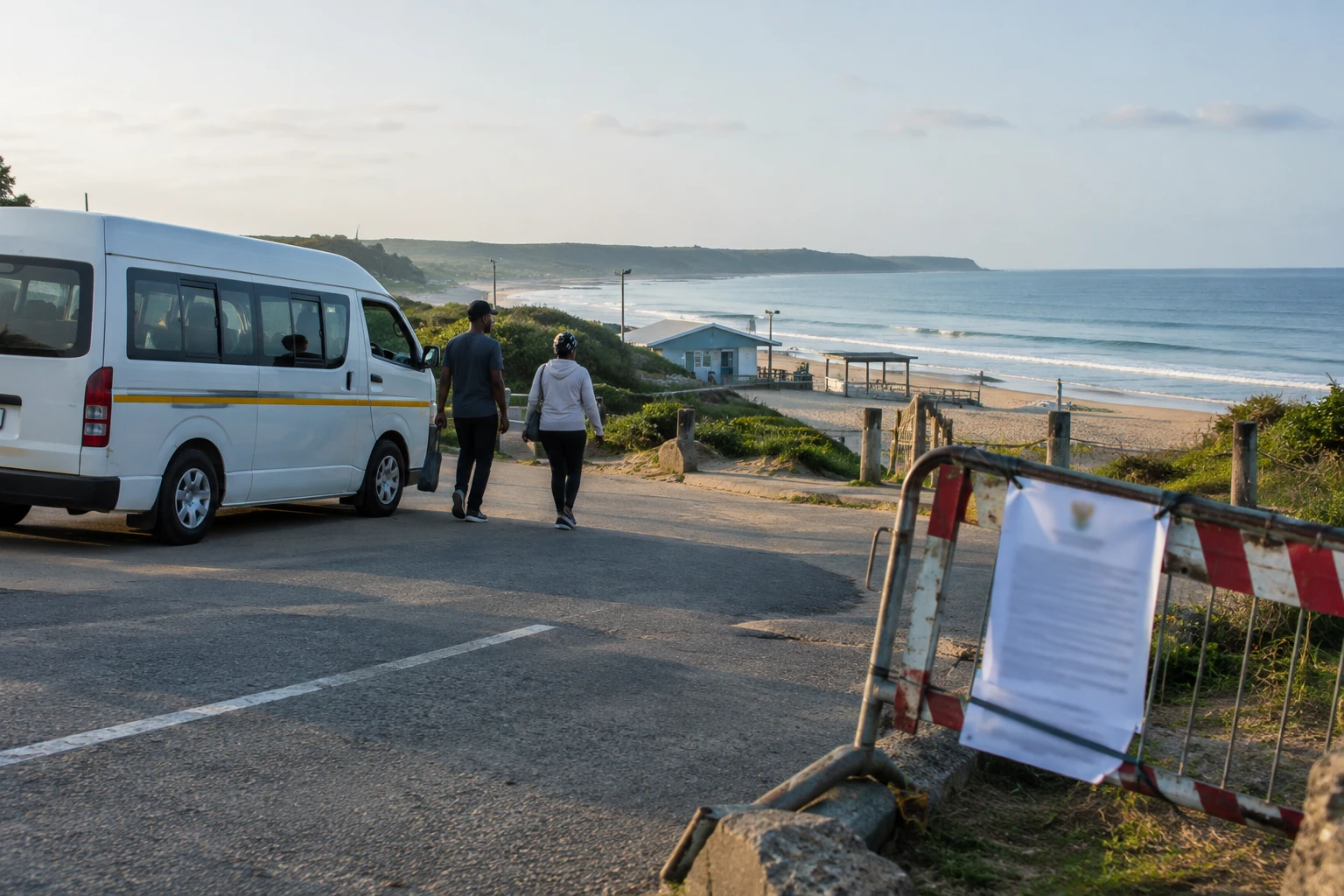
At Orient Beach, the sea is part of daily life: people swim early, before the day begins. The death of a swimmer in a shark attack is a reminder, however, that a living coastline requires appropriate safety rules, without turning a rare accident into widespread fear.
Beach closed after tragedy
On Tuesday 20 October 2026, a 65-year-old South African woman died off Orient Beach, in KuGompo, in the Eastern Cape province. The city, formerly called East London, lies on the country’s south-east coast. Police were called at around 7am and an investigation was opened to establish the circumstances of the death.
Members of an open-water swimming group responded to the distress call and brought the swimmer back to shore, according to an account by Mike Loewe reported by public broadcaster SABC. A lifeguard who was there tried to resuscitate her. She was pronounced dead at the scene. The authorities have not publicly identified the species of shark involved.
The Buffalo City Metropolitan Municipality has closed Orient Beach and Eastern Beach until further notice. Their reopening will depend on safety assessments and expert advice. The city also reiterated lifeguard duty hours: 8.30am to 5pm. The attack took place before they came on duty.
A swimmer quoted by SABC described the victim as a recently retired nuclear medicine radiologist and musician, well known in the local open-water swimming community. These details help explain the shock felt by her loved ones and fellow swimmers, but the police investigation still needs to establish precisely what happened.
A risk to manage, not exaggerate
The Eastern Cape is part of a country with an extensive coastline and significant marine biodiversity. Sharks are present in its coastal ecosystems; their presence does not mean an attack is likely. Historical data cited by municipal authorities indicate that the previous recorded fatal attack in KuGompo dates back to 1997. Another attack was reported there in 2023, with no deaths.
Nationally, incidents remain rare relative to the number of people who visit beaches. The Florida Museum of Natural History’s International Shark Attack File recorded 29 unprovoked bites in South Africa between 2012 and 2021, six of them fatal. This ten-year series does not, on its own, make it possible to assess the current risk at Orient Beach.
The public response must therefore combine caution with proportion. A temporary closure allows the situation to be assessed and clear guidance to be communicated. But a lasting measure requires precise evidence: the location of the incident, sea conditions, available observations and expert advice. At this stage, no confirmed details allow the attack to be attributed to a particular species or to a change in shark behaviour.
For swimmers, the time and place matter in practical terms. Swimming before lifeguards arrive means that no official supervision is yet in place. Groups can help raise the alarm and provide assistance, as appears to have happened on Tuesday, but they do not eliminate the risks inherent in open-water swimming. The closed beaches must remain off-limits until the authorities make a decision.
Coastal safety beyond a single beach
Coastal management involves several levels: municipalities responsible for beaches, emergency services and police, as well as national authorities responsible for marine conservation. South Africa has a national plan dedicated to shark conservation and management. It stresses that public safety and species protection must be considered together, rather than responding automatically to an incident with lethal measures.
In KuGompo, the immediate impact is being felt first by regular swimmers, families and local emergency teams. The closure also affects beach activities and businesses that depend on visitor numbers. Residents who swim early to train or maintain their health are not in the same position as occasional visitors: they need reliable information on reopening and guidance, not just a one-off alert.
The case forms part of a broader question for southern Africa: how can access to the coast be ensured while natural risks are managed and marine ecosystems preserved? Regional co-operation within SADC, the Southern African Development Community, can support scientific exchanges and the management of shared coastal areas. But the closure of Orient Beach is primarily a matter for South African local authorities; no direct regional link to the incident has been announced.
The next expected decisions are the publication of the investigation’s findings and the technical advice that will guide the reopening of the two beaches. Until then, the key facts remain: a swimmer has died, two beaches are closed and the shark species has not been confirmed. The response must protect beachgoers without making marine wildlife as a whole responsible for an event that is still under investigation.
Sources consulted: account of the authorities and witness statements ; report by South African broadcaster eNCA ; information on previous recorded attacks in KuGompo ; South Africa’s national shark conservation and management plan.