Algeria
 Egypt
 Libya
 Morocco
 Sudan
 Tunisia
 Benin
 Burkina Faso
 Cabo Verde
 Côte d'Ivoire
 Ghana
 Guinea
 Guinea-Bissau
 Liberia
 Mali
 Mauritania
 Niger
 Nigeria
 Senegal
 Sierra Leone
 The Gambia
 Togo
 Cameroon
 Central African Republic
 Chad
 DR Congo
 Equatorial Guinea
 Gabon
 Republic of the Congo
 São Tomé and Príncipe
 Burundi
 Comoros
 Djibouti
 Eritrea
 Ethiopia
 Madagascar
 Malawi
 Mauritius
 Mozambique
 Rwanda
 Seychelles
 Somalia
 South Sudan
 Tanzania
 Uganda
 Angola
 Botswana
 Eswatini
 Lesotho
 Namibia
 South Africa
 Zambia
 Zimbabwe
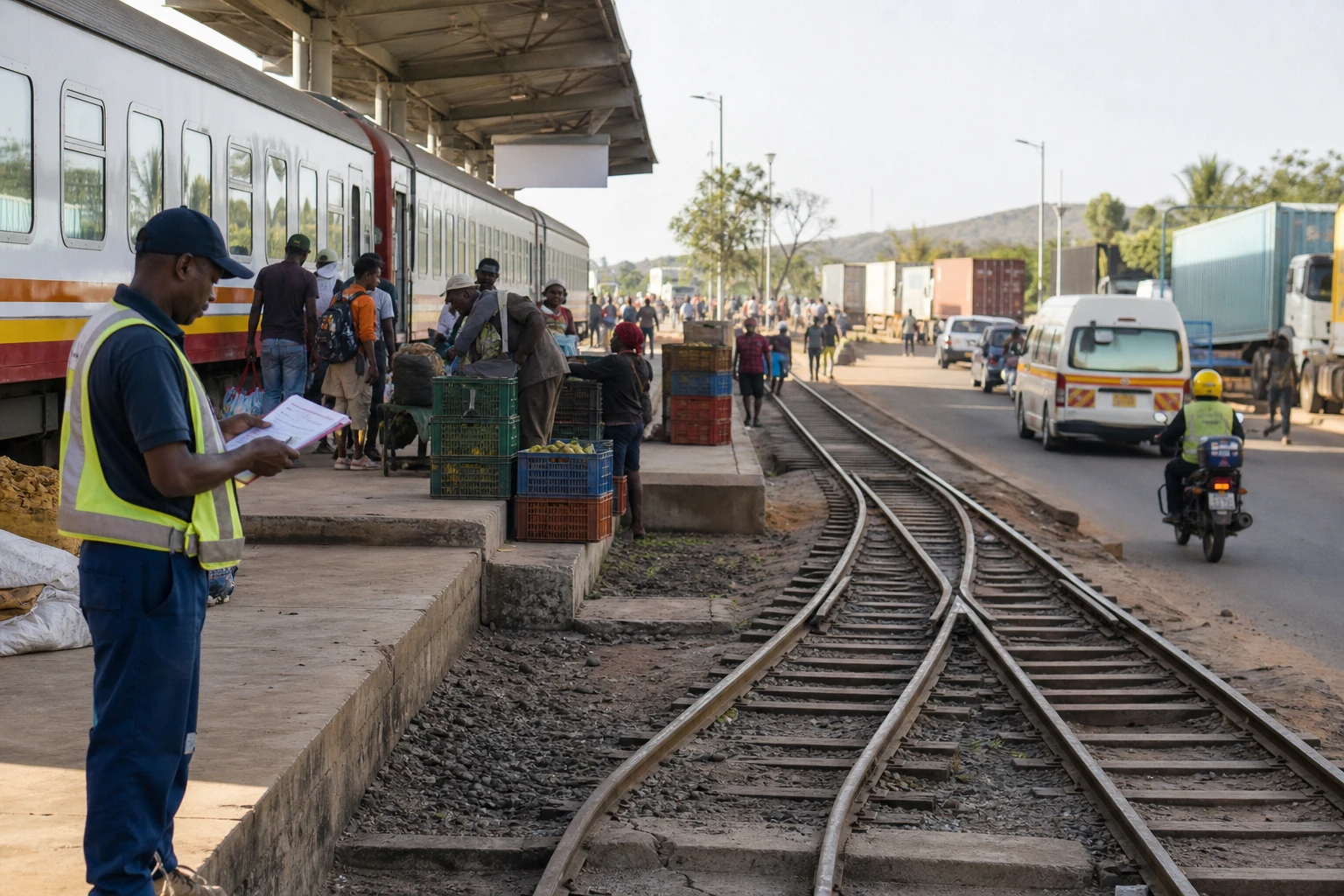
In Voi, Kenya wants to turn a long-overlooked border area into a strategic gateway to Tanzania. The challenge, however, goes beyond laying new tracks: it means linking different networks, cutting logistics costs and giving businesses in Taita-Taveta access to regional markets.
A rail corridor at the heart of East Africa
Kenyan President William Ruto announced on 27 September 2026 a project to extend the standard-gauge railway network, or SGR, from Voi to the Tanzanian border. The initial funding mentioned amounts to around 5 billion Kenyan shillings, or nearly $38.5 million.
The announcement concerns Taita-Taveta County in south-eastern Kenya. The proposed route is to serve several localities, including Mwatate, Bura, Mwakitau and Taveta, before reaching the border corridor towards northern Tanzania. The project is intended to carry passengers and freight.
Technical details have yet to be clarified. Kenyan authorities have not yet publicly presented a full timetable, a definitive route or a detailed agreement with Tanzania. The link therefore cannot be considered secured on the basis of the presidential announcement alone.
This caution is all the more necessary because another rail operation is already under way in the same area. In April 2026, William Ruto launched the rehabilitation of the metre-gauge line linking Voi, Mwatate and Taveta. The old line, around 130 kilometres long, had been inactive for nearly 20 years. The project is receiving 5.5 billion shillings and also includes a transhipment platform at Voi.
The rehabilitation of this metre-gauge line and the SGR project are therefore based on different standards. The metre gauge is one metre wide, while standard gauge measures 1,435 millimetres. This difference requires transfer equipment between the two networks, unless technical continuity is built through to Tanzania.
Voi, a future hub between Mombasa and the border
Voi holds a particular position for Kenya. The town lies on the rail line linking the port of Mombasa with the country’s interior. It could also serve as a junction for sea, rail and road transport, as well as cross-border trade.
The Kenyan government therefore wants to make Voi a logistics hub. The planned platform is intended to facilitate the transfer of cargo between existing lines and roads leading to Taveta. It could serve agricultural produce, minerals and goods destined for the Tanzanian market.
In Taita-Taveta County, the expected benefits primarily concern producers and transport operators. A more regular connection could cut the cost of shipping goods to Mombasa and neighbouring markets. It could also improve small businesses’ access to regional supply chains, provided tariffs and procedures remain affordable.
The benefits will not, however, be automatic. The railway must connect to secondary roads, border posts and storage areas. Without these facilities, a modern rail infrastructure risks operating as an isolated segment, with limited impact on local economies.
Transhipment will be a key issue. If SGR and metre-gauge trains cannot run on the same tracks, goods will have to be moved from one system to the other. This adds time and costs. It can nevertheless be organised efficiently through suitable terminals at Voi and Taveta.
Integration still depends on Kenya-Tanzania coordination
The planned link falls within the East African Community, or EAC, a regional organisation that includes Kenya, Tanzania and Uganda, among others. Its aim is to facilitate the movement of goods, services and people between its member states.
Trade within the EAC rose from $14.2 billion to $18 billion between June 2024 and June 2025, an increase of 27%, according to figures published by the organisation’s secretariat. This growth is increasing demand for more reliable corridors, but also highlights the persistent obstacles at borders.
A rail connection between Voi and northern Tanzania would therefore need to be accompanied by an agreement on standards, customs checks and cargo management. The two countries would also have to harmonise procedures at the Taveta-Holili border post, where formalities directly affect the speed of trade.
Tanzania is developing its own SGR network around several domestic corridors. It is also exploring links to landlocked countries in the region, including Rwanda, Burundi and the Democratic Republic of the Congo. Kenya, meanwhile, is seeking to extend its own SGR to Kisumu and then Malaba, on the Ugandan border.
These projects could form a more coherent regional network. They could also create competing infrastructure if states do not coordinate their investments. The choice of ports, standards and routes will influence how traffic is divided between Mombasa and Dar es Salaam.
An announcement to turn into a regional project
For Nairobi, the announced extension towards Tanzania complements Kenya’s strategy of connecting to EAC markets. It aims to strengthen both the role of the port of Mombasa and that of border counties, often far from major economic centres.
For the people of Taita-Taveta, the priority will be less the prestige of a new rail standard than the reliability of the service, transport prices and genuine access to markets. Informal operators, farmers, traders and mining companies will benefit from the project only if stations and terminals are integrated into the local economy.
The next step will therefore be institutional. Kenya will have to clarify the funding and timetable, and explain how the future SGR infrastructure will fit with the metre-gauge line already being rehabilitated. Tanzania will also have to confirm its ability to extend or connect the corridor on its side.
The Voi-Tanzania project thus illustrates the new battle over corridors in East Africa. The growth of regional trade is creating a need for faster connections. But success will depend less on the announcement than on coordination between states, cost control and the practical value of the infrastructure for economies between Nairobi, Mombasa and the Tanzanian border.