Algeria
 Egypt
 Libya
 Morocco
 Sudan
 Tunisia
 Benin
 Burkina Faso
 Cabo Verde
 Côte d'Ivoire
 Ghana
 Guinea
 Guinea-Bissau
 Liberia
 Mali
 Mauritania
 Niger
 Nigeria
 Senegal
 Sierra Leone
 The Gambia
 Togo
 Cameroon
 Central African Republic
 Chad
 DR Congo
 Equatorial Guinea
 Gabon
 Republic of the Congo
 São Tomé and Príncipe
 Burundi
 Comoros
 Djibouti
 Eritrea
 Ethiopia
 Madagascar
 Malawi
 Mauritius
 Mozambique
 Rwanda
 Seychelles
 Somalia
 South Sudan
 Tanzania
 Uganda
 Angola
 Botswana
 Eswatini
 Lesotho
 Namibia
 South Africa
 Zambia
 Zimbabwe
An event that goes beyond the stadium
In Nairobi, the stakes are not only sporting. They concern Kenya’s image, East Africa’s place on the global calendar and the ability of the Kenyan capital, Nairobi, to host a world-class event without hiding behind established capitals. In athletics, the country has nothing left to prove on the track. What remains is to convince on organisation, infrastructure and the legacy for the city as well as the country.
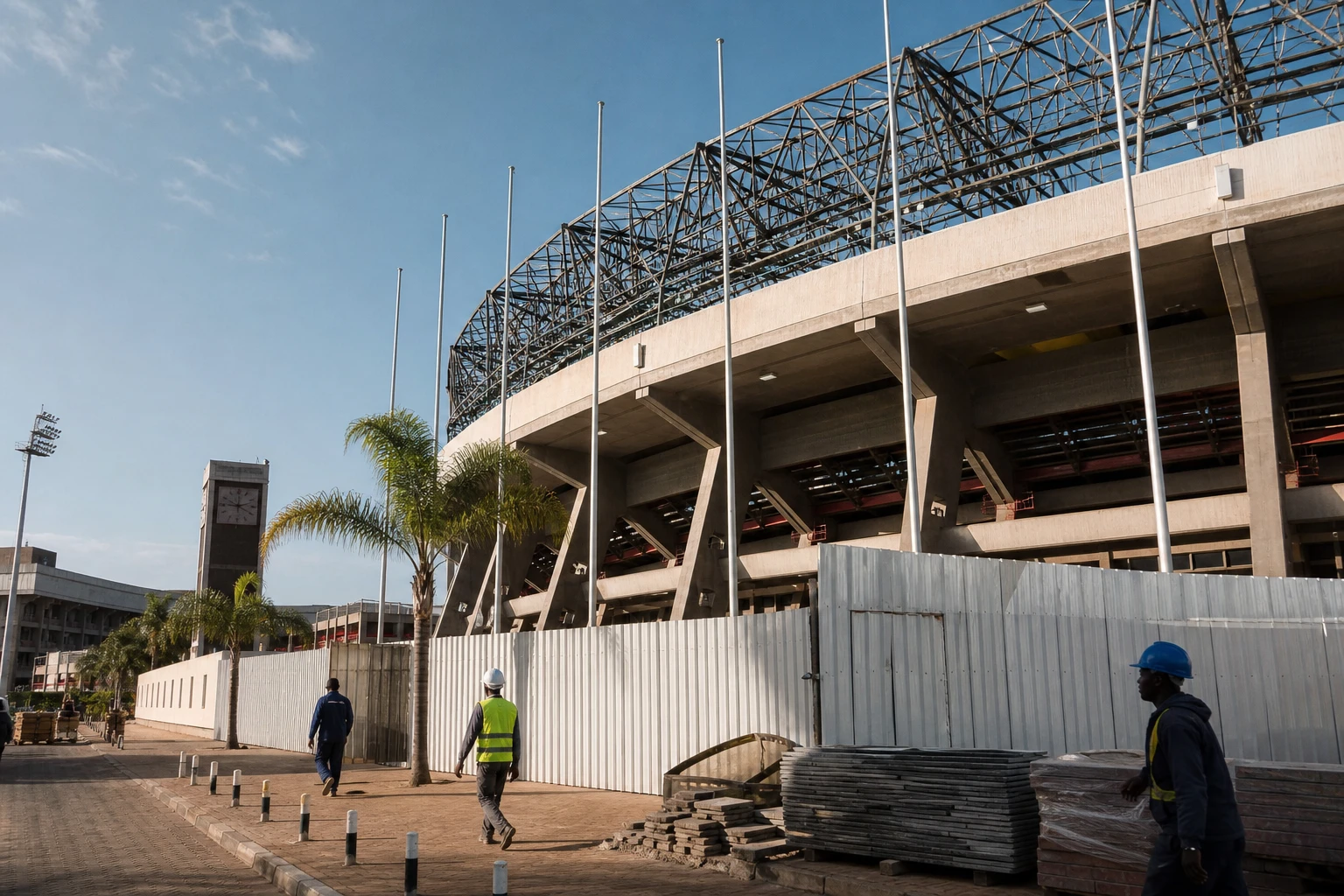
The bid comes at a particular moment for Kenyan sport. Kenya is already preparing to co-host the 2027 Africa Cup of Nations with Uganda and Tanzania, while major works are under way at the Kasarani complex, north of Nairobi. The site is due to host football matches, but also serve as a showcase for other uses in the medium term. This convergence of projects points to a broader strategy: using sports infrastructure to raise the region’s profile within the East African Community (EAC).
Kenya built its bid on tradition and a track record
In its bid, Kenya highlighted its history in athletics, its world and Olympic titles, and its ability to stage major competitions. World Athletics opened the process for the 2029 and 2031 editions in 2025, with a decision expected from the Council in September 2026. Kenyan authorities, for their part, emphasised Nairobi’s and Mombasa’s previous events, including the 2017 and 2021 World Under-18 Championships and the 2007 World Cross Country Championships.
The bid is also based on a simple fact: Kenya is a historic power in middle- and long-distance running. In the local sports press, athletics officials have pointed out that Nairobi has already hosted several international competitions and that the country has a deep-rooted sporting culture. This is not a decorative argument. It is a way of saying that the event would not be imported into a vacuum, but embedded in an ecosystem where athletics already shapes the paths of many young athletes.
Kasarani, a sports showcase and logistical test
Kasarani Stadium is at the centre of many expectations. Kenyan authorities have confirmed renovation and modernisation works at the site, described as one of the main venues in preparations for AFCON 2027. The complex has already hosted major events, but an Athletics World Championships would demand a higher standard: traffic flow, security, hospitality, urban transport, media, accessibility and the long-term upkeep of facilities.
The question is as much economic as sporting. A world championship attracts visitors, teams, broadcasters and contracts. It also mobilises hotels, services, logistics and the small-scale informal activities that thrive around major events in Nairobi. But the knock-on effect depends on one thing: turning the event into lasting investment rather than a costly interlude. That is where the true measure of Kenya’s success will lie.
A symbolic victory for Africa, beyond Kenya
If Nairobi were to be awarded the event, the continent would cross an unprecedented threshold: Africa would host the World Athletics Championships for senior athletes for the first time. The symbolism is powerful, but it is not enough. Above all, it is a reminder that major competitions should not remain confined to Europe, East Asia or North America. For Africa, the stakes are also political in an institutional sense: to show that a national federation, a state and a set of infrastructure can meet world standards.
Within the EAC, the bid could also have a knock-on effect. Kenya, Uganda and Tanzania are already co-hosting AFCON 2027. Another major international event in Nairobi would strengthen the idea that East Africa can become a credible sports hub, provided transport, security, financing and stadium maintenance are coordinated. For the region, it would be a vote of confidence. For Kenya, it would be a test of its approach. And for Kenyan athletes, it would be an event where national pride could finally be measured at home, in front of the whole world.