Algeria
 Egypt
 Libya
 Morocco
 Sudan
 Tunisia
 Benin
 Burkina Faso
 Cabo Verde
 Côte d'Ivoire
 Ghana
 Guinea
 Guinea-Bissau
 Liberia
 Mali
 Mauritania
 Niger
 Nigeria
 Senegal
 Sierra Leone
 The Gambia
 Togo
 Cameroon
 Central African Republic
 Chad
 DR Congo
 Equatorial Guinea
 Gabon
 Republic of the Congo
 São Tomé and Príncipe
 Burundi
 Comoros
 Djibouti
 Eritrea
 Ethiopia
 Madagascar
 Malawi
 Mauritius
 Mozambique
 Rwanda
 Seychelles
 Somalia
 South Sudan
 Tanzania
 Uganda
 Angola
 Botswana
 Eswatini
 Lesotho
 Namibia
 South Africa
 Zambia
 Zimbabwe
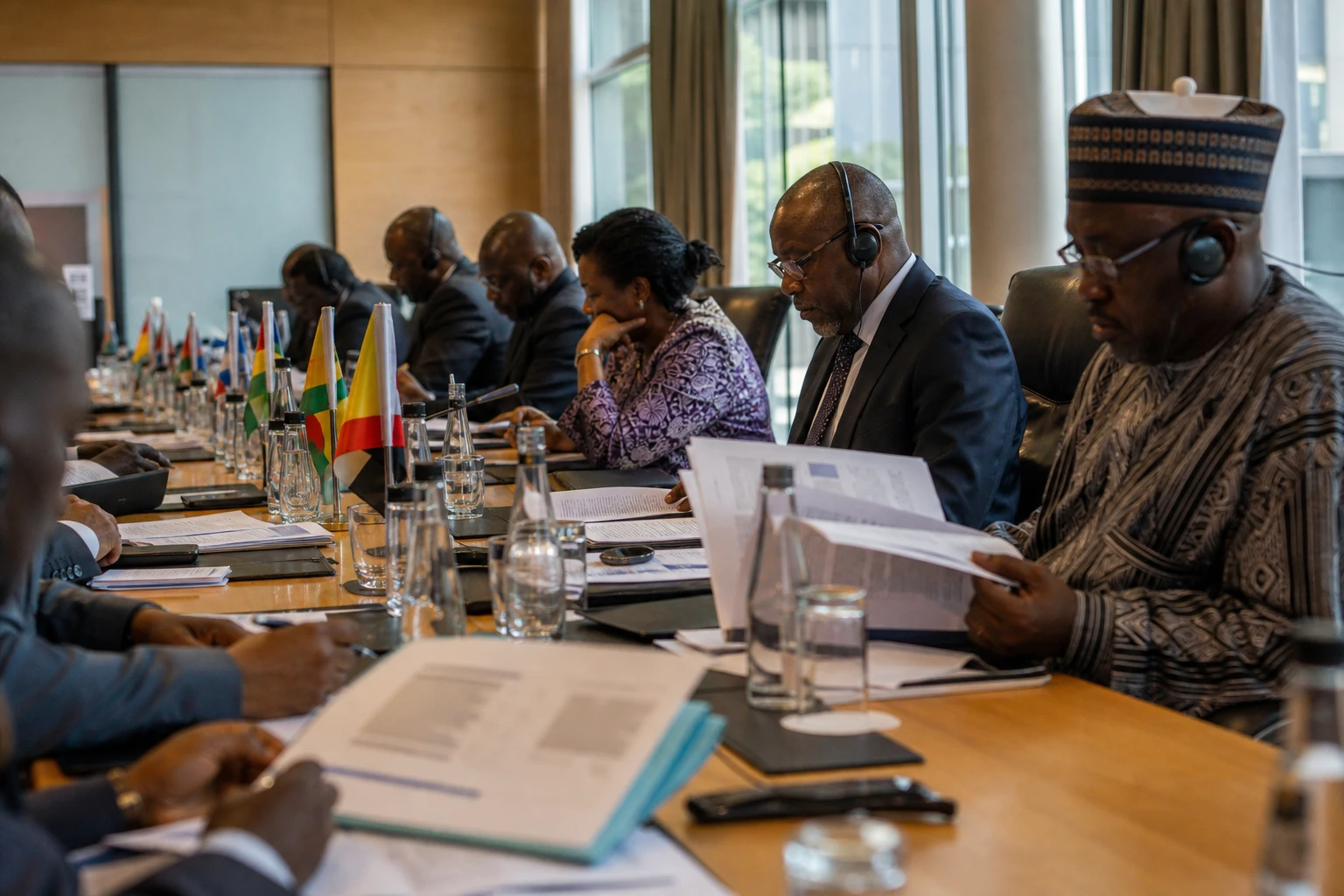
In Lamu, on Kenya’s coast, an industrial project could redraw East Africa’s energy map. But before it produces its first litre of fuel, the planned refinery will have to clear several technical, financial, environmental and regional hurdles.
A project at the heart of Kenya’s energy strategy
Nigerian group Dangote has appointed Engineers India Limited (EIL) to provide consulting and management services for its planned Lamu refinery and petrochemical complex. The Indian company will act as project management and engineering, procurement and construction management consultant, according to the terms announced on 22 September 2026.
The contract is worth more than $450 million. It covers a facility designed to process up to 700,000 barrels of crude oil a day. The complex is also expected to include petrochemical units, intended in particular to produce derivatives used in plastics and other industrial activities.
The EastAfrican reported that the signing comes days before a launch ceremony planned in Lamu. The Kenya News Agency, meanwhile, refers to a groundbreaking ceremony scheduled for 30 September 2026.
The project’s total cost is estimated at between $15 billion and $16 billion, according to available announcements. The difference reflects the scope considered: some figures cover the refinery alone, while others include petrochemical infrastructure and associated facilities.
Lamu, a logistics hub as well as an industrial site
Lamu was chosen for more than its coastline. The town lies at the heart of the LAPSSET corridor, a vast infrastructure project linking the port of Lamu to northern Kenya, Ethiopia and South Sudan. The corridor is intended to bring together a port, roads, pipelines, industrial zones and logistics links.
For a refinery of this size, access to a deep-water port is a major advantage. Crude could be imported by sea and then processed on site. The finished products could supply the Kenyan market, neighbouring landlocked countries or international markets.
The project is therefore part of a regional strategy. Kenya is a member of the East African Community, or EAC, which brings together several economies sharing trade corridors and growing fuel needs. Ethiopia, South Sudan and Uganda rely heavily on imports transported by road or pipeline.
According to available information, Dangote also plans to connect the refinery to other regional infrastructure. The possibility of a pipeline network extending up to 4,000 kilometres has been raised. However, these links will still require studies, intergovernmental agreements, financing and regulatory approvals.
A partnership already tested in Nigeria
Engineers India is not a new partner for Dangote Group. The Indian state-owned company took part in developing the refining and petrochemical complex built at Lekki, near Lagos, in Nigeria.
The initial contract, signed in the early 2010s, covered engineering and project management services. The Nigerian complex now has a nameplate capacity of 650,000 barrels a day. It produces petrol, diesel, jet fuel and polypropylene, among other products.
The Lekki refinery is, however, still in a ramp-up phase. Dangote plans to increase its capacity to 1.4 million barrels a day by 2029 and to expand its petrochemical units at the same time. This experience partly explains the confidence placed in EIL for the Kenyan project.
The mandate awarded in 2026 does not mean that Engineers India will build the entire refinery alone. Its role is focused mainly on coordination, studies, technical supervision and the organisation of the various work packages. Construction, equipment supply and financing contracts still need to be structured.
An energy security pledge, subject to conditions
Kenya currently imports most of the petroleum products it consumes. The closure of the former Mombasa refinery in 2013 turned the site into a storage and handling terminal. Since then, the country’s supply has relied largely on imports of refined fuels.
A refinery in Lamu could reduce this dependence and alter flows in the Indian Ocean. It could also create new export capacity to Uganda, Rwanda, Burundi, Ethiopia or South Sudan. However, installed capacity of 700,000 barrels a day does not automatically guarantee lower prices for households and businesses.
The cost of crude, financing, transport costs, taxation and the structure of the regional market will all affect the final price. The refinery will also have to operate at a high level to recoup its investment. Kenya will therefore have to balance security of supply, product competitiveness and expected revenues.
Local impacts will also be decisive. The project could boost employment, technical training, port services and industrial activity in Lamu County. However, it will have to address concerns over land use, coastal protection, fishing and the preservation of coastal ecosystems.
A test for economic integration in East Africa
The Lamu project therefore extends beyond Dangote Group alone. It will test the ability of Kenya and its neighbours to coordinate their infrastructure, standards and energy policies.
For Nairobi, the refinery could strengthen the role of the port of Lamu relative to Mombasa and support its ambition to turn the north of the country into a logistics platform. For landlocked countries, it would offer a closer source of supply, provided the pipelines and road corridors are actually built.
The timetable will be the first indicator to watch. The ceremony announced for 30 September 2026 will mark only the beginning of the institutional and industrial process. The next steps will involve financial close, impact assessments, permits, construction contracts and securing markets for the output.
If these conditions are met, Lamu could become a major refining and petrochemical hub in East Africa. Otherwise, the project will remain a large-scale industrial ambition, like other energy infrastructure projects announced in the region before it.