Algeria
 Egypt
 Libya
 Morocco
 Sudan
 Tunisia
 Benin
 Burkina Faso
 Cabo Verde
 Côte d'Ivoire
 Ghana
 Guinea
 Guinea-Bissau
 Liberia
 Mali
 Mauritania
 Niger
 Nigeria
 Senegal
 Sierra Leone
 The Gambia
 Togo
 Cameroon
 Central African Republic
 Chad
 DR Congo
 Equatorial Guinea
 Gabon
 Republic of the Congo
 São Tomé and Príncipe
 Burundi
 Comoros
 Djibouti
 Eritrea
 Ethiopia
 Madagascar
 Malawi
 Mauritius
 Mozambique
 Rwanda
 Seychelles
 Somalia
 South Sudan
 Tanzania
 Uganda
 Angola
 Botswana
 Eswatini
 Lesotho
 Namibia
 South Africa
 Zambia
 Zimbabwe
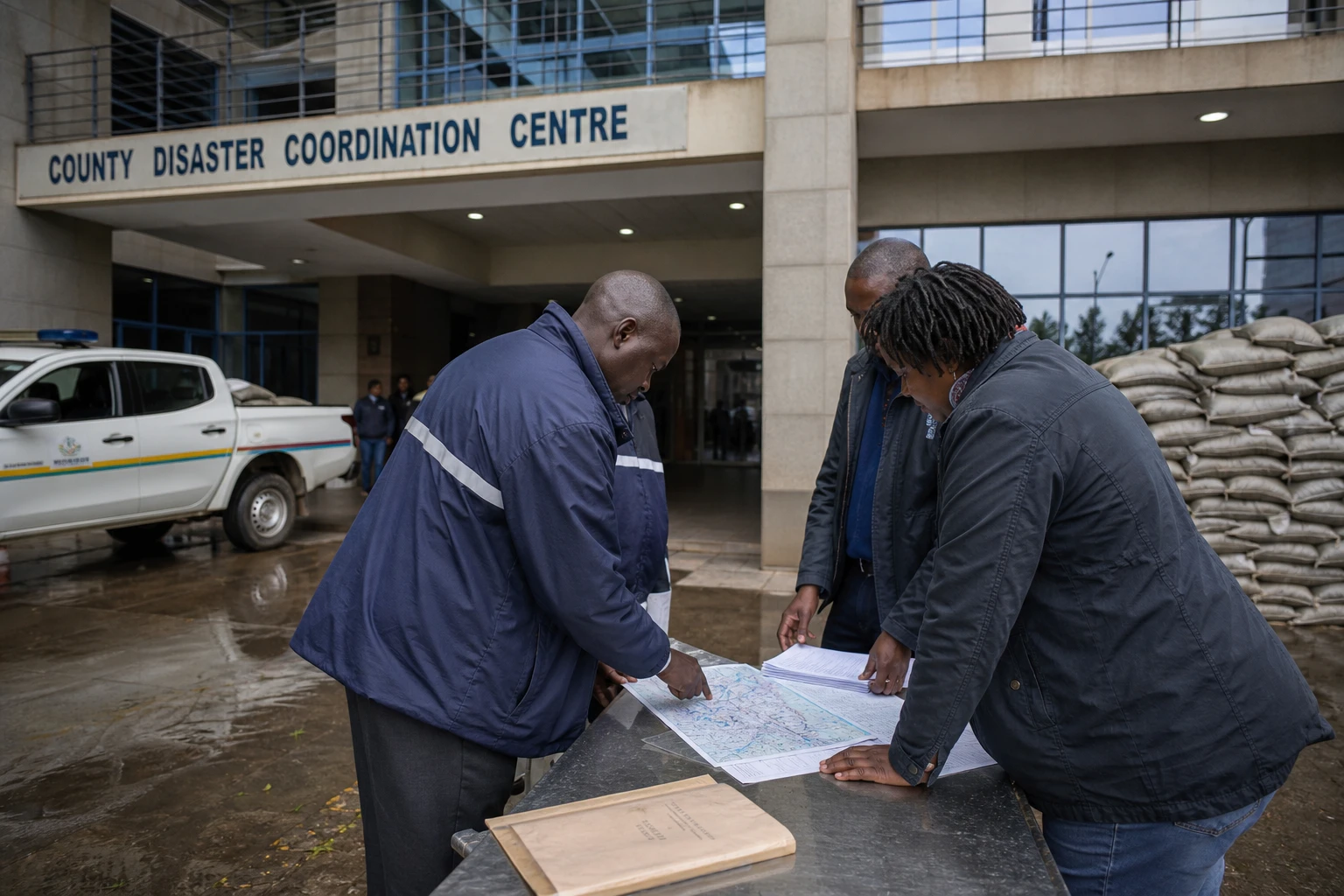
In Nairobi, rain is no longer managed one day at a time
In Kenya, the rainy season is never just a matter of weather. In Nairobi, it affects roads, markets, informal settlements, schools and hospitals. When clouds gather over the country, the issue quickly becomes political, social and logistical. Kenyan authorities have reiterated this by highlighting stronger preparations for the heavy rains expected during the short October-to-December rainy season.
The regional context matters as much as the national one. East Africa receives its warnings through the IGAD Climate Prediction and Applications Centre, based in Nairobi, which had already forecast above-average rainfall in parts of the Greater Horn of Africa in 2023. Kenya, meanwhile, relies on its national meteorological service, disaster management bodies and county authorities to turn warnings into concrete measures.
A prevention plan for cities, roads and at-risk areas
Kenya’s response is based first on mapping vulnerable areas. The idea is simple: identify neighbourhoods exposed to flooding, landslides and infrastructure outages more quickly, to facilitate evacuations. This approach is all the more important because Nairobi and other urban centres have already shown how vulnerable they are to heavy rain, especially when drains are blocked or poorly maintained.
The second pillar is drainage. Clearing drains, cleaning outlets and securing urban hotspots have become visible priorities. As early as 2023, the Kenyan capital itself made repeated announcements about repairing water drainage systems, mobilising municipal resources and monitoring areas along rivers. This preparation addresses a practical reality: in large cities, damage is caused not only by the amount of rain, but also by the condition of the network meant to absorb it.
Authorities are also focusing on public awareness and identifying evacuation centres. Families living along rivers, on unstable slopes or in low-lying areas must be warned quickly and moved if necessary. In this plan, stocks of food, medicine and emergency kits help reduce the time between a warning and assistance. The National Disaster Operations Centre, established to coordinate disaster response, serves as a platform linking the state, counties and humanitarian partners.
Figures from the previous episode left a deep impression
Recent experience also explains the current caution. Kenya has already endured an El Niño-related rainy spell that severely affected the country between October 2023 and May 2024. According to the International Federation of Red Cross and Red Crescent Societies, at least 245 people died, 78,683 households were affected and 45,778 households displaced. The organisation says 42 of the 47 counties were affected.
These figures were included in official Kenyan assessments. The country’s meteorological service reports in its 2023 climate report that rainfall during both the long and short rainy seasons was above average in several areas, with serious effects on agriculture, health, energy and transport. The IGAD regional climate institute, for its part, warned as early as August 2023 that El Niño was likely to intensify October-to-December rainfall in parts of the region.
The Kenya Red Cross had also raised the alarm early about the potential scale of the phenomenon. In the local press, the organisation said 46 of the 47 counties were at risk of above-average rainfall, particularly in the west of the country, the Rift Valley and along the coast. This threat is not abstract. It means roads being cut off, homes weakened, temporary displacement, and health risks from contaminated water.
What these preparations say about Kenya and East Africa more broadly
In Kenya, El Niño is a test of governance. It measures Nairobi’s and the 47 counties’ ability to anticipate events rather than scramble to contain a crisis. It also exposes an economic reality: climate damage hits hardest those who live day to day — small traders, transport operators, families settled on cheaper but more exposed land, and public services already under strain.
The other issue is regional. East Africa shares weather systems, transboundary river basins and warning systems that do not stop at national borders. A severe rainy spell in Kenya can disrupt routes to Uganda, Tanzania, South Sudan or Somalia, and affect trade within the East African Community. This is also why regional actors, such as IGAD through ICPAC, have taken on a central role in climate forecasting.
What happens next will depend on the details in the most exposed counties: how quickly drains are cleared, whether shelters are available and how well the state, local governments and humanitarian actors coordinate. In Kenya, the rainy season is no longer simply a matter of waiting for the skies to open. It is now prepared for as a public safety operation, with one clear imperative: to prevent known warnings from once again turning into a disaster foretold.