Algeria
 Egypt
 Libya
 Morocco
 Sudan
 Tunisia
 Benin
 Burkina Faso
 Cabo Verde
 Côte d'Ivoire
 Ghana
 Guinea
 Guinea-Bissau
 Liberia
 Mali
 Mauritania
 Niger
 Nigeria
 Senegal
 Sierra Leone
 The Gambia
 Togo
 Cameroon
 Central African Republic
 Chad
 DR Congo
 Equatorial Guinea
 Gabon
 Republic of the Congo
 São Tomé and Príncipe
 Burundi
 Comoros
 Djibouti
 Eritrea
 Ethiopia
 Madagascar
 Malawi
 Mauritius
 Mozambique
 Rwanda
 Seychelles
 Somalia
 South Sudan
 Tanzania
 Uganda
 Angola
 Botswana
 Eswatini
 Lesotho
 Namibia
 South Africa
 Zambia
 Zimbabwe
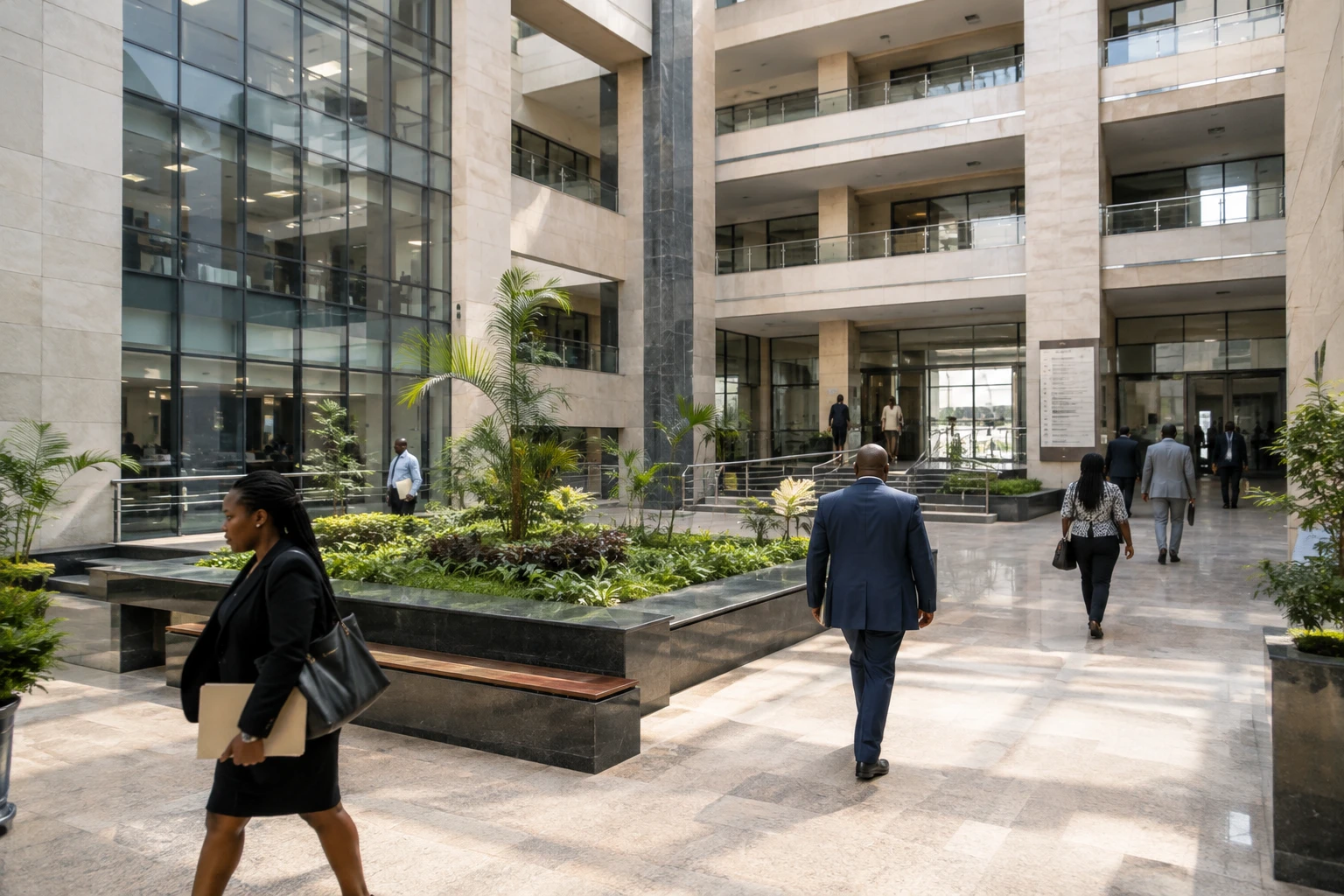
When the state loses revenue and pays more to borrow, the consequences are not confined to public accounts. They can mean less well-funded services, more expensive contracts and increased tax pressure. In Kenya, the World Bank estimates that corruption and illicit collusion weigh on the budget deficit each year, as the country seeks to reconcile debt repayment with social demands.
A fiscal cost that also undermines growth
In its half-yearly economic report on Kenya, published on 4 November 2026, the World Bank estimates that corruption and collusion cost the equivalent of 2% of gross domestic product (GDP) a year. The institution links these practices to higher deficits and additional borrowing needs that accumulate over time. It also points to a “governance premium”: corruption-related risks can increase the cost at which the state borrows.
This estimate does not correspond to a sum directly recovered from public coffers. It describes several mechanisms: tax revenue lost to the state, misdirected or inefficient public spending, inflated costs and diminished investor confidence. The World Bank report details, in particular, the risks associated with public procurement and conflicts of interest, as well as payments for goods or services that do not exist.
The daily lives of Kenyans may also be affected. Small informal payments and demands for bribes particularly affect people who regularly deal with public services. On a larger scale, opaque public contracts can reduce the resources available for roads, schools or healthcare. The report also notes that management weaknesses in the energy sector contribute to high costs, weighing on businesses and competitiveness.
The legacy of the 2024 protests
The debate over corruption is part of a broader crisis of confidence. In June 2024, thousands of Kenyans, particularly young people mobilised online and in the streets, protested against the finance bill and its tax increases. The movement quickly went beyond taxation alone: criticism also targeted state spending, corruption and the quality of public services.
In response to the protests, President William Ruto declined to sign the bill into law. The African Commission on Human and Peoples’ Rights had recalled that peaceful demonstrations are protected by the African Charter. Rights organisations also documented deaths and injuries during the crackdown. This context is a reminder that trust in institutions depends both on how public funds are managed and on how the authorities respond to demands.
Afrobarometer data cited in the World Bank report shed light on this discontent: in 2024, about six in ten Kenyans thought corruption had increased, and nearly seven in ten believed the authorities were not doing enough to fight it. These perceptions do not, on their own, prove that a specific act has taken place. They nevertheless weigh on public acceptance of budgetary choices, particularly when the state asks people to make tax contributions.
Reforms announced, implementation still to be assessed
Kenyan authorities have highlighted several initiatives. Principal Secretary to the Treasury Chris Kiptoo cited more predictable payment deadlines for contractors, a new law on conflicts of interest and the digitalisation of public procurement. The stated aim is to make contracts more transparent and limit opportunities for favouritism or embezzlement.
The World Bank also recommends strengthening public financial management. The tools it mentions include the Treasury Single Account, which centralises state funds, and electronic public procurement. The report stresses, however, the need to move from rules to enforcement: digital systems are not enough without independent checks, effective sanctions and access to contract information.
Conflicts of interest are a particularly sensitive issue. They arise when a public official may benefit from their position or private connections. To prevent such abuses, declarations of interests must be verifiable and oversight bodies must be able to act without political pressure. Progress therefore cannot be measured by the law alone: the investigations launched, rulings handed down and funds recovered will need to be monitored.
The report offers an ambitious comparison: according to its scenarios, governance reforms could make Kenya’s economy up to twenty times larger by 2035. This projection depends on assumptions and is not a guaranteed forecast. Above all, it highlights the potential gap between current performance and a trajectory in which investment and public spending are better protected.
A question of trust for East Africa
Kenya is a major East African economy and a key member of the East African Community (EAC), which brings several countries in the region together for economic and political cooperation. Its ability to finance infrastructure, attract investment and maintain reliable public services therefore extends beyond its borders. Businesses and regional trade also depend on predictable rules and strong institutions.
The World Bank raised its forecast for Kenyan growth in 2026 to 4.6%, from 4.3% previously, after a stronger-than-expected first half of the year. It nevertheless warned of budget overruns and debt-related risks. Kenya’s Treasury, for its part, believes growth could reach at least 5% and considers the institution’s assessment too cautious. This disagreement is a reminder that economic projections remain estimates, not established outcomes.
The next major political milestone will be the general election scheduled for August 2027. By then, voters will be able to judge the reforms by tangible signs: greater transparency in public procurement, investigations pursued to completion and improved services funded by tax revenue. For Kenya, the challenge is not simply to reduce an accounting cost. It is also to rebuild a credible link between the contributions demanded of citizens and what the state gives them in return.