Algeria
 Egypt
 Libya
 Morocco
 Sudan
 Tunisia
 Benin
 Burkina Faso
 Cabo Verde
 Côte d'Ivoire
 Ghana
 Guinea
 Guinea-Bissau
 Liberia
 Mali
 Mauritania
 Niger
 Nigeria
 Senegal
 Sierra Leone
 The Gambia
 Togo
 Cameroon
 Central African Republic
 Chad
 DR Congo
 Equatorial Guinea
 Gabon
 Republic of the Congo
 São Tomé and Príncipe
 Burundi
 Comoros
 Djibouti
 Eritrea
 Ethiopia
 Madagascar
 Malawi
 Mauritius
 Mozambique
 Rwanda
 Seychelles
 Somalia
 South Sudan
 Tanzania
 Uganda
 Angola
 Botswana
 Eswatini
 Lesotho
 Namibia
 South Africa
 Zambia
 Zimbabwe
When water levels reshape life around Baringo
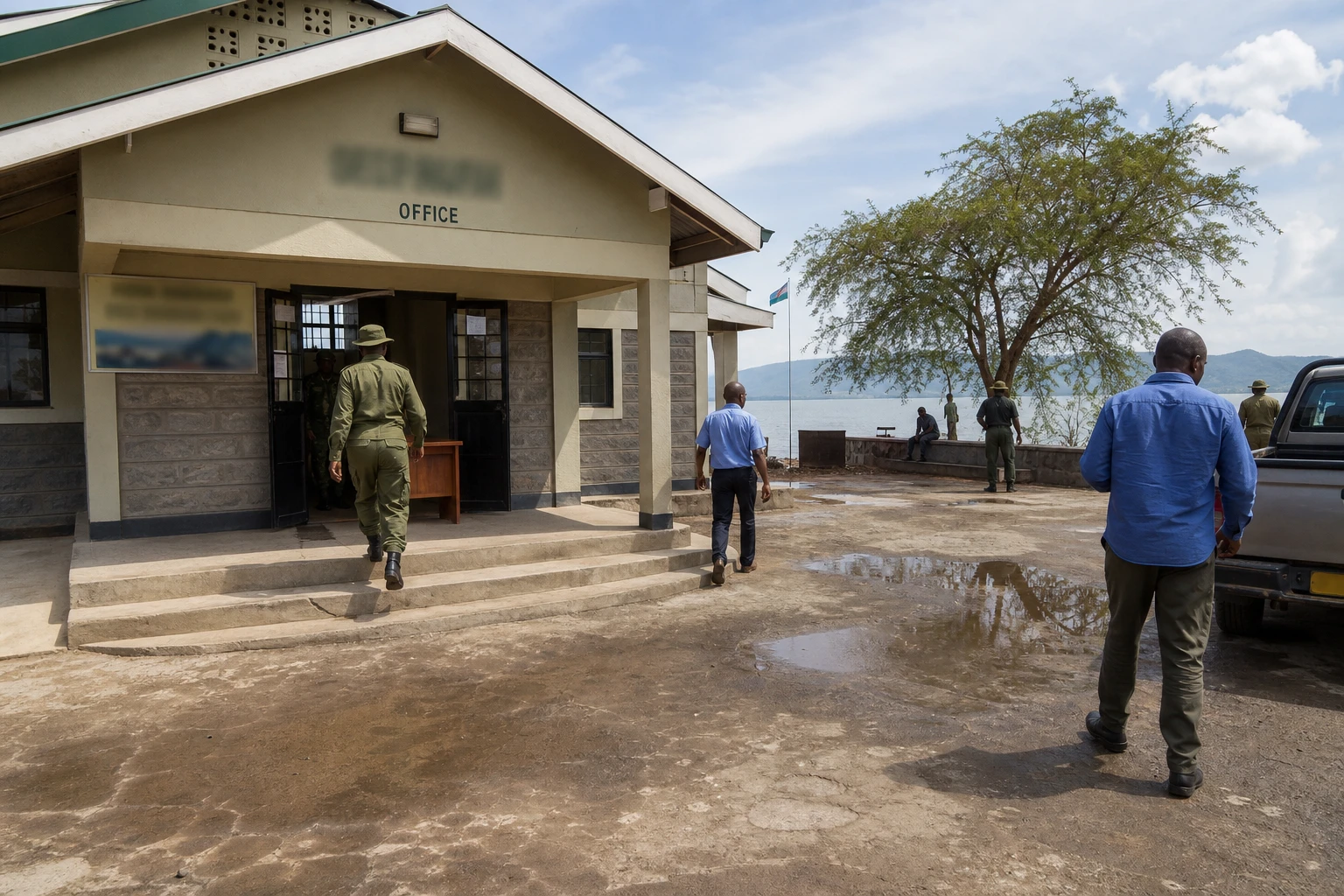
Around Lake Baringo in Kenya, the danger no longer comes only from distance. It comes from the water itself, advancing towards homes, schools and landing points. In this shifting landscape, crocodiles are finding themselves closer to residents, and every daily task — fetching water, reaching a landing site, watching over livestock — now calls for greater caution. The Kenya Wildlife Service has launched an operation to capture and relocate some of the reptiles to reduce risks while continuing to protect the species.
Lake Baringo lies in the Great Rift Valley, an area where climate variations, floods and human pressure combine with great force. For several years, residents of Kampi ya Samaki and neighbouring settlements have watched the shoreline move closer to their homes. Roads have been submerged, businesses relocated and fishing activities disrupted. In this county in north-western Kenya, coexistence between lakeside communities and wildlife is no abstraction: it determines access to work, school and healthcare.
Targeted capture to remove the immediate danger
In early September 2026, Kenya Wildlife Service teams set traps along the shores of Baringo to capture crocodiles considered too close to homes. Kenyan and African media have shown officers asking onlookers to remain quiet so as not to frighten the animal and to encourage it to enter the trap. According to these reports, the most exposed reptiles are then transferred to other state-managed parks and reserves, where crocodiles are less common. The stated aim is twofold: to reduce the risk of attacks and to reintroduce the animals to areas suited to their survival.
This approach says much about wildlife management in Kenya. The country relies on a model in which conservation is not confined to protected areas. It must also take account of communities that live, work and travel near ecosystems. At Baringo, this approach is being tested to the extreme, because rising waters are reducing the space available to everyone. The crocodile is not being “relocated” because it is inherently an intruder, but because conditions in the area have changed to the point where proximity has become dangerous. That is the central tension of the operation.
A human-wildlife conflict amplified by climate change
The situation around Lake Baringo cannot be viewed as a simple wildlife incident. It is part of a broader trend: several lakes in the Rift Valley have expanded in recent years, notably as a result of heavy rainfall and hydrological changes that experts are still debating. Analyses reported in the press show that the surface area of Lake Baringo has increased sharply since 2010, contributing to the submergence of areas that were once dry. At the same time, the space between people and animals has shrunk, increasing the risk of confrontation.
For lakeside residents, the stakes are concrete and immediate. Fishers work in a more dangerous environment. Children travel under closer supervision. Livestock keepers have to protect their herds. Women responsible for water, small businesses or household journeys often bear a greater share of the risk, because their movements depend on the most exposed access points. At Baringo, the crisis is therefore affecting the local economy, as well as family routines and food security. It is putting particular pressure on households that live hand to mouth.
Kenya is not alone in facing this kind of pressure. In several East African countries, changing rainfall, flash floods and competition for space are altering relations between populations and wildlife. Nairobi’s response at Baringo is therefore also a regional signal: conservation must now incorporate climate adaptation, conflict prevention and the protection of livelihoods. This is an issue of direct concern to the East African Community, as well as IGAD, whose member states are facing increasingly visible climate shocks.
What Baringo reveals about Kenya and the region
The case of Baringo is a reminder of a frequently underestimated reality: wildlife becomes more vulnerable as its habitat shrinks, even as it grows more visible and more dangerous to people. By relocating crocodiles, Kenya is seeking to avoid a purely repressive response to the problem. The aim is not to eliminate the animals, but to temporarily separate spaces that have become incompatible. This approach is in keeping with the Kenya Wildlife Service’s position, which presents the operation as both a conservation measure and a public safety response.
The continental significance is clear. In many African lake basins, the boundaries between nature, agriculture, settlement and tourism are shifting rapidly. The debate is no longer only about protecting species, but about how to protect people, local incomes and ecosystems together. At Baringo, Kenya is offering an example of emergency management that could matter elsewhere, provided conservation authorities, counties, researchers and communities are willing to treat climate change as a central factor in human security. The coming weeks will remain decisive, as water levels and wildlife movements will continue to depend on the rains ahead.