Algeria
 Egypt
 Libya
 Morocco
 Sudan
 Tunisia
 Benin
 Burkina Faso
 Cabo Verde
 Côte d'Ivoire
 Ghana
 Guinea
 Guinea-Bissau
 Liberia
 Mali
 Mauritania
 Niger
 Nigeria
 Senegal
 Sierra Leone
 The Gambia
 Togo
 Cameroon
 Central African Republic
 Chad
 DR Congo
 Equatorial Guinea
 Gabon
 Republic of the Congo
 São Tomé and Príncipe
 Burundi
 Comoros
 Djibouti
 Eritrea
 Ethiopia
 Madagascar
 Malawi
 Mauritius
 Mozambique
 Rwanda
 Seychelles
 Somalia
 South Sudan
 Tanzania
 Uganda
 Angola
 Botswana
 Eswatini
 Lesotho
 Namibia
 South Africa
 Zambia
 Zimbabwe
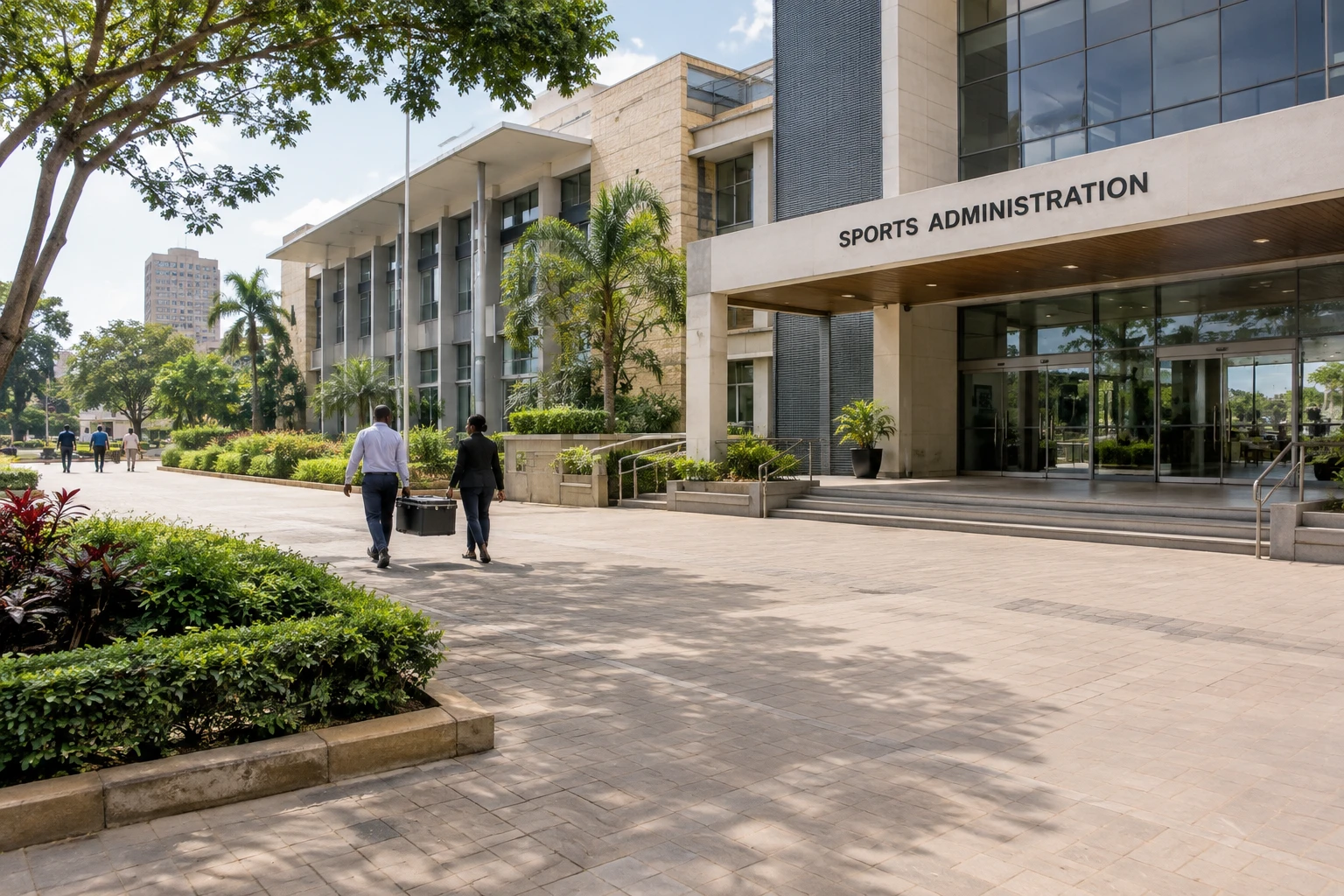
In Iten, Eldoret and Nairobi, an athlete’s career can depend as much on a time on the clock as on confidence in their performances. By hosting the World Athletics Championships in 2029, Kenya gains a major stage. It will also have to show that its testing genuinely protects athletes and the fairness of competitions.
A first for Africa, under the watch of governing bodies
World Athletics has selected Nairobi to host the World Championships in 2029. Kenya will thus become the first African country to stage the competition. The announcement opens up significant prospects for Kenyan athletics and East Africa. It also raises expectations of the national institutions in terms of organisation and sporting integrity.
Anti-doping efforts are part of a trajectory already under way. The Anti-Doping Agency of Kenya (ADAK) was established in 2016. Since then, the country has strengthened its testing and legal framework, while continuing to face cases involving Kenyan athletes. The Athletics Integrity Unit (AIU), the independent body responsible for World Athletics’ integrity rules, regularly publishes disciplinary decisions concerning athletes of various nationalities, including Kenyans.
The regional context also matters. Kenya is a member of the East African Community (EAC), which brings together several neighbouring countries and supports their economic and political cooperation. The movement of prohibited substances and the cross-border routes taken by some networks go beyond the remit of a national agency. Tackling them therefore requires exchanges between investigative services, health authorities and anti-doping organisations, in Kenya and across the region.
Witold Bańka calls for a coordinated response
During a three-day official visit to Nairobi, which ended on 6 October 2026, World Anti-Doping Agency (WADA) president Witold Bańka met public officials, sports representatives and athletes. He stressed the need for cooperation between the state, ADAK, federations and anti-doping organisations. Kenyan media outlet Citizen Digital reports on his meetings and statements in Nairobi.
Bańka notably called for joint action against networks that manufacture or distribute doping substances. ADAK cannot investigate supply chains and prosecute offences involving several public services on its own. The police, health and judicial authorities therefore each have a distinct but complementary role to play.
This approach aligns with legislative work under way. ADAK and a Kenyan parliamentary committee have discussed revising the national anti-doping policy, the 2016 law and the agency’s rules. The stated aim is to align them with the World Anti-Doping Code due to come into force on 1 January 2027. The agency sets out these discussions in its report on its work with the parliamentary committee.
Credibility is built beyond the stadiums
Testing and sanctions are essential, but they are not enough on their own. Independent investigations, clear procedures and athletes’ right to challenge a decision must also be guaranteed. Clear rules protect both clean competitors and the institutions responsible for enforcing sanctions.
The consequences extend beyond the stars of international races. Athletes seeking a place on national teams, coaches, clubs and race organisers also depend on the confidence of sponsors and the public. In regions where running is an economic activity, a damaged collective reputation can weigh on athletes who abide by the rules. Conversely, credible testing distinguishes established cases from suspicions and avoids reducing an entire country to individual offences.
ADAK’s ability to act over the long term also depends on its resources. It needs funding for sample collection, analysis, athlete education and investigations into the distribution of substances. An effective policy must reach elite athletes as well as national competitions, rather than concentrating efforts solely in the capital. The strength of the system will be judged by these tangible results as much as by official statements.
Kenya already has experience hosting international competitions, including the 2021 World Athletics U20 Championships in Nairobi. The 2029 World Championships, however, will be on a different scale. The requirements cover venues, transport and security, as well as confidence in sporting results. The challenge is to deliver a demanding competition for athletes and spectators without conflating the responsibility of institutions with that of individual athletes.
A test for East African sport
Nairobi’s selection gives Africa a new place on the global athletics calendar. It could strengthen local expertise in event organisation, sports medicine and anti-doping testing. For this legacy to extend beyond the week of competition, the capabilities developed will need to remain useful to federations and athletes after 2029.
The next deadline is already close: the revised World Anti-Doping Code comes into force on 1 January 2027. Progress will be measured by changes to legislation, the agency’s operational independence, testing and cooperation against supply networks. The preparation for the World Championships will then show whether these changes work in practice. Nairobi’s promise will depend as much on transparent procedures as on the success of the event.