
 Algeria
 Egypt
 Libya
 Morocco
 Sudan
 Tunisia
 Benin
 Burkina Faso
 Cabo Verde
 Côte d'Ivoire
 Ghana
 Guinea
 Guinea-Bissau
 Liberia
 Mali
 Mauritania
 Niger
 Senegal
 Sierra Leone
 The Gambia
 Togo
 Cameroon
 Central African Republic
 Chad
 DR Congo
 Equatorial Guinea
 Gabon
 Republic of the Congo
 São Tomé and Príncipe
 Burundi
 Comoros
 Djibouti
 Eritrea
 Ethiopia
 Kenya
 Madagascar
 Malawi
 Mauritius
 Mozambique
 Rwanda
 Seychelles
 Somalia
 South Sudan
 Tanzania
 Uganda
 Angola
 Botswana
 Eswatini
 Lesotho
 Namibia
 South Africa
 Zambia
 Zimbabwe
When marriage becomes a public expense
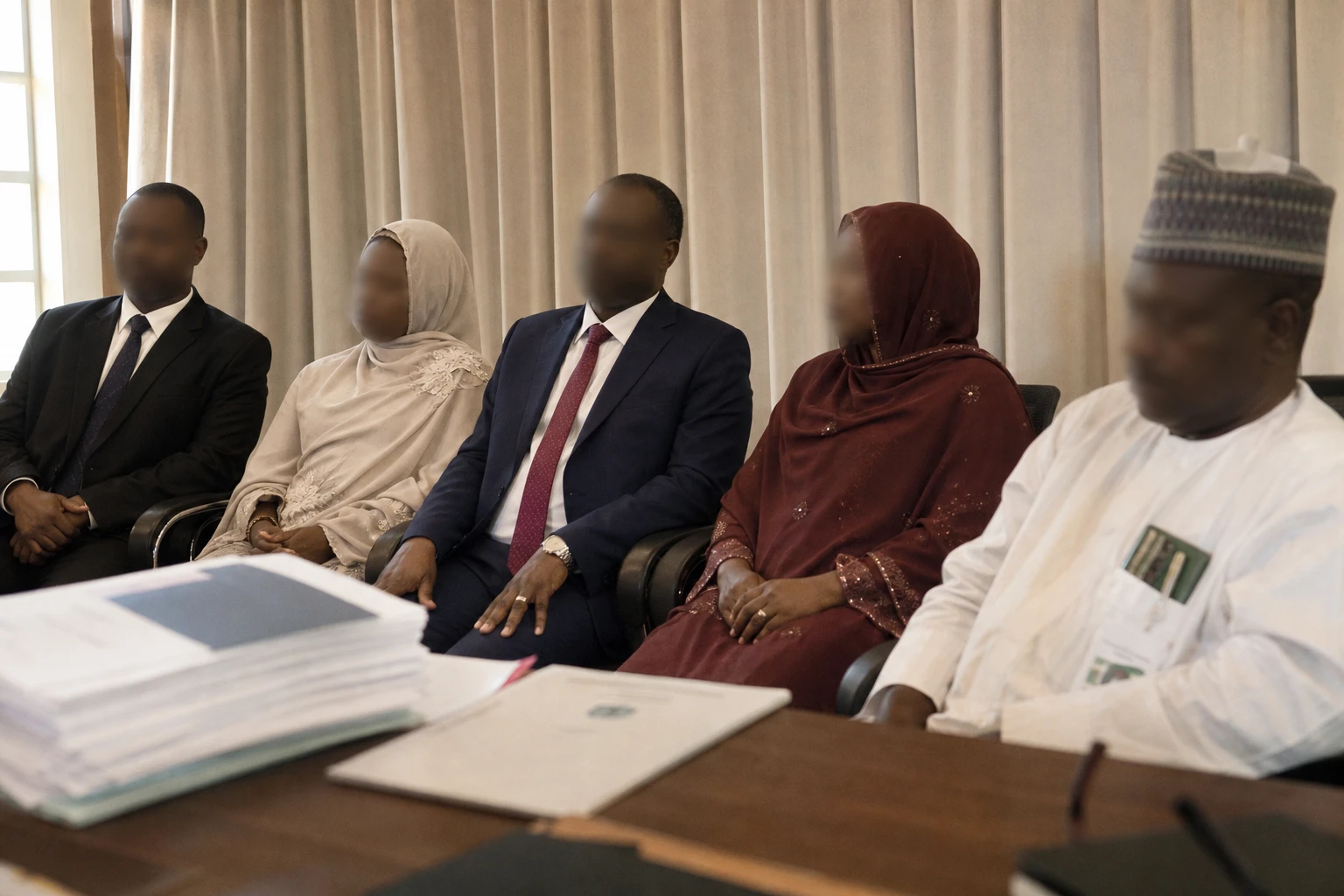
In Kano, in northern Nigeria, marriage has become more than a religious rite. It is also an instrument of social policy. On Friday and Saturday, the state celebrated the union of 1,500 couples at a mass ceremony funded by the authorities, with a support package intended to ease the start-up costs for newly formed households.
The decision says much about the economic conditions facing many Nigerian families. As the cost of living rises, some couples are postponing marriage for lack of funds. Kano’s authorities therefore present the programme as a response to a very concrete obstacle: the inability to pay for a wedding and then the household’s first purchases.
Kano, a key Nigerian state between religious tradition and social policy
Kano is one of Nigeria’s major urban and commercial centres. The state has 44 local government areas and remains an important political hub in the north of the country. The mass wedding programme is run by the state government, under Governor Abba Kabir Yusuf, and coordinated by the Hisbah, the religious and moral authority responsible for certain aspects of social oversight in the state.
The initiative did not come out of nowhere. Mass weddings have been held in Kano for several years. Recent history includes ceremonies for 100 couples in 2012 and then 1,111 couples in 2013. In other words, the state is not launching an improvised experiment; it is reviving a longstanding practice, now part of its social policy toolkit.
The institutional framework also matters. The programme is run by a state administration, not the federal government based in Abuja. It therefore reflects Nigeria’s highly decentralised federal system, in which states can pursue their own social policies, particularly in the north, under the influence of local religious structures.
What the authorities funded, and how couples were selected
According to cross-checked reports, the programme involved 1,500 couples, or 3,000 people, selected from more than 5,000 initial applications. The process was not automatic. Applicants underwent preliminary screening, including medical checks, HIV and hepatitis tests, and verification of genetic compatibility.
Funding announced by Kano officials amounts to 1.5 billion naira, or about $1.1 million at the exchange rate cited in news reports. The couples were due to receive material support after the ceremony: a dowry, furniture, household items and start-up assistance for the poorest. In detail, the press reported a dowry of 200,000 naira per bride, plus essential goods.
Governor Abba Kabir Yusuf described the scheme as a social intervention intended to restore hope, support a dignified family life and ease the difficulties of entering marriage. The Hisbah Council, which organised the operation, said the beneficiaries included widows, divorcees, young women and single men considered financially vulnerable.
The ceremony was held at Kano Central Mosque according to Islamic rites. Women did not attend the signing of the marriage contracts inside the mosque, a separation of spaces in keeping with local religious customs. This is not a minor detail: it shows that the event is simultaneously a public policy, a religious framework and part of the social order of northern Nigeria.
What this changes for families, and what it does not solve
For beneficiaries, public support removes an immediate financial barrier. In an environment where prices are weighing heavily on low incomes, marriage can become a social expectation that is economically out of reach. The programme therefore offers a less costly start, particularly for widows and divorcees, who are more exposed to economic disruption.
But the issue goes beyond the ceremony. Observers cited in the sources note that such a scheme can support family stability, without replacing broader policies on social protection, employment and purchasing power. In other words, Kano is easing one stage of the journey, but it is not addressing income insecurity or the economic pressures that delay marriages.
The programme also says something about the relationship between the state, religion and public assistance in Nigeria. In Kano, social policies sometimes take religious forms, without being the same as private charity. It is a governance choice made by the local executive, which is relying on institutions familiar to the population to make assistance visible, acceptable and immediately understandable.
Finally, this type of initiative may affect different groups in different ways. For poor urban families, it eases a one-off expense. For widowed or divorced women, it can accelerate a fresh start. For the authorities, it also serves as a political marker, making a promise of social protection tangible at a time when economic pressure remains high in the north of the country.
A local practice, but a regional signal
Beyond Kano, the episode is of interest across West Africa. Nigeria, a pillar of ECOWAS, is testing a very concrete form of social support, somewhere between public policy, religious norms and a response to the high cost of living. It is not a solution that can be exported unchanged, but it is an indicator: states are seeking visible ways to reduce the social costs of economic crises.
For Abuja, the question is different. The federal government did not lead the operation. But the image projected by Kano has national significance, showing how some states are filling gaps in social protection in their own way. In a country of more than 200 million people, local responses often carry as much weight as major federal announcements.
Above all, it will be important to watch what happens next: Kano State’s ability to sustain this type of intervention, the programme’s actual cost to its budget, and its place among Governor Abba Kabir Yusuf’s future social priorities. Kano’s budget documents already show that the Hisbah has a dedicated budget line and significant resources, confirming that the mass wedding is not a one-off gesture, but an acknowledged part of a broader public policy.



