Algeria
 Egypt
 Libya
 Morocco
 Sudan
 Tunisia
 Benin
 Burkina Faso
 Cabo Verde
 Côte d'Ivoire
 Ghana
 Guinea
 Guinea-Bissau
 Liberia
 Mali
 Mauritania
 Niger
 Nigeria
 Senegal
 Sierra Leone
 The Gambia
 Togo
 Cameroon
 Central African Republic
 Chad
 DR Congo
 Equatorial Guinea
 Gabon
 Republic of the Congo
 São Tomé and Príncipe
 Burundi
 Comoros
 Eritrea
 Ethiopia
 Kenya
 Madagascar
 Malawi
 Mauritius
 Mozambique
 Rwanda
 Seychelles
 Somalia
 South Sudan
 Tanzania
 Uganda
 Angola
 Botswana
 Eswatini
 Lesotho
 Namibia
 South Africa
 Zambia
 Zimbabwe
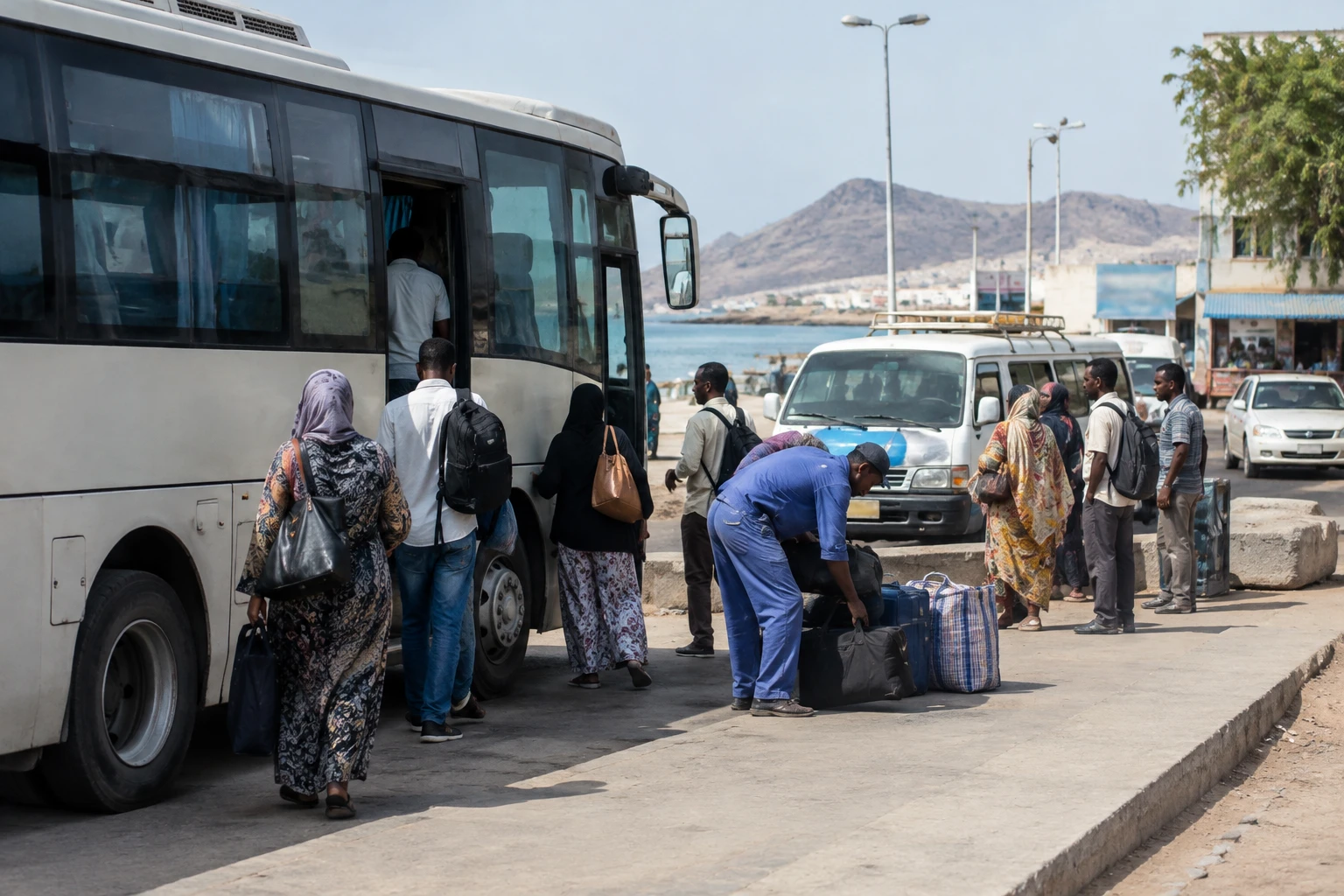
From the Horn of Africa to the Great Lakes, several distinct tensions are testing the same balances: the safety of populations, trust in institutions and the ability of states to contain crises without exporting them. This week, news from Djibouti, the Democratic Republic of the Congo and the Tigray region also shows how political decisions can reverberate far beyond capital cities.
In the Great Lakes, a coalition shifts the balance of power
In the Democratic Republic of the Congo (DRC), Joseph Kabila announced on 12 October in Goma the creation of the Front for the Refoundation of the Nation (FRN). The former president, who led the country from 2001 to 2019, is joining forces with figures from the Congo River Alliance (AFC), a political-military platform linked to the 23 March Movement (M23), an armed group active in the east of the country.
The new front says it intends to fight Félix Tshisekedi’s government “by all means, including force”. Its statement says the FRN succeeds the AFC. However, it does not clearly specify the M23’s status within the new structure. These details are set out in the founding text, the contents of which Actualite.cd has reported. The coalition’s announcement was also confirmed by the Associated Press.
The alliance gives national political weight to a rebellion already established in several areas of eastern Congo. Kinshasa has for several years accused Joseph Kabila of supporting the movement; the former president denies the allegations against him. The new development is now public: armed actors and a major figure from the former ruling class are presenting themselves as part of the same project.
For residents of North Kivu and South Kivu, the immediate concerns remain security, access to services and the possibility of returning home. For the government, the coalition complicates the response to a military crisis that also has a regional diplomatic dimension. Negotiations between Kinshasa and the AFC/M23 are under way in Doha. It remains to be seen whether the change of banner will alter the interlocutors and terms of those discussions, or harden positions.
Horn of Africa: renewed fighting worries neighbours
Further north, tensions between Ethiopia and Eritrea have worsened around Tigray, an Ethiopian region bordering Eritrea. Addis Ababa accuses Asmara of deploying troops there and supporting its adversaries. The Eritrean government rejects these accusations and says Ethiopia is waging war against its country. These remain claims made by the two governments: independent verification is still difficult.
The tensions coincide with renewed fighting between Ethiopian federal forces and the Tigray People’s Liberation Front (TPLF), following the 2020–2022 war. The Pretoria Agreement, signed in November 2022 under the auspices of the African Union, established a cessation of hostilities. The African Commission on Human and Peoples’ Rights is concerned about a new escalation and has called on the parties to protect civilians and respect the agreement.
The dispute extends beyond Tigray. Ethiopia, which has been landlocked since Eritrea’s independence in 1993, is seeking access to the Red Sea. Asmara sees this ambition as a threat to its sovereignty. In a region already marked by rivalries over ports, the Nile and political alliances, a confrontation between the two neighbours could affect the entire Horn of Africa. The African Union has called for restraint and diplomatic dialogue.
Off Djibouti, a deadly migration route
The tragedy off Djibouti is a reminder of the human cost of the sea route to Yemen and the Arabian Peninsula. On the night of 8–9 October, a boat carrying 305 people capsized near Guhere, north of Obock. As of 11 October, the International Organization for Migration (IOM) reported at least 139 deaths and 84 people missing. It said 82 people had survived. The toll is attributed to the organisation and may change as search efforts continue.
Migrants from the Horn of Africa hoping to reach Yemen and then the Gulf countries use this crossing through the Bab el-Mandeb Strait. The war in Yemen has not stopped these departures. Survivors are being cared for in Obock, while families are left waiting and, in some cases, unable to identify those missing. The IOM confirmed the initial figures in its tally published on 11 October.
The shipwreck highlights the dangers of a journey in which smugglers, overcrowded boats and a lack of safe routes expose travellers to death. It does not capture the full range of movements in the region, but underlines the urgent need to better protect people in transit and co-ordinate rescues among countries of origin, transit and destination.
South Africa: the asylum debate is not confined to protests
In South Africa, anti-immigration protests coincided with the withdrawal of an administrative directive on the processing of asylum applications. The Department of Home Affairs announced the decision on 9 October. It said the directive, published in late September, was intended to implement a Constitutional Court ruling but had been issued without the minister’s consultation.
The withdrawal did not end the protests. Demonstrations in Durban and Johannesburg descended into violence and disrupted the operation of reception centres, according to press reports. The issue lies at the intersection of public services’ capacity to process applications, respect for asylum seekers’ rights and political tensions around immigration. Withdrawing a circular does not resolve either administrative difficulties or the risk of violence against foreign nationals.
Detention brings press freedom back into focus
In Algeria, French sports journalist Christophe Gleizes is approaching 500 days in detention. His parents and Reporters Without Borders have called on the French authorities to intervene to secure his release. The journalist was sentenced to seven years in prison in June 2025, according to RSF, which disputes the grounds for his conviction.
The case comes amid sensitive relations between Paris and Algiers. The family’s appeals express their concern, but do not prejudge future judicial or diplomatic decisions. For the media and press freedom advocates, the case is a reminder of the importance of judicial safeguards and the protection of journalists, including when they work on politically sensitive subjects.
In the coming days, several developments will bear watching: the progress of talks on eastern DRC, implementation of the Pretoria Agreement in Ethiopia and the outcome of search efforts off Djibouti. In each case, the stakes go beyond leaders’ statements: they are also measured in safety, rights and the practical options available to populations.