Algeria
 Egypt
 Libya
 Morocco
 Sudan
 Tunisia
 Benin
 Burkina Faso
 Cabo Verde
 Côte d'Ivoire
 Ghana
 Guinea
 Guinea-Bissau
 Liberia
 Mali
 Mauritania
 Niger
 Nigeria
 Senegal
 Sierra Leone
 The Gambia
 Togo
 Cameroon
 Central African Republic
 Chad
 DR Congo
 Equatorial Guinea
 Gabon
 Republic of the Congo
 São Tomé and Príncipe
 Burundi
 Comoros
 Djibouti
 Eritrea
 Ethiopia
 Kenya
 Madagascar
 Malawi
 Mauritius
 Mozambique
 Rwanda
 Seychelles
 Somalia
 South Sudan
 Tanzania
 Uganda
 Angola
 Botswana
 Eswatini
 Lesotho
 Namibia
 Zambia
 Zimbabwe
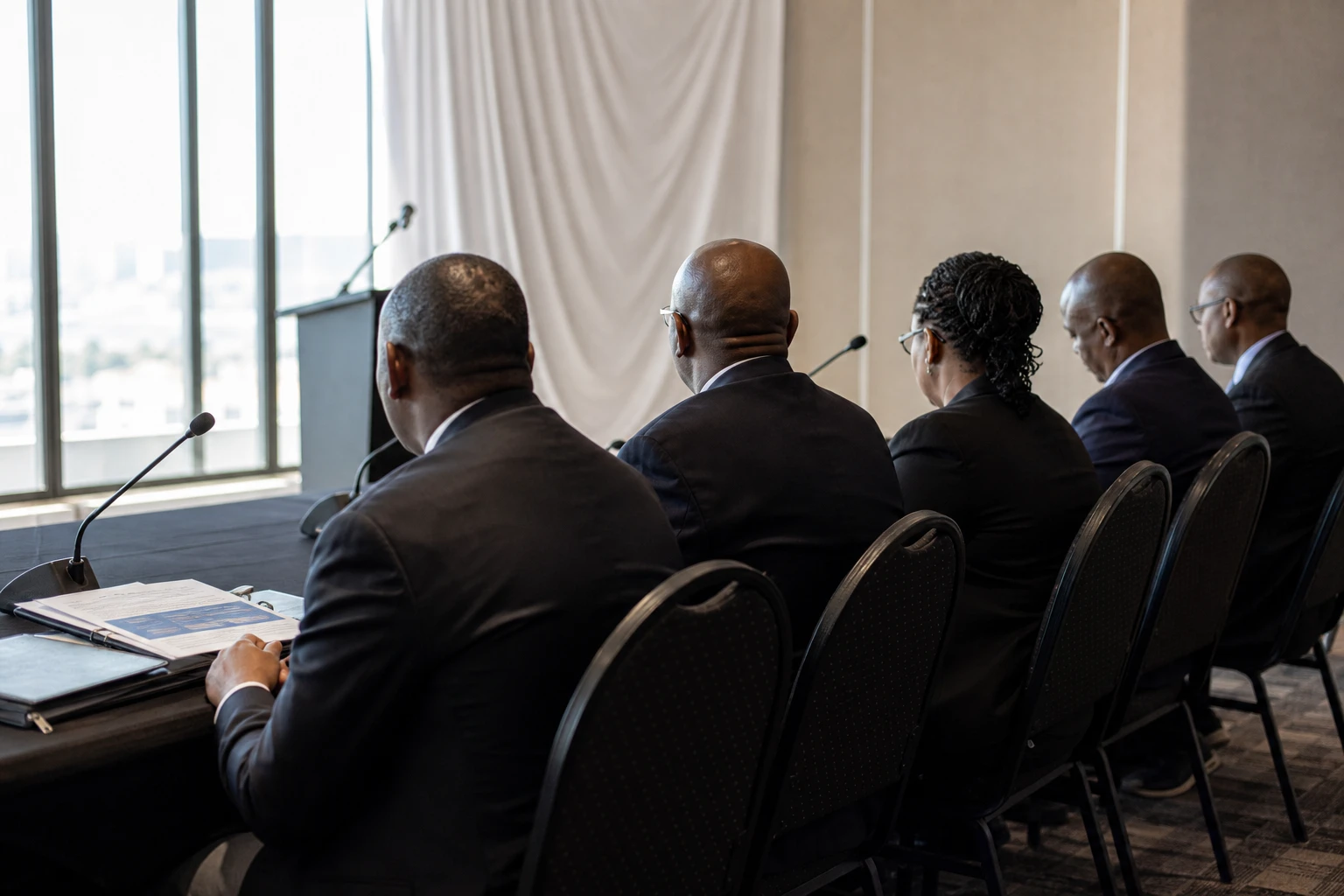
When waste piles up, it is often the city itself that reveals its limits
In Johannesburg, the issue is no longer just the rubbish visible on street corners. It points to something broader: how a major South African city is coping with — or no longer coping with — its rapid growth. When trucks are delayed, disposal sites reach capacity and illegal dumps multiply, poorer neighbourhoods are the first to bear the brunt.
In a city in Gauteng province, the country’s economic powerhouse, waste collection is handled by Pikitup, Johannesburg’s municipal waste management company. The issue is therefore far from marginal. It affects public health, the delivery of local services and the credibility of an urban administration already under pressure. The municipality also recently stressed that tackling illegal dumping requires coordinated operations with other city services, evidence that this is no longer simply a cleanliness problem.
In Johannesburg, collection no longer always keeps pace
The diagnosis has been clear for several months. In its 2025/26 plan, Pikitup says it recorded 2,033 illegal dumping sites. The document also notes that these sites are “moving targets” — in other words, hotspots that keep reappearing. The same plan links this challenge to a range of responses: awareness-raising, neighbourhood partnerships, hotspot monitoring and targeted interventions.
On the ground, the effects are immediate. When some facilities reach capacity or collection routes break down, waste accumulates faster than it is removed. In 2025 and 2026, the city also stepped up clean-up campaigns and rehabilitation operations in several areas, from Roodepoort to Alexandra, a sign that pressure remains high.
The problem is not merely a logistical one. Municipal authorities acknowledge that waste collection is one of the basic services expected of South Africa’s 257 municipalities, alongside water and sanitation. When this link weakens, discontent quickly spills onto the streets and then into municipal councils.
What the breakdown reveals: finances, fleet, labour and governance
Johannesburg’s crisis has no single cause. Social tensions, budget constraints and an ageing fleet are regularly cited as factors holding the service back. This is consistent with national data: South African municipalities are under growing pressure to provide basic services, while cities account for a large share of local spending and residents’ expectations.
The budget itself tells part of the story. In its 2025/26 plan, Pikitup has set aside funding to strengthen some capacities, finance cooperatives and contain fleet costs. At the same time, the city has launched more visible clean-up operations, but these actions are often corrective. They address the symptoms, not always the structural causes.
The informal sector also complicates matters. In Johannesburg, waste pickers, private hauliers and small-scale collectors are meeting demand created by the unreliability of the official service. This can ease pressure in some neighbourhoods, but it also creates a parallel waste market that is sometimes useful and sometimes chaotic, and partly beyond municipal control. Pikitup has highlighted programmes for separation at source and cooperation with waste-picking networks, showing that the city is seeking to bring these players into the system rather than ignore them.
For residents, the impact is tangible. Illegal dumps degrade the local environment, attract pests and make everyday life more difficult. For businesses, they damage the image of commercial streets and can deter visitors. For the municipality, they increase clean-up costs and divert resources that could be used for routine maintenance. Pikitup estimates that littering and illegal dumping already cost Johannesburg tens of millions of rand a year.
An urban problem that extends beyond South Africa
Johannesburg is not an isolated case. African cities are now producing waste faster than collection, sorting and treatment capacity can adapt. Rapid urbanisation, often outpacing public investment, is putting pressure on landfills, local budgets and recycling systems. UN-Habitat and the United Nations Environment Programme have for several years stressed the need to build more circular, better-equipped cities.
This is a continent-wide trend. African cooperation platforms for clean cities, such as the African Clean Cities Platform, were created specifically to share technical solutions, strengthen local skills and facilitate investment in waste management. In other words, the challenge is not simply to “clean up” more. It is also to plan, fund and organise the waste chain better, from neighbourhoods to treatment facilities.
In South Africa, the issue also has political weight. A metropolis such as Johannesburg often serves as a testing ground for other cities in SADC, the Southern African Development Community, where urbanisation, mobility and employment pressures create comparable challenges. If the country’s economic capital struggles to stabilise its collection service, the signal it sends extends well beyond its municipal borders.
The real test now will be the city’s ability to turn one-off campaigns into a lasting service. In South Africa, as elsewhere on the continent, waste is no longer a secondary issue. It has become an indicator of urban governance, territorial justice and quality of life.