Algeria
 Egypt
 Libya
 Morocco
 Sudan
 Tunisia
 Benin
 Cabo Verde
 Côte d'Ivoire
 Ghana
 Guinea
 Guinea-Bissau
 Liberia
 Mali
 Mauritania
 Niger
 Nigeria
 Senegal
 Sierra Leone
 The Gambia
 Togo
 Cameroon
 Central African Republic
 Chad
 DR Congo
 Equatorial Guinea
 Gabon
 Republic of the Congo
 São Tomé and Príncipe
 Burundi
 Comoros
 Djibouti
 Eritrea
 Ethiopia
 Kenya
 Madagascar
 Malawi
 Mauritius
 Mozambique
 Rwanda
 Seychelles
 Somalia
 South Sudan
 Tanzania
 Uganda
 Angola
 Botswana
 Eswatini
 Lesotho
 Namibia
 South Africa
 Zambia
 Zimbabwe
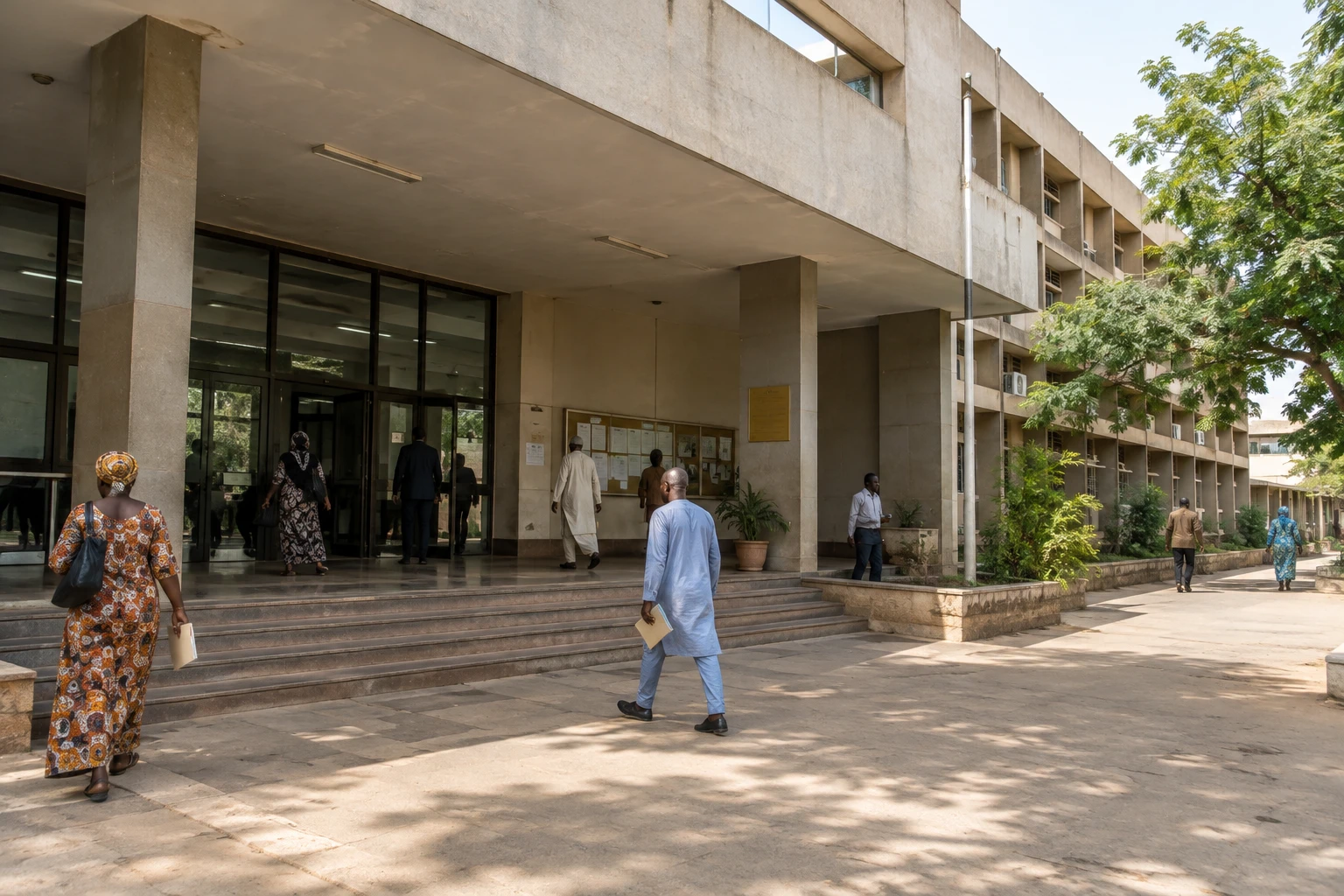
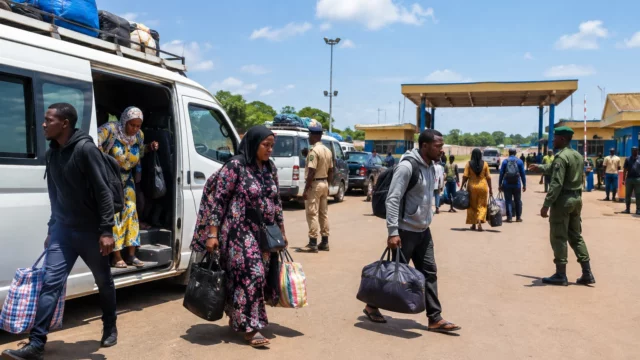
In the border areas of Mali, Burkina Faso and Niger, rivalry between armed groups is adding to the fighting against national forces. Local communities find themselves caught in power struggles that cross borders and complicate travel, trade and access to services.
A border turned into a battleground
The central Sahel connects rural areas and transport routes across three countries. Since 2023, Mali, Burkina Faso and Niger have been united within the Alliance of Sahel States (AES), a political and security partnership between military governments. But insecurity, too, crosses from one territory to another.
JNIM, or the Group for the Support of Islam and Muslims, is affiliated with al-Qaeda. The Islamic State in the Sahel (IS Sahel) is part of the Islamic State organisation. The two movements are vying for territory, routes and influence over populations. Their clashes do not put an end to operations against the armies of the three countries.
Data cited by the ACLED organisation show that this rivalry now extends beyond the tri-border area alone. In its regional assessment for July 2026, it describes western Niger as a major hotspot of competition, with possible repercussions in Mali, Burkina Faso and as far as neighbouring countries on the Gulf of Guinea.
Claimed casualty figures, but no verification
New clashes reportedly took place on 9 October in Burkina Faso’s Oudalan province, particularly near Ganadaouri. The area is close to the borders with Mali and Niger. Clashes were also reported around Tessit, in Mali’s Ménaka region, as well as near localities in northern Burkina Faso.
IS Sahel says, in a statement circulated by its propaganda agency Amaq, that it killed about 400 JNIM fighters. The figure has not been independently confirmed. It must therefore be treated as a claim, not an established count. No verified figures are available here to specify the losses on either side or the immediate consequences for civilians.
This caution is essential. In a war in which armed groups seek to impose their own narrative, figures announced also serve communication and recruitment. On 16 October, available information points to an intensification of the clashes, but does not make it possible to measure their human toll with certainty.
The rivalry is longstanding. According to ACLED analyst Héni Nsaibia, cited by TV5MONDE, more than 320 clashes between the two organisations were reportedly recorded between 2019 and September 2026, with about 2,200 deaths. These estimates give an indication of how long the phenomenon has lasted, without constituting a comprehensive tally of victims of violence in the Sahel.
For residents, overlapping insecurity
Competition between JNIM and IS Sahel does not mean that populations benefit from a decline in violence. Both groups continue their operations against national forces and impose their authority in some areas. Residents may face threats, forced levies, movement restrictions or reprisals, depending on local circumstances.
The effects vary from place to place. Villages located along contested routes risk seeing trade and travel disrupted. Markets, herders and small traders depend on roads that sometimes cross several areas of influence. In towns, the consequences may be felt through supply disruptions or difficulties transporting goods.
For Bamako, the issue is also strategic. The presence of JNIM and IS Sahel in border areas tests the Malian state’s ability to protect people beyond major urban centres. Military operations and external partnerships form part of the response, but cross-border movements also require intelligence and sustained co-ordination with neighbours.
This issue arises in a reshaped regional context. The three AES countries have left ECOWAS, the Economic Community of West African States, and are pursuing their own security co-operation. Attacks and clashes that cross borders nevertheless show that threats do not follow the same lines as political alliances.
A test for Sahelian co-operation
Clashes between rival groups should not be mistaken for a general decline in violence. IS Sahel may gain ground against JNIM in one area, while either group retains the capacity to act elsewhere. The balance of power shifts according to local alliances, available resources and army operations.
For the Malian, Burkinabè and Nigerien authorities, the challenge is to protect communities while preventing the conflict between armed groups from spreading further. Residents of border regions, often far from decision-making centres, are directly exposed to the consequences of these shifts. Public services and local economic networks are also affected.
Across West Africa, the course of the fighting warrants particular attention because instability is already spreading towards western Niger and areas near coastal countries. The next indicator will not be only the number of deaths claimed by each side. It will also be important to watch whether the clashes move, whether roads remain passable and whether the region’s states can exchange information despite their political differences.
At this stage, the most dramatic figures remain unverified. What is established is the persistence of armed rivalry in a cross-border area. For the populations of Mali and its neighbours, the multiplication of fronts may mean greater uncertainty, even when armed groups are weakening one another.