Algeria
 Egypt
 Libya
 Morocco
 Sudan
 Tunisia
 Benin
 Burkina Faso
 Cabo Verde
 Côte d'Ivoire
 Ghana
 Guinea
 Guinea-Bissau
 Liberia
 Mali
 Mauritania
 Niger
 Nigeria
 Senegal
 Sierra Leone
 The Gambia
 Togo
 Cameroon
 Central African Republic
 Chad
 DR Congo
 Equatorial Guinea
 Gabon
 Republic of the Congo
 São Tomé and Príncipe
 Burundi
 Comoros
 Eritrea
 Ethiopia
 Kenya
 Madagascar
 Malawi
 Mauritius
 Mozambique
 Rwanda
 Seychelles
 Somalia
 South Sudan
 Tanzania
 Uganda
 Angola
 Botswana
 Eswatini
 Lesotho
 Namibia
 South Africa
 Zambia
 Zimbabwe
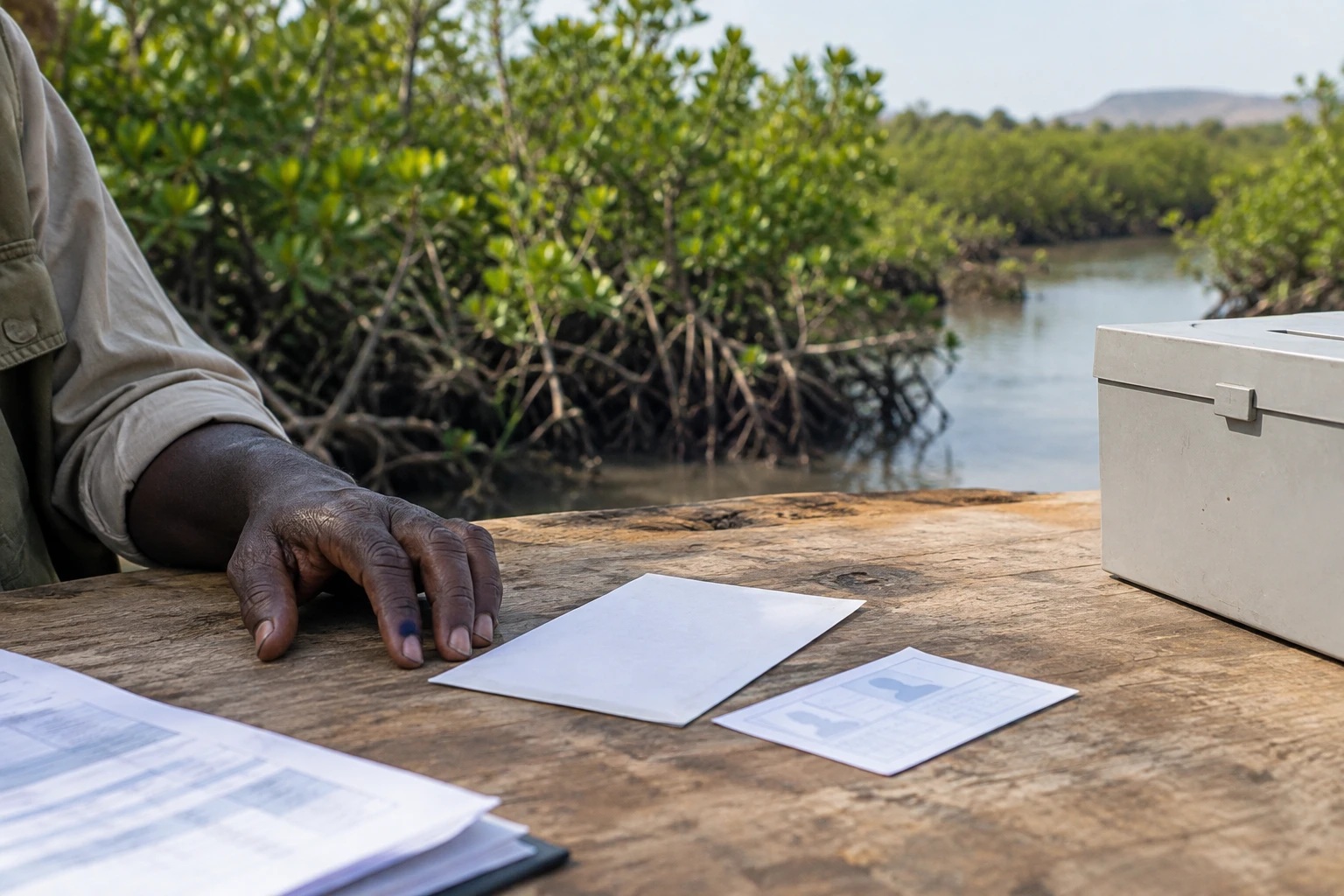
At Godoria, in northern Djibouti, the mangrove is more than a green strip between land and sea. It protects the coastline, shelters species and supports local activities. But its future also depends on very practical factors: tidal flows, rainfall and changes in sea level.
A coastal site at the meeting point of two environments
The mangrove is in the Obock region, on the northern coast, near the Bab-el-Mandeb Strait. This passage links the Red Sea to the Gulf of Aden. Godoria is part of an ecological complex that also includes the mangroves of Khor Angar and Ras Siyyan, as well as the Seven Brothers archipelago.
In 2025, UNESCO included this Djiboutian complex in its World Network of Biosphere Reserves. The recognition covers a much larger area than the mangrove alone: it brings together terrestrial, coastal and marine environments where the influences of the Red Sea and Indian Ocean meet. A biosphere reserve seeks to reconcile conservation, research and human activities; it does not, in itself, mean that all activity is prohibited there.
Godoria is described as the country’s largest mangrove. The Djiboutian dossier submitted to UNESCO’s World Heritage Centre places the three main northern complexes between Obock and Doumeira. It notes the presence of several mangrove species, including Ceriops tagal, Avicennia marina and Rhizophora mucronata.
A forest monitored by satellite, with mixed signs
A study published in 2026 in the scientific journal Scientific Reports examined Landsat images covering the period 1987-2022. It estimates that mangrove cover declined by 30.5% between 1987 and 2012, before partially recovering by 25.3% between 2015 and 2022. The decline was therefore not followed by continuous loss: the researchers observe a trajectory of degradation followed by regeneration.
This recovery is uneven. The study reports signs of regreening in the northern and central sectors, while some low-lying areas in the south remain vulnerable. The authors link changes in mangrove cover in particular to sea-level anomalies and rainfall. They note, however, that satellite imagery cannot replace regular field observations and that human pressures could not be systematically measured across the entire period.
These findings qualify the idea of a uniformly resilient ecosystem. Where water flows and sedimentation conditions allow, the mangrove can regain ground. Elsewhere, planting alone may not be enough if tidal exchanges remain blocked. Restoration must therefore take local hydrology into account—that is, the movement and availability of water.
Ecological benefits linked to livelihoods
Mangrove roots provide shelter for fish and crustaceans, particularly young individuals. The mangrove also helps stabilise coastal soils. These functions matter directly to communities that depend on artisanal fishing and other coastal resources. The health of the ecosystem and local activities are therefore closely linked.
A project supported by the Global Environment Facility’s Small Grants Programme and the UNDP combined restoration with local income generation. Run with the Association for the Promotion of Fishing and Ecotourism in Godoria, it included reforestation, beekeeping and clam farming. The project record states that it was implemented from July 2019 to December 2021 and is complete. It reports nine hectares of land managed sustainably according to its indicators.
This experience illustrates a key challenge: conservation cannot rely solely on international recognition. It also depends on residents’ participation, monitoring results and economic solutions compatible with protecting the site. The development of regulated ecotourism could be considered, but it would require rules, appropriate infrastructure and a clear sharing of benefits. Available data do not support presenting Godoria as a destination already developed on a large scale.
Regional significance, decisions to be monitored
The reserve links several habitats important for marine species and migratory birds. UNESCO’s report on Djibouti’s nomination estimates that the area lies on a corridor used each year by 85,000 to 245,000 migratory birds of prey. This figure concerns the wider reserve area, not Godoria’s mangrove alone. It should not be confused with the estimate of more than 1.5 million birds moving through the straits, cited by the Djiboutian organisation Djibouti Nature on the basis of bird-monitoring data.
Across East Africa, the site is a reminder that protecting arid coastlines is relevant to biodiversity, fishing and adaptation to climate variations alike. For Djibouti, the challenge now is to translate biosphere status into regular scientific monitoring and management carried out in consultation with communities. Future assessments of the mangrove’s condition and restoration efforts will show whether the recovery observed by satellite is confirmed and extends to areas that remain degraded.