Algeria
 Egypt
 Libya
 Morocco
 Sudan
 Tunisia
 Benin
 Burkina Faso
 Cabo Verde
 Côte d'Ivoire
 Ghana
 Guinea
 Guinea-Bissau
 Liberia
 Mali
 Mauritania
 Niger
 Nigeria
 Senegal
 Sierra Leone
 The Gambia
 Togo
 Cameroon
 Central African Republic
 Chad
 DR Congo
 Equatorial Guinea
 Gabon
 Republic of the Congo
 São Tomé and Príncipe
 Burundi
 Comoros
 Djibouti
 Eritrea
 Kenya
 Madagascar
 Malawi
 Mauritius
 Mozambique
 Rwanda
 Seychelles
 Somalia
 South Sudan
 Tanzania
 Uganda
 Angola
 Botswana
 Eswatini
 Lesotho
 Namibia
 South Africa
 Zambia
 Zimbabwe
An energy issue that goes beyond nuclear power
In Addis Ababa, the challenge is not simply to produce more electricity. Above all, it is to build a credible decision-making chain, with rules, oversight and expertise capable of lasting over time. For Ethiopia, that is what will distinguish industrial ambition from mere political posturing.
The country is moving forward in a particular context. Its electricity system still relies heavily on hydropower, making it sensitive to climate fluctuations and droughts. The International Energy Agency also notes that the Horn of Africa is under severe water stress, while electricity demand is rising with urbanisation and industrialisation. The African Development Bank, for its part, estimates that Ethiopia is targeting 17.1 GW of installed capacity by 2030, up from about 6.1 GW in 2024.
Regulators, not just industrial partners
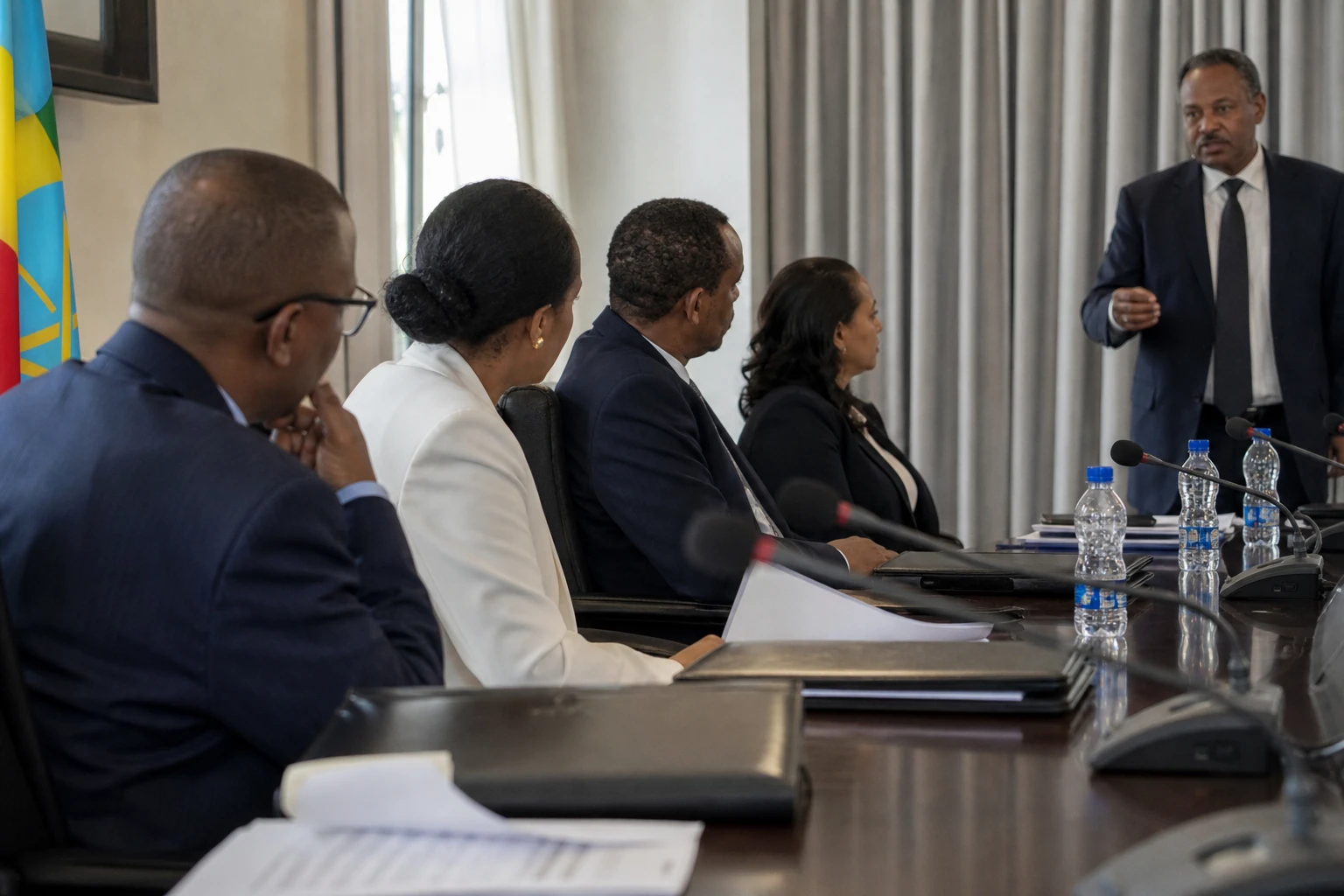
On 4 August in Addis Ababa, the Ethiopian Technology Authority brought together public sector actors and international partners to examine draft regulations for nuclear installations. According to an account carried by Ethiopia’s national news agency, the US Nuclear Regulatory Commission and Russia’s nuclear oversight agency, Rostechnadzor, were among those involved in the consultation. The stated aim is clear: to establish a future safety framework before any major industrial steps are taken.
This episode says much about the approach chosen by Addis Ababa. Ethiopia is not relying on a single side. It is consulting regulators from different traditions, while keeping the International Atomic Energy Agency as its technical reference. In civil nuclear power, this is crucial: licensing, inspection, staff training, waste management and emergency preparedness are not administrative details, but the very heart of the programme. The IAEA also stresses the need for a robust legal and regulatory framework before embarking on a nuclear programme.
ETA Director-General Solomon Getachew said that mechanisms for training, licensing, inspection and enforcement are being designed in line with IAEA standards. This clarification matters. It shows that Ethiopia is seeking to frame its efforts in the language of international standards, rather than as a political race between powers.
Moscow in the lead, Washington in the mix
In practice, Russia remains the project’s most advanced industrial partner. In March 2026, Ethiopia and Rosatom signed a strategic roadmap for nuclear development, following a cooperation agreement signed in 2025. Ethiopia’s ENA news agency described the document as a structured plan to guide cooperation on technical, institutional and operational matters.
The United States does not play the same role. Its presence, through the Nuclear Regulatory Commission, is primarily focused on safety expertise and regulatory consultation. This distinction matters. Moscow is leading the industrial strand, while Washington mainly serves as a regulatory reference in a project where Ethiopia wants to avoid reliance on a single partner. In Addis Ababa, this plurality also signals that the programme is open, even as the Russian axis remains central.
The approach is not entirely new. As early as 2025, Ethiopian officials were speaking of a roadmap with Russia, a future national nuclear commission and support from the IAEA. In December 2025, Addis Ababa officially launched its nuclear programme and put the Ethiopian Nuclear Energy Commission into operation, after it was established in October of the same year. This places the 4 August forum in a longer sequence: regulation is following the project, but not far behind it.
What this means for Ethiopia’s economy
For the Ethiopian government, nuclear power addresses three needs at once: securing supply, supporting industrialisation and reducing the electricity system’s vulnerability to climate-related shocks. The argument is consistent with the country’s recent national strategy. Ethiopia is already investing in major dams, renewables and regional interconnections, but is also seeking a dispatchable source that is less dependent on the seasons.
For the population, the issue remains a tangible one. In urban centres, the pressure is on supply reliability, power cuts and the cost of expanding the grid. In rural areas, the priority remains basic access. Nuclear power will not bridge this gap on its own, but it could strengthen the generation base underpinning electrification, light industry, hospitals, laboratories and some public services. This is also how the Ethiopian Nuclear Energy Commission describes its mandate.
However, a cautious perspective is warranted. A nuclear programme is costly, lengthy and highly demanding institutionally. Ethiopia will have to train engineers, establish a genuinely independent regulator, plan for decommissioning costs and organise waste management before any plant is commissioned. The IAEA stresses that safety must be considered from the outset, not added at the end.
Resonance across Africa beyond Addis Ababa
Ethiopia’s plans are of interest throughout East Africa. Across the region, energy needs are growing rapidly, while states seek to diversify their energy mixes without deepening an already heavy reliance on imported hydrocarbons. Ethiopia, a member of IGAD, also wants to establish itself as a leading player in the Horn of Africa’s strategic infrastructure. Its nuclear programme is therefore part of a national strategy as well as a regional contest for credibility.
At continental level, the signal is broader. Addis Ababa is showing that an African country can seek to build a regulatory framework before talking only about reactors. This is an important approach for the African Union, regional organisations and the continent’s regulators. The real test now will be turning words into standards, training, inspections and verifiable public decisions in the coming months.