Algeria
 Egypt
 Libya
 Morocco
 Sudan
 Tunisia
 Benin
 Burkina Faso
 Cabo Verde
 Côte d'Ivoire
 Ghana
 Guinea
 Guinea-Bissau
 Liberia
 Mali
 Mauritania
 Niger
 Nigeria
 Senegal
 Sierra Leone
 The Gambia
 Togo
 Cameroon
 Central African Republic
 Chad
 DR Congo
 Equatorial Guinea
 Gabon
 Republic of the Congo
 São Tomé and Príncipe
 Burundi
 Comoros
 Djibouti
 Eritrea
 Ethiopia
 Kenya
 Madagascar
 Malawi
 Mauritius
 Mozambique
 Rwanda
 Seychelles
 Somalia
 South Sudan
 Tanzania
 Uganda
 Angola
 Botswana
 Eswatini
 Lesotho
 South Africa
 Zambia
 Zimbabwe
In Walvis Bay and Windhoek, uranium is once again at the centre of discussions about Namibia’s mining future. The Etango project has reached a decisive milestone with the arrival of CNNC Overseas Limited, a subsidiary of Chinese state-owned nuclear group CNNC. The deal brings the country closer to new production, but also strengthens China’s position in a sector already largely shaped by Asian capital.
A project at the heart of Namibia’s uranium basin
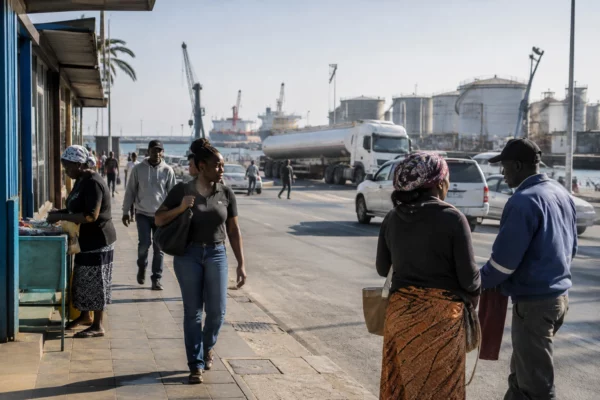
Etango is in the Erongo region, close to several of Namibia’s major uranium operations. This mining zone stretches between the Namib Desert and the logistics corridor linking industrial sites to the port of Walvis Bay.
Namibia has produced uranium since 1976, when the Rössing mine began operations. The country is also home to Husab, operated by Swakop Uranium, and Langer Heinrich, which was restarted by Australia’s Paladin Energy. Uranium is therefore already a key component of Namibia’s mining exports.
This concentration of industry gives Etango a significance that extends beyond Bannerman Energy, an Australian company listed in Australia and Namibia. The project is to be integrated into an environment where infrastructure, skilled labour and supply chains are already in place.
China secures a new stake
On 9 September 2026, Bannerman Energy announced that the conditions precedent to CNOL’s strategic investment had been satisfied or waived. The joint venture was expected to be legally finalised before the end of September.
The agreement reached in February provides for an initial Chinese investment of $294.5 million, with a possible reimbursement of up to $27 million to cover some of the expenditure already incurred. The total package could therefore reach $321.5 million.
Under the terms disclosed by Bannerman, CNOL is to hold 45% of the joint venture responsible for the project. Bannerman will retain 55%. The joint venture itself will control 95% of the Etango project, while the remaining 5% is linked to a funding mechanism backed by the One Economy Foundation.
The difference between the stake in the joint venture and the direct economic interest in the project explains some of the varying percentages cited in public communications. The key point, however, remains the same: CNOL is funding construction in exchange for a significant stake and privileged access to future production.
The agreement provides for CNOL to buy 60% of the uranium produced over the life of the mine. Bannerman will retain the right to market the remaining 40%. This offtake clause, or long-term purchase commitment, gives the project an industrial outlet even before production begins.
Debt-free funding, but a decision still to come
For Bannerman, the immediate benefit of the deal is financial. Chinese capital is expected to enable Etango to be built without a conventional loan. The Australian company says it has therefore removed the main obstacle to financing the construction phase.
This structure reduces the pressure of debt repayments. It does not, however, eliminate the risks associated with a large-scale mining project. Construction costs, delays, permits, uranium market conditions and the availability of infrastructure will remain decisive.
The next major milestone will be the final investment decision, known as the FID. It must confirm that the project is technically, legally and financially ready to proceed to full construction. Bannerman is targeting the fourth quarter of 2026.
Preliminary work has already begun at the site. This does not yet amount to the full launch of the mine, however. The FID will need to set out the industrial timetable, final budget and conditions for starting production.
China already has a firmly established presence
CNOL’s entry into Etango is not China’s first move into Namibian uranium. CNNC already holds a majority stake in Rössing, one of the country’s oldest mines. The group also owns 25% of Langer Heinrich, alongside Paladin Energy.
Another Chinese player, China General Nuclear Power Group, controls Swakop Uranium and the Husab mine. China’s presence therefore spans several stages of Namibian uranium production, although the companies involved do not all belong to the same group.
This foothold meets China’s growing needs. The country is rapidly expanding its nuclear fleet and is seeking to secure long-term supplies. For Beijing, direct access to African production limits exposure to spot markets, where prices can fluctuate sharply.
For Namibia, the partnership brings capital and the prospect of new industrial activity. It also raises questions about the distribution of value, local content, public revenue and employment. The benefits will therefore depend not only on the amount invested, but also on the terms negotiated with the state and the impact on the Erongo region.
A Southern African stake
Etango is part of the trajectory of the Southern African Development Community, or SADC, which is seeking to strengthen regional trade and corridors. Production will need to reach processing facilities and road and rail networks before being shipped through the port of Walvis Bay.
This logistics network is also of interest to neighbouring countries. The Namibian corridor links the Atlantic to several landlocked markets in Southern Africa. A new mine could therefore support transport, maintenance and engineering services beyond the uranium site itself.
The project also illustrates a continent-wide trend: African countries rich in strategic minerals are negotiating with partners able to finance projects quickly. The challenge now is to turn these investments into lasting local capacity, without reducing national economies to exporters of raw minerals.
In the short term, attention will focus on the effective completion of the transaction before the end of September 2026, followed by the FID announced for the fourth quarter. These two milestones will show whether Etango becomes a new Namibian mine or remains an advanced project awaiting its real start.