Algeria
 Egypt
 Libya
 Morocco
 Sudan
 Tunisia
 Benin
 Burkina Faso
 Cabo Verde
 Côte d'Ivoire
 Ghana
 Guinea
 Guinea-Bissau
 Liberia
 Mali
 Mauritania
 Niger
 Nigeria
 Senegal
 Sierra Leone
 The Gambia
 Togo
 Cameroon
 Central African Republic
 Chad
 DR Congo
 Gabon
 Republic of the Congo
 São Tomé and Príncipe
 Burundi
 Comoros
 Djibouti
 Eritrea
 Ethiopia
 Kenya
 Madagascar
 Malawi
 Mauritius
 Mozambique
 Rwanda
 Seychelles
 Somalia
 South Sudan
 Tanzania
 Uganda
 Angola
 Botswana
 Eswatini
 Lesotho
 Namibia
 South Africa
 Zambia
 Zimbabwe
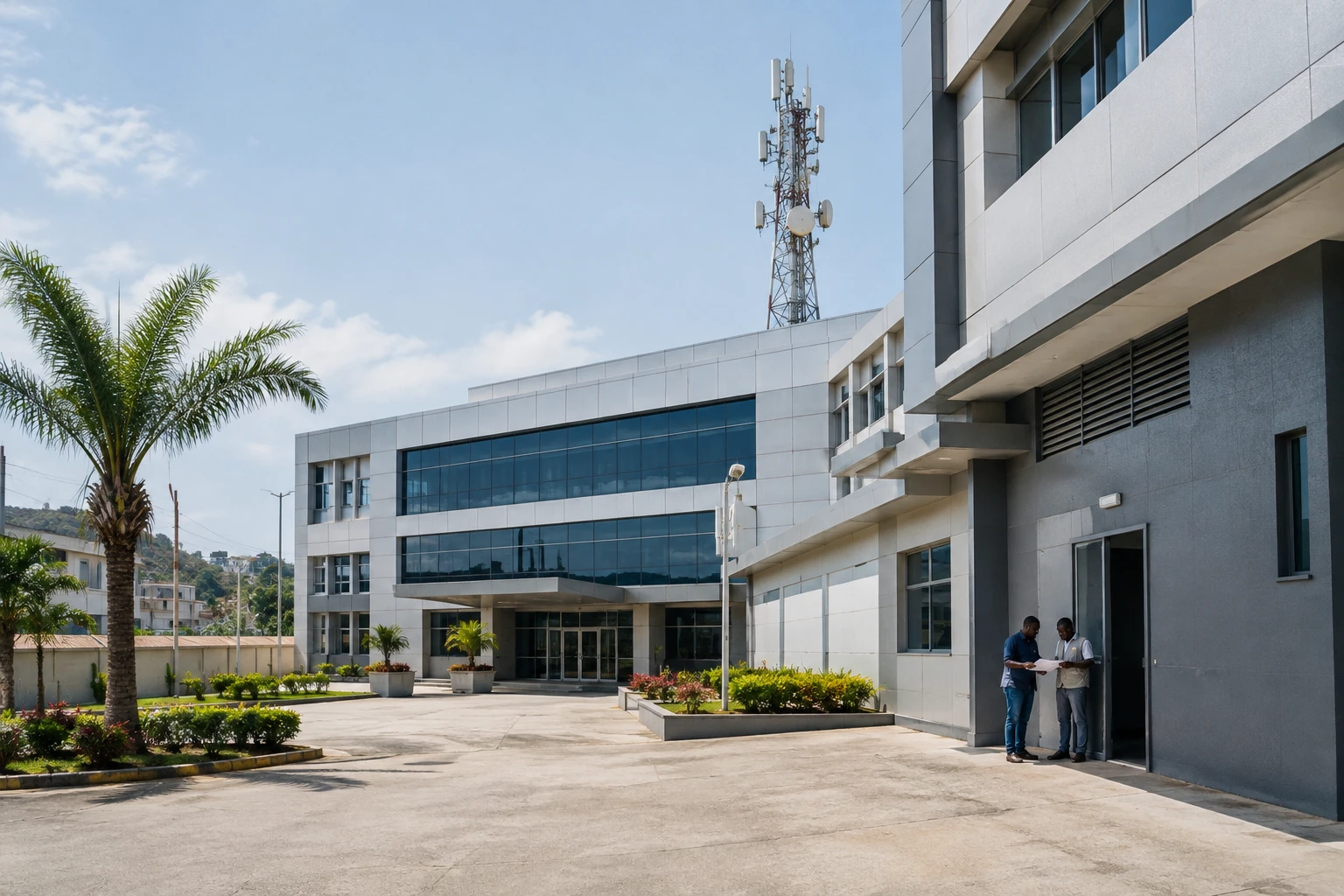
For a student following a remote class, a trader confirming an order or a family making a call outside Malabo, an unstable connection is not merely a technical fault. It is an obstacle to everyday activities. In Equatorial Guinea, the announced creation of TELGESA promises a new organisation for the sector, but several steps remain before it can be set up.
Operator in the works, agreement still to be finalised
On 16 October 2026, Vice-President Teodoro Nguema Obiang Mangue convened the prime minister, telecommunications officials, GECOMSA and the state’s legal representatives. The meeting concerned the establishment of TELGESA, a project being pursued with the EGSA LOITA investor group. According to the account by the Vice-Presidency of the Republic, the authorities aim to sign the agreement before the end of the month.
The process is not yet complete, however. KPMG is to assess the facilities, equipment and other assets of GECOMSA, the state operator affected by the reorganisation. This valuation is intended to clarify the company’s worth and the state’s stake in the future structure. At the meeting, the vice-president called for the necessary documents to be sent to the firm. Until this step is completed, the precise terms of the partnership remain to be confirmed.
The project has been presented for several months as a response to coverage and quality problems. A proposal attributed to EGSA LOITA envisages an investment of $50 million, 260 towers and coverage of 90% of the territory. These figures describe targets and an investment offer, not infrastructure that has already been deployed. The information available does not yet make it possible to establish publicly the detailed timetable, financing arrangements or final terms of the partnership.
Investment promise meets network needs
Announced coverage does not, by itself, guarantee a reliable service. Capacity is also needed to carry data, along with well-maintained equipment and a stable power supply at sites. Quality ultimately depends on the density of towers and their connection to the main network. Calls dropping or slowing down, as cited by the authorities, will therefore not be resolved simply by announcing a number of towers.
The coverage figures cited in the available material attribute 2G coverage of 85% of the population to the GSMA Mobile Connectivity Index 2026, compared with 13.4% for 4G. They should be treated with caution: the public page of the GSMA index presents data by year and country, but these specific figures could not be independently confirmed in the material consulted. They are therefore not presented here as verified findings.
The announced transformation also affects economic life. Better connectivity can facilitate payments, administrative procedures and access to digital services. But the benefits will depend on the network’s actual availability and the cost of services. People in areas far from the main urban centres may not benefit at the same pace as users in Malabo or Bata. Small businesses and workers in the informal economy likewise need affordable services, not just theoretical coverage.
GECOMSA’s future also matters. The valuation of its assets will determine what the new operator takes over, as well as the responsibilities and investments required. The terms of the agreement, the allocation of capital and service commitments will therefore need to be monitored. These details will make it possible to distinguish a new legal structure from an effective improvement for subscribers.
International connectivity, another part of the project
Towers will not be enough if the national network remains dependent on vulnerable international links. The ACE submarine cable, which connects several countries on the Atlantic coast to Europe, is part of the sub-region’s connectivity infrastructure. In April 2026, Equatorial Guinea’s Vice-Presidency reported on a study into strengthening international connectivity and an option to connect to MEDUSA. It then cited the possibility of a landing in Bata between 2029 and 2030, subject to further studies and agreements.
This prospect is separate from the TELGESA project: one concerns the organisation and domestic telecommunications network, the other the capacity to connect abroad. Regional experience highlights the value of having multiple routes and cables, so that a breakdown does not cut an essential link. But a projected timetable is not a final commitment. The dates and financing for the Equatorial Guinean connection remain to be specified.
For Equatorial Guinea, a member of CEMAC — the Economic and Monetary Community of Central Africa —, the issue forms part of a regional market in which connectivity shapes trade, services and digital integration. Creating an operator does not automatically guarantee greater competition or lower prices: that will depend on governance, investment and the quality actually measured.
The next milestones are clear: completion of GECOMSA’s valuation, possible signature of the agreement with EGSA LOITA, and then the establishment of management and a deployment plan. The authorities had previously said the operator would begin operations before the end of 2026. As of 21 October, the operator is still being prepared. For consumers, change will become tangible only when services are launched and calls, coverage and internet access improve over time.