Algeria
 Egypt
 Libya
 Morocco
 Sudan
 Tunisia
 Benin
 Burkina Faso
 Cabo Verde
 Côte d'Ivoire
 Ghana
 Guinea
 Guinea-Bissau
 Liberia
 Mali
 Mauritania
 Niger
 Senegal
 Sierra Leone
 The Gambia
 Togo
 Cameroon
 Central African Republic
 Chad
 DR Congo
 Equatorial Guinea
 Gabon
 Republic of the Congo
 São Tomé and Príncipe
 Burundi
 Comoros
 Djibouti
 Eritrea
 Ethiopia
 Kenya
 Madagascar
 Malawi
 Mauritius
 Mozambique
 Rwanda
 Seychelles
 Somalia
 South Sudan
 Tanzania
 Uganda
 Angola
 Botswana
 Eswatini
 Lesotho
 Namibia
 South Africa
 Zambia
 Zimbabwe
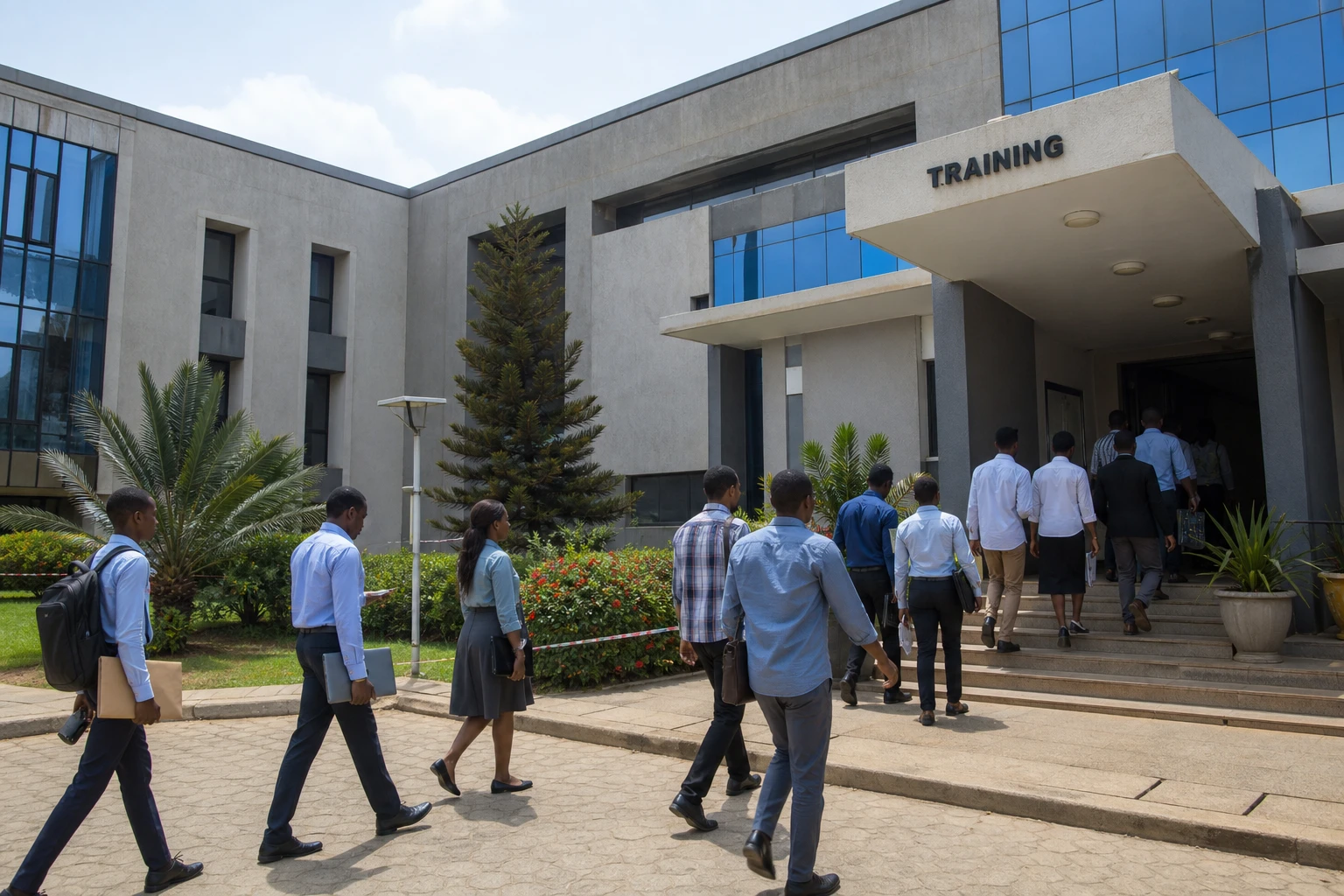
Enugu aims to turn public buildings into skills factories
In Nigeria, the digital battle is not being fought only in Abuja, through legislation or strategy announcements. It is also playing out in the states, where jobs are created, young people receive training and businesses look for reliable places to work. In Enugu, the state government is now betting on two long-underused facilities to move the country from intention to implementation.
This shift is part of a broader trend. The Nigerian Communications Commission, or NCC, describes the Digital Bridge Institute as a platform for training, research and public service. Enugu, for its part, has made the rehabilitation and operationalisation of the Digital Industrial Park and Digital Bridge Institute budget priorities, alongside other skills and innovation programmes.
What the agreement between the NCC and Enugu State provides
The NCC has signed a 15-year operational lease with the Enugu State Government for two sites: the Digital Industrial Park and the Digital Bridge Institute, a training and talent development centre. The agreement was signed by NCC Director General Aminu Maida and Governor Peter Mbah at Government House in Enugu.
The aim is straightforward: to place federally owned facilities under local management and put them back at the service of the digital ecosystem. According to reports carried by Nigerian business media, Enugu is to manage the day-to-day running of the sites and focus them on artificial intelligence, start-up incubation, practical training and outsourcing services. This approach aligns with the NCC’s emphasis on training, digital learning and innovation as the DBI’s purpose.
The timeline is worth noting. In spring 2025, Enugu State officials were still discussing, in a different context, a 25-year lease for the same facilities. The newly announced 15-year agreement therefore reflects an evolving sequence of negotiations, without changing the overall objective: to reactivate public assets and turn them into economic tools.
Why Enugu is focusing on digital services and outsourcing
The move is not an isolated one. Enugu has made a series of commitments to digital development: a budget for young people’s digital skills, the creation of a start-up fund, the refurbishment of ICT centres and collaboration with public operators to connect the state’s 17 local government areas. The objective is clear: to make Enugu a services hub, not merely an administrative centre in south-eastern Nigeria. ([]())
The strategy comes as Africa’s business process outsourcing (BPO) market — outsourcing tasks such as customer support, back-office work and some technical operations — continues to grow. Grand View Research estimates that the African market could reach $3.95bn by 2030, growing at an average annual rate of 4% from 2023. The same trend is also supporting higher-value services, often referred to as knowledge process outsourcing, or KPO.
Nigeria wants to capture a larger share of this demand. According to Ataraxis’s global index, the country is among the most attractive outsourcing destinations, thanks to English-language proficiency, competitive costs and what it describes as a strong base of professional talent. The index measures the ability to provide a scalable workforce for remote functions, including IT, customer support and administrative operations.
In other words, the challenge is not simply to fill buildings. It is to build an entire chain: training, connectivity, incubation, business support and access to markets. Without that chain, digital parks remain costly façades. With it, they can become employment platforms for graduates, freelancers and small service businesses.
What this means for Nigerians, and beyond Enugu
For the federal authorities and Enugu State, the gains are political and economic. The central government can show that its digital roadmap is delivering results beyond Abuja. The state, meanwhile, gains a tool to raise its profile and attractiveness in a region where competition among state capitals for investment has intensified.
For young people, the potential benefits are more tangible: access to training, internships, entry-level jobs in digital professions and opportunities in outsourcing. For start-ups, the appeal lies in physical space, proximity to public institutions and the promise of a more predictable environment in which to test services, recruit and grow. For people living further from major urban centres, however, the impact will depend on the quality of connectivity, access costs and the ability to extend programmes beyond the state capital.
The weakness is a familiar one in Nigeria: the gap between announcements and maintenance. The country has advantages in language and population size, but digital infrastructure, regulatory stability and electricity remain risk factors in many projects. Even Ataraxis, which ranks Nigeria among competitive destinations, highlights these operational constraints. That is precisely why Enugu’s experience will be closely watched.
The role of ECOWAS, the Economic Community of West African States, is indirect but real. In a region where the movement of talent, services and businesses is accelerating, states able to offer credible digital environments gain an advantage. If Enugu makes the partnership work, it could serve as a model for other Nigerian administrations and regional capitals across West Africa.
A local experiment with lessons for French- and English-speaking Africa
The significance of the project therefore extends beyond Enugu. In several African countries, the question is no longer just how to build digital hubs, but how to make them work. The credibility of digital transformation policies is tested in management, budget continuity, access to fibre, training trainers and the ability to attract public and private clients alike.
Nigeria, with its capital in Abuja, is sending a useful signal to the continent: the state can retain ownership of a strategic asset while entrusting its operation to a local entity better placed to activate it. If the 15-year lease delivers on its promise, Enugu could become a case study in turning federal infrastructure into a regional driver of innovation and employment. What happens next will depend above all on how quickly the sites become operational, recruitment and the ability to attract real businesses, not just slogans.