Algeria
 Egypt
 Libya
 Morocco
 Sudan
 Tunisia
 Benin
 Burkina Faso
 Cabo Verde
 Ghana
 Guinea
 Guinea-Bissau
 Liberia
 Mali
 Mauritania
 Niger
 Nigeria
 Senegal
 Sierra Leone
 The Gambia
 Togo
 Cameroon
 Central African Republic
 Chad
 DR Congo
 Equatorial Guinea
 Gabon
 Republic of the Congo
 São Tomé and Príncipe
 Burundi
 Comoros
 Djibouti
 Eritrea
 Ethiopia
 Kenya
 Madagascar
 Malawi
 Mauritius
 Mozambique
 Rwanda
 Seychelles
 Somalia
 South Sudan
 Tanzania
 Uganda
 Angola
 Botswana
 Eswatini
 Lesotho
 Namibia
 South Africa
 Zambia
 Zimbabwe
An announced financing commitment is not yet a disbursed loan. For Ivorian SMEs, the test of the European Bank for Reconstruction and Development’s (EBRD) expected new commitments will be whether promises translate into accessible credit, productive investment and jobs.
The visit by EBRD President Odile Renaud-Basso to Abidjan from 23 to 25 November 2026 highlights the institution’s growing presence in Côte d’Ivoire. It comes as the country seeks to mobilise capital for development while expanding financing options for local businesses.
A recent foothold in a West African market
Côte d’Ivoire became an EBRD country of operations in 2025, as part of the expansion of its activities in sub-Saharan Africa. Since then, the bank says it has committed more than €200 million in the country. This sum covers operations in several sectors, but does not mean that all the funds have already been disbursed or that their economic effects can already be measured.
The new presence also forms part of a regional landscape in which development finance institutions are seeking to support the private sector. Côte d’Ivoire is a member of the Economic Community of West African States (ECOWAS), which brings together countries linked by trade and integration projects. For Ivorian businesses, access to credit and infrastructure can affect their ability to produce and trade beyond the domestic market.
Ivorian authorities, for their part, have made SME financing and industrial development priorities in their co-operation with the EBRD. The Ministry of Trade announced the opening of the Abidjan office and the launch of activities for small and medium-sized enterprises in July 2026. Côte d’Ivoire’s Ministry of Trade outlines the areas of co-operation.
Agreements expected, but details still unclear
During her visit, the EBRD plans to sign new investment agreements totalling €250 million, or about $275 million. The sectors involved and beneficiary companies have not yet been made public. These are expected commitments: signing them and then implementing them are separate steps.
The representative office in Abidjan is intended to bring the bank closer to businesses, investors and authorities. The president is also due to meet public officials, business leaders and representatives of financial institutions. The discussions will aim, among other things, to identify projects capable of attracting private finance.
The visit will also see the launch of a programme focused on financing and developing SMEs. It is to combine access to finance with advisory services. Its usefulness will depend in particular on eligibility criteria, the guarantees required and businesses’ ability to secure loans on terms compatible with their revenues.
Previous operations give an indication of the sectors already involved. The EBRD has provided a loan of up to $60 million to Dorado to support cashew processing in Côte d’Ivoire. It has also planned $30 million in financing for Polynickel West Africa Holding, linked to the acquisition of a majority stake in a nickel mine. These operations illustrate the range of the bank’s interventions, but do not in themselves reveal their local impact in terms of jobs, added value or benefits for Ivorian suppliers.
In November 2026, the bank also invested CFA francs 6 billion in a bond issue by Baobab Côte d’Ivoire. The funds are intended to help finance micro, small and medium-sized enterprises led by women, as well as projects related to education, early childhood and the environment. The operation focuses on activities less visible than major industrial projects, but important for small businesses’ access to credit.
The central question: who will be able to access the capital?
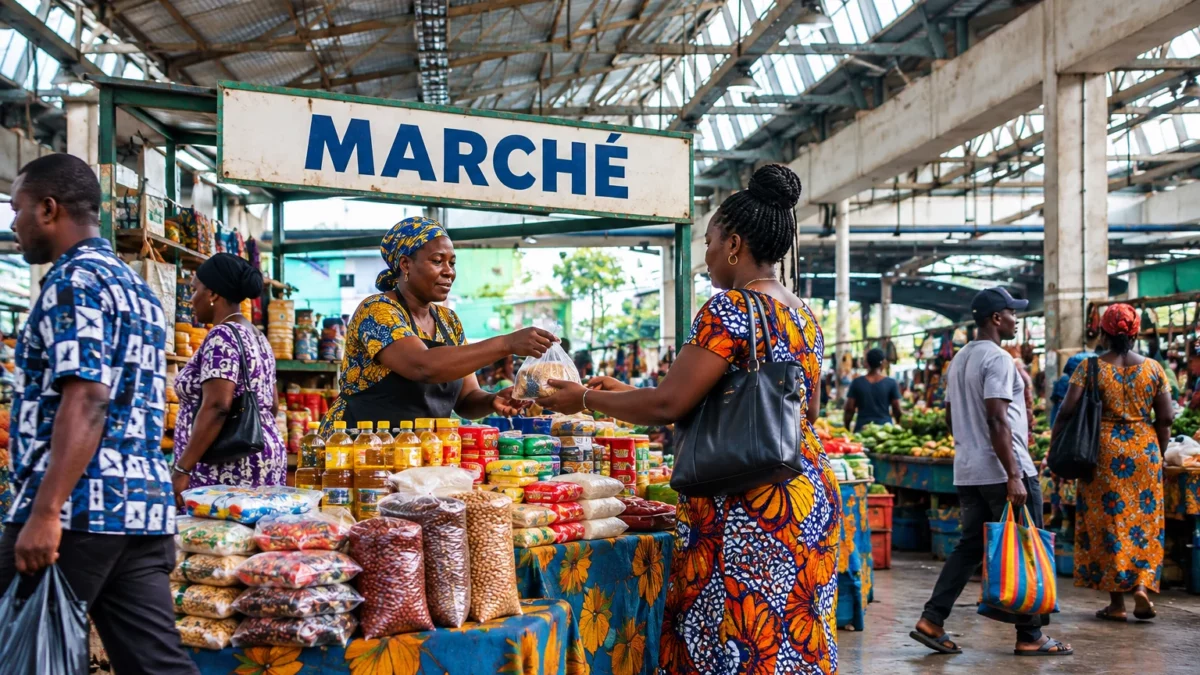
For large companies, financing of this scale can facilitate expansion or support long-term investment. For SMEs, the effect depends more on the role of partner banks, the interest rates charged and the guarantees required. Formal businesses with accounts and financial statements may be better placed to meet the criteria. Smaller businesses and those in the informal economy risk being left out if the programme does not provide appropriate support.
Financing the processing of agricultural products such as cashew nuts also raises questions about how value is shared. Expanding processing locally can strengthen Côte d’Ivoire’s industrial activity. But the concrete results will depend on local procurement, working conditions, training and market opportunities for the country’s producers and suppliers.
In mining, investment can support the extraction of resources used in certain energy-transition technologies. It also raises questions about transparency, environmental impact and the sharing of benefits. The available information on the expected agreements does not yet specify what safeguards are planned in these areas.
A test for West Africa’s financing strategy
The EBRD’s stronger presence in Abidjan is part of a broader trend: international financial institutions are expanding their activities in sub-Saharan Africa as countries seek to mobilise more private capital. For Côte d’Ivoire, the challenge is not simply to attract large sums. It is also to link these resources to national priorities and businesses’ practical needs.
Progress will be measured by verifiable indicators: the agreements actually signed, the projects financed, the terms of the loans and the share of Ivorian businesses able to benefit. The launch of the SME programme will provide an initial measure. Across West Africa, its operation could also shed light on how development finance institutions combine funding for major projects with access to credit for small businesses.
The visit’s announcements therefore mark a new stage, not yet a track record. The Abidjan office can facilitate dialogue and project monitoring. But the significance of its presence will be judged over time, by the financing actually mobilised and the benefits it brings to Côte d’Ivoire’s economic actors.