Algeria
 Egypt
 Libya
 Morocco
 Sudan
 Tunisia
 Benin
 Burkina Faso
 Cabo Verde
 Côte d'Ivoire
 Ghana
 Guinea
 Guinea-Bissau
 Liberia
 Mali
 Mauritania
 Niger
 Nigeria
 Senegal
 Sierra Leone
 The Gambia
 Togo
 Cameroon
 Central African Republic
 Chad
 DR Congo
 Equatorial Guinea
 Gabon
 Republic of the Congo
 São Tomé and Príncipe
 Burundi
 Comoros
 Djibouti
 Eritrea
 Ethiopia
 Kenya
 Madagascar
 Malawi
 Mauritius
 Mozambique
 Rwanda
 Seychelles
 Somalia
 South Sudan
 Tanzania
 Uganda
 Angola
 Botswana
 Eswatini
 Lesotho
 Namibia
 Zambia
 Zimbabwe

In Durban, the investigation must establish who killed a man in the middle of a march and why. For residents and migrant communities alike, the stakes go beyond this murder: in a tense climate, verified facts and rumours can quickly become confused.
A fatal attack, with the motive still unknown
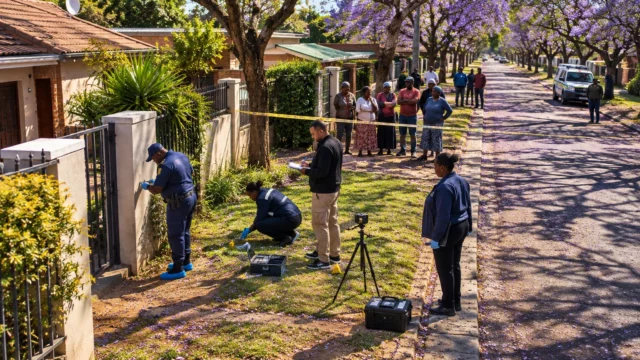
On Thursday 22 October 2026, in central Durban, a man in his thirties or forties was beaten by a group of around 50 people. Police say he died at the scene. The authorities have not disclosed his nationality or the motive for the attack.
According to initial details reported by investigators, the victim was standing by the roadside during a march. Two men are said to have approached him before others joined the attack. Police are seeking to identify the suspects. At this stage, they have not established a link between the murder and the march organisers or an anti-immigration claim. The details reported on the police investigation in Durban are consistent with information published by the Associated Press.
This distinction matters. The presence of a march and the anti-immigration context are not, in themselves, enough to prove the motive for the murder. The victim’s nationality is also still unknown. Prematurely assigning blame could fuel tensions rather than clarify responsibility.
Tensions already visible in Durban
The port city in KwaZulu-Natal has been one of the main centres of mobilisation against irregular immigration for several weeks. Gatherings and clashes have been reported in different areas. A local media outlet reported the murder on Russell Street, while noting that police had not confirmed a link to the March and March movement. The local account of the situation in Durban also describes a heightened police presence around planned gatherings.
The debate centres in particular on people without residence permits, access to public services, security and employment. These are political and practical concerns. But they do not justify holding migrants collectively responsible for economic hardship or crime. The South African government says it wants to manage immigration through legal and co-ordinated means, while rejecting xenophobia and calls for violence. South Africa’s official position on migration and xenophobic violence also recalls the country’s constitutional commitments.
The consequences are not evenly distributed. A migrant may fear for their safety or livelihood, even if they have valid documents. Businesses and workers in the city centre, meanwhile, depend on open streets and conditions that allow people to move around. Law enforcement must protect peaceful gatherings, prevent assaults and advance the investigation without naming culprits before the evidence is in.
A regional precedent that calls for caution
Durban has experienced episodes of xenophobic violence before. In 2008, attacks targeting foreigners spread across several South African provinces and killed 62 people, according to Human Rights Watch archives. In 2015, a new wave of violence in Durban prompted the United Nations High Commissioner for Refugees to voice concern. These precedents do not prove that Thursday’s attack follows the same pattern. They do, however, explain why the authorities, media and local organisations must distinguish established facts from accounts that have yet to be verified. The documented toll of the 2008 violence and UNHCR’s warning during the 2015 violence shed light on this context.
The issue extends beyond South Africa’s borders. The Southern African Development Community (SADC), a regional co-operation organisation, includes several countries of origin for migrants who live and work in South Africa. When foreign nationals are threatened, concerns can affect relations between Pretoria and its neighbours, as well as the movement of people and regional trade.
An analysis by ACLED, an organisation that records political violence and protest events, highlights a sharp rise in anti-migrant mobilisation in the country in 2026. It notes that attacks can target people with or without documentation. This trend does not, however, make it possible to classify the Durban murder before the investigation establishes the motive. ACLED data on anti-migrant mobilisation in South Africa offer a measure of the climate, not a conclusion about this case.
What happens next depends on the investigation
The next steps are clear: identify the victim, establish the exact circumstances of the attack, find those involved and determine whether the march played a role in the violence. The authorities will need to communicate their findings without conflating the motive for the murder with the wider context of immigration.
For Pretoria, South Africa’s capital, the challenge is twofold: enforce immigration rules and protect the rights of everyone in the country. For Durban and its communities, the response will be measured by safety in public spaces and the justice system’s ability to establish responsibility. Across the SADC, governments will also monitor the impact of these tensions on their nationals and bilateral relations.