Algeria
 Egypt
 Libya
 Morocco
 Sudan
 Tunisia
 Benin
 Burkina Faso
 Cabo Verde
 Côte d'Ivoire
 Ghana
 Guinea
 Guinea-Bissau
 Liberia
 Mali
 Mauritania
 Niger
 Nigeria
 Senegal
 Sierra Leone
 The Gambia
 Togo
 Cameroon
 Central African Republic
 Chad
 DR Congo
 Equatorial Guinea
 Gabon
 Republic of the Congo
 São Tomé and Príncipe
 Burundi
 Comoros
 Djibouti
 Eritrea
 Ethiopia
 Kenya
 Madagascar
 Malawi
 Mauritius
 Mozambique
 Rwanda
 Seychelles
 Somalia
 South Sudan
 Tanzania
 Uganda
 Angola
 Botswana
 Eswatini
 Lesotho
 South Africa
 Zambia
 Zimbabwe
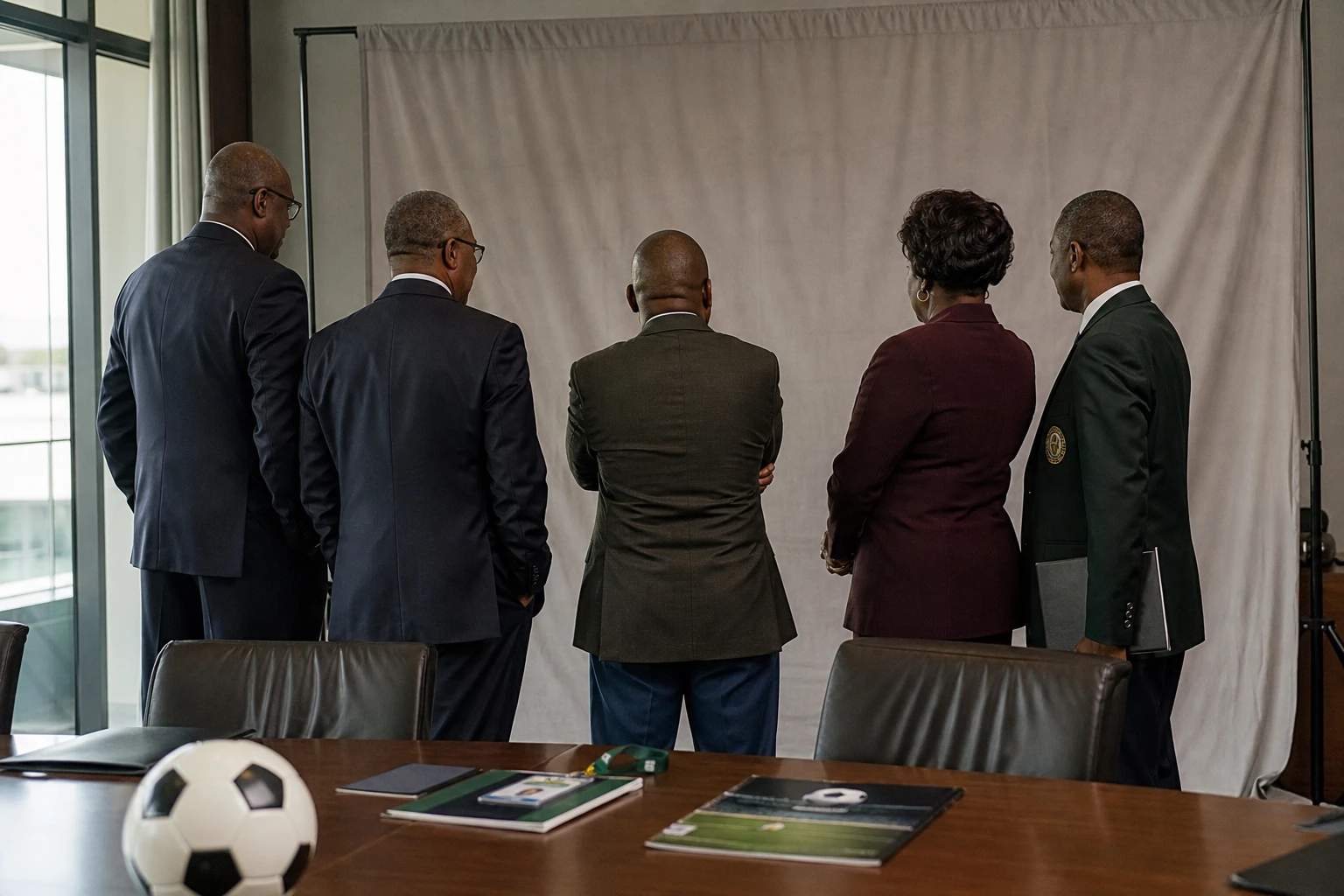
For the Democratic Republic of the Congo, the opening round of the 2027 Africa Cup of Nations qualifiers confirmed an important trend: the Leopards now know how to win without letting a match get away from them. In Kinshasa, the Congolese side beat Equatorial Guinea 2-0 on Thursday 24 September 2026. In Group G, Namibia also began with a victory, beating Congo 1-0 in Gaborone, Botswana.
DR Congo take control early in Kinshasa
The Stade des Martyrs saw DR Congo begin their campaign in determined fashion. Against an Equatorial Guinea side known to be difficult to break down, Sébastien Desabre’s men imposed their tempo from the opening minutes.
Chancel Mbemba opened the scoring in the third minute. The Congolese captain headed home a free-kick from Nathanaël Mbuku. The goal rewarded an aggressive start from the Leopards, who were intent on making the most of set pieces and space out wide.
DR Congo could have extended their lead before half-time. Yoane Wissa had a goal ruled out for offside. Aaron Wan-Bissaka and Noah Sadiki then hit the crossbar. The chances demonstrated Congolese control, but also a degree of difficulty in quickly turning dominance into a decisive advantage.
Equatorial Guinea tried to respond. The Nzalang Nacional, however, lacked accuracy in the final third. A goal for the visitors was also ruled out for offside. The Congolese defence, well organised around Mbemba, prevented the match from swinging in the visitors’ favour.
The decisive moment finally came in the 72nd minute. Yoane Wissa finished off a move with Wan-Bissaka in the penalty area. The striker thus put the result beyond doubt for DR Congo and more accurately reflected the dominance seen at the Stade des Martyrs.
The 2-0 win gives the Congolese three valuable points. It also provides an early benchmark for Sébastien Desabre’s staff, who are seeking to build a team that is more consistent over time. Their next fixture is against Zimbabwe in Harare on 28 September 2026.
A successful start, but qualification remains a long way off
The 2027 AFCON qualifiers bring together 48 teams divided into 12 groups of four. The finals will be held from 19 June to 17 July 2027 in Kenya, Tanzania and Uganda. Those three countries have qualified automatically as co-hosts.
In the other groups, the top two teams qualify for the tournament. Where a host nation is in a group, only one additional team qualifies alongside the country already assured of a place. This arrangement therefore changes the stakes in some groups, particularly those involving Uganda, Kenya and Tanzania.
DR Congo are in Group E with Equatorial Guinea, Zimbabwe and Sierra Leone. The Kinshasa victory puts the Leopards in a favourable position ahead of their next matches. It does not, however, settle anything. Six matchdays are scheduled, and away fixtures will weigh heavily in the final standings.
For the Congolese, the stakes go beyond simply opening the tournament. The national team is emerging from a period in which it has gradually regained its place among the continent’s competitive sides. Qualification for AFCON 2027 must now confirm that progress, while avoiding the lapses that have often complicated previous campaigns.
The result also highlights the importance of home matches. In Kinshasa, the crowd’s support accompanied an enterprising team. In areas far from the capital, the national side’s performances are closely followed as a marker of national cohesion. But those expectations can also increase pressure on players when they play away.
Namibia win in Gaborone and defy expectations
Namibia also took all three points in Group G. The Brave Warriors beat Congo 1-0, but the match was not played in Windhoek. Namibia hosted their opponents in Botswana, at Gaborone’s national stadium, because their usual venue did not meet the requirements for an international match.
The only goal came in the 47th minute, scored by Bethuel Muzeu. The South African striker headed home a cross from Riaan Hanamub. Namibia then held firm against Congo’s attempts, despite a more open second half.
Congo had chances to equalise, but their shots lacked accuracy. The Red Devils also struggled against the mobility of Namibia’s full-backs. The match was ultimately decided by one move and the Brave Warriors’ ability to protect their lead.
The win is important for a side hoping to return to the finals after taking part in AFCON 2023, held in Côte d’Ivoire in 2024. It also gives Namibia confidence ahead of their trip to the Comoros, scheduled for 29 September.
Group G also includes Cameroon and the Comoros. Their match was due to complete the opening round. Namibia will therefore have to wait for the other results to gauge the full significance of their win, but they have already gained an important psychological advantage.
Southern Africa already at the heart of the race
Namibia and DR Congo’s results also give this opening round a regional dimension. Namibia and DR Congo belong to the Southern African Development Community, SADC, which includes several federations competing in continental tournaments. Congo, meanwhile, is part of Central Africa and has regular sporting rivalries with its neighbours in the sub-region.
These opening matches illustrate a familiar reality in African football: home advantage does not always depend on geography. Namibia won in Gaborone, far from Windhoek, while DR Congo made full use of the Stade des Martyrs’ atmosphere. Infrastructure, hosting conditions and the ability to play on neutral ground can therefore influence the competition.
The next international window, scheduled for 9 to 17 November 2026, will provide a clearer picture of the balance of power. Before then, the second-round matches on 28 and 29 September will already offer concrete indications. For both DR Congo and Namibia, the aim now will be to turn a strong start into a well-managed campaign.
CAF confirms DR Congo’s 2-0 win over Equatorial Guinea, while Namibia’s 1-0 win over Congo has also been officially confirmed by the continental governing body.