
 Algeria
 Egypt
 Libya
 Morocco
 Sudan
 Tunisia
 Benin
 Burkina Faso
 Cabo Verde
 Côte d'Ivoire
 Ghana
 Guinea
 Guinea-Bissau
 Liberia
 Mali
 Mauritania
 Niger
 Nigeria
 Senegal
 Sierra Leone
 The Gambia
 Togo
 Central African Republic
 Chad
 DR Congo
 Equatorial Guinea
 Gabon
 Republic of the Congo
 São Tomé and Príncipe
 Burundi
 Comoros
 Djibouti
 Eritrea
 Ethiopia
 Kenya
 Madagascar
 Malawi
 Mauritius
 Mozambique
 Rwanda
 Seychelles
 Somalia
 South Sudan
 Tanzania
 Uganda
 Angola
 Botswana
 Eswatini
 Lesotho
 Namibia
 South Africa
 Zambia
 Zimbabwe
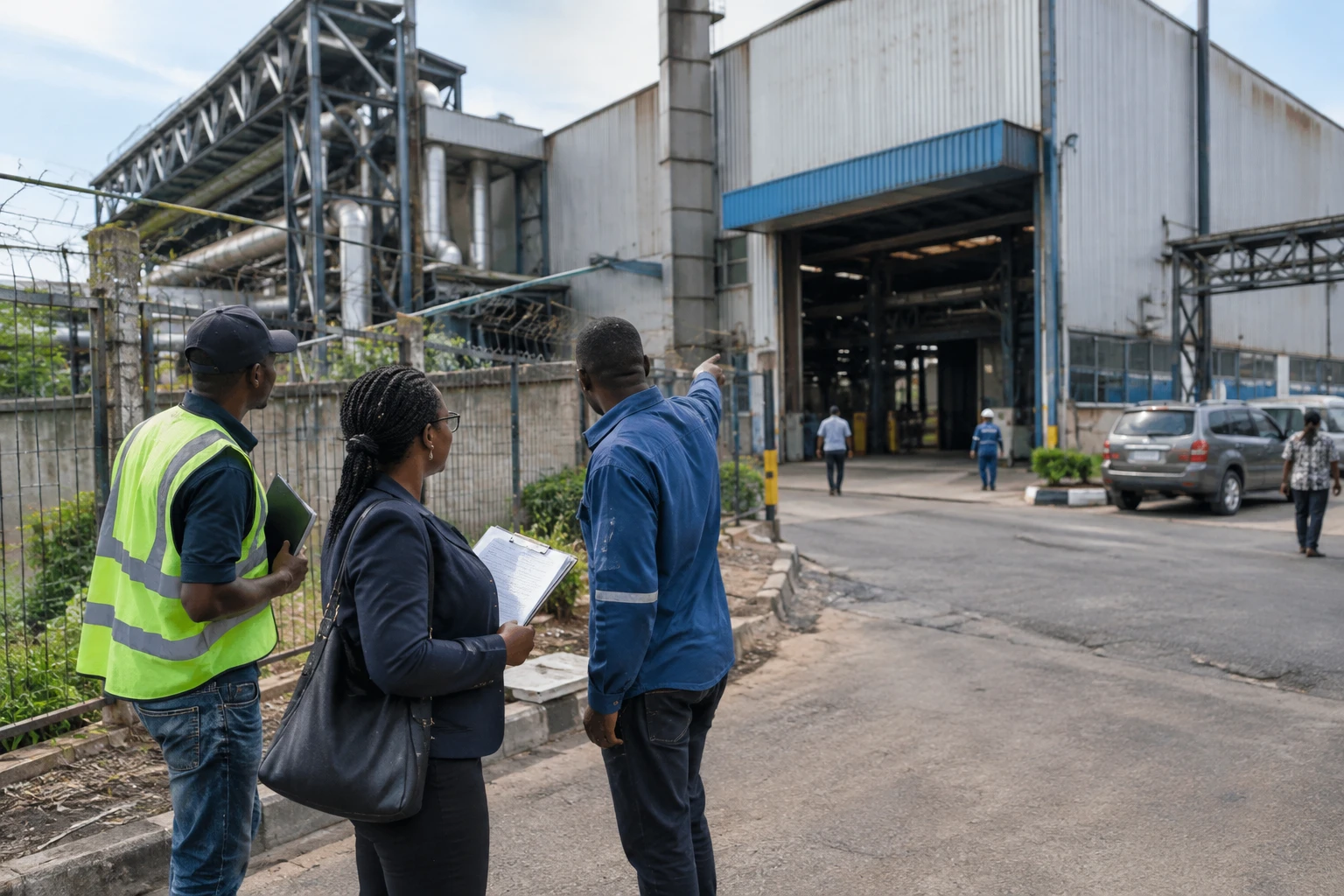
A new emergency has arisen at an industrial site in Douala: how can workers be protected when fires repeatedly break out at the same factory? The fire on 2 November 2026 at Metafrique Steel killed four people and seriously burned 16, according to several Cameroonian and regional media outlets.
Another fire after the blaze in the spring
The explosion and fire occurred on Monday morning at Metafrique Steel’s facilities in the Bassa industrial zone of Douala. Initial reports put the outbreak at around 7am. Emergency services found four people dead and evacuated 16 burned employees to Douala General Hospital. These figures were reported by separate sources, including Journal du Cameroun and KOACI.
The precise circumstances remain to be established. In a statement carried by the press, the company described the incident as external and said its causes were unknown. This explanation is not an investigative finding. The announced inquiries will have to determine the origin of the explosion and the circumstances in which the fire spread.
The governor of the Littoral region, Samuel Dieudonné Ivaha Diboua, visited the site and the hospital. He accused the company of failing to implement safety measures prescribed after an earlier fire. He also raised the prospect of suspending operations. Reports differ, however, on the exact status of this measure: some describe it as a possibility, while others report an order to cease operations. The authorities will need to clarify the decision taken and its duration.
A recurrence that calls for verifiable answers
The previous fire occurred on the night of 30 April to 1 May 2026. It affected the factory and injured employees. The authorities announced that an investigation had been opened. The state-owned daily Cameroon Tribune reported on the investigation and the company’s commitments to strengthen safety. The November fire therefore raises a concrete question: what requirements were set, which were implemented, and how was their implementation monitored?
These facts alone do not make it possible to conclude that a criminal offence was committed or to identify a particular technical cause. They do, however, make a documented review of preventive measures, emergency procedures and inspections carried out since the first fire necessary. The role of public services and the operator’s obligations will have to be examined on the basis of the investigation’s evidence, not assumptions.
For the 16 injured people, medical care is the priority. The governor said their condition was a serious cause for concern because of the severity of their burns. Medical assessments may change; no individual prognosis should be taken as certain without confirmation from the care teams. Families are also waiting for reliable information on treatment and support for the victims.
Douala, an industrial city and economic hub
Douala accounts for a significant share of Cameroon’s port and industrial activity. The Bassa area is home to processing companies, within an urban area where production sites sit alongside residential neighbourhoods and roads. An industrial accident can therefore affect employees first, but also disrupt neighbouring activities and call on the city’s emergency services.
Metafrique Steel processes metals and produces, among other things, reinforcing steel, according to information published by Journal du Cameroun. Its activities are part of an economy in which construction and industry create jobs, while requiring equipment suited to the risks of heat, fire and explosions. Workplace safety is measured not only by the instructions displayed: it also depends on their implementation, staff training and regular inspections.
The consequences of a shutdown would not be the same for everyone. Employees and their families may suffer a direct loss of income, while the company and its partners must contend with halted production. But economic continuity cannot replace the establishment of the facts or the protection of workers. Any lasting administrative decision will have to be based on the results of the checks and the actual condition of the facilities.
An issue that extends beyond Cameroon’s borders
Cameroon is a member of CEMAC, the Economic and Monetary Community of Central Africa, which brings six states together around economic and monetary co-operation. The Douala case falls first and foremost to the Cameroonian authorities: safety rules, the investigation and any sanctions are their responsibility. At regional level, however, the accident is a reminder that industrialisation and worker protection must go hand in hand in increasingly interconnected economies.
The next steps will be decisive: publication of the investigation’s findings, clarification of the measure concerning the factory, verification of the requirements set after the spring fire and follow-up on care for the victims. At this stage, the causes of the explosion remain unknown. The public response will need to distinguish established facts from responsibilities that have yet to be determined.



