Algeria
 Egypt
 Libya
 Morocco
 Sudan
 Tunisia
 Benin
 Burkina Faso
 Cabo Verde
 Côte d'Ivoire
 Ghana
 Guinea
 Guinea-Bissau
 Liberia
 Mali
 Mauritania
 Niger
 Nigeria
 Senegal
 Sierra Leone
 The Gambia
 Togo
 Cameroon
 Central African Republic
 Chad
 DR Congo
 Equatorial Guinea
 Gabon
 Republic of the Congo
 São Tomé and Príncipe
 Burundi
 Comoros
 Eritrea
 Ethiopia
 Kenya
 Madagascar
 Malawi
 Mauritius
 Mozambique
 Rwanda
 Seychelles
 Somalia
 South Sudan
 Tanzania
 Uganda
 Angola
 Botswana
 Eswatini
 Lesotho
 Namibia
 South Africa
 Zambia
 Zimbabwe
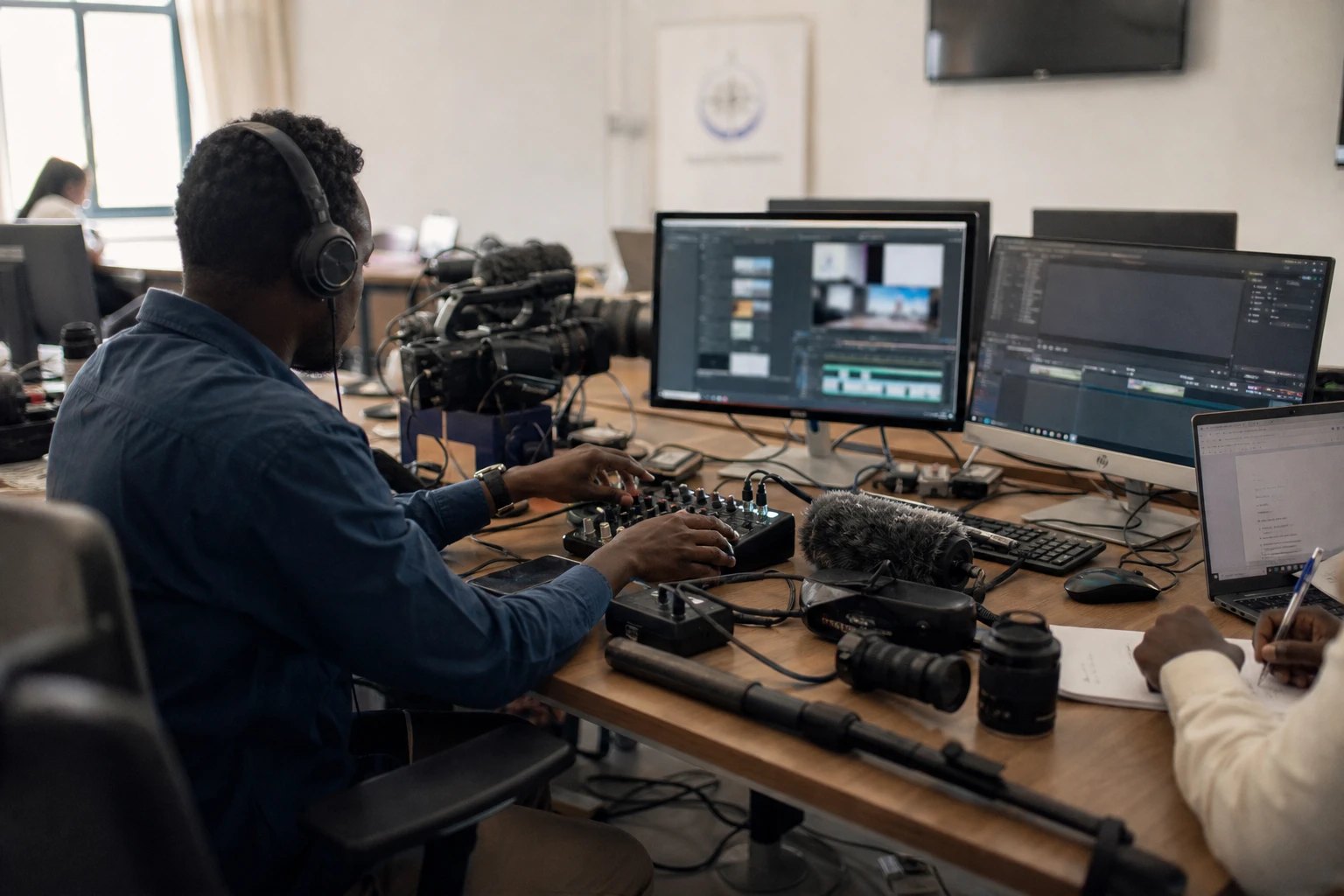
In Djibouti, a disappearance that goes beyond a simple crime story
In Djibouti, a sudden absence can quickly become a matter of state. In a pivotal country in the Horn of Africa, where armies, goods, diplomats and reporters pass through, the disappearance of a journalist and his local companion raises a simple question: what happened, and who can answer?
The case concerns Roshan Micah Reddy, a South African journalist and Africa coordinator at the International Consortium of Investigative Journalists, and Kooki Mahmoud, his Djiboutian fixer – a local intermediary who arranges meetings, travel and on-the-ground verification. According to corroborated information, both stopped communicating on Saturday 19 September 2026 in Djibouti, after a work trip that had begun a few days earlier.
A country closed to the media, but at the heart of regional traffic
Djibouti is no peripheral country. It is a strategic transit point between the Red Sea and the Gulf of Aden, and a member state of IGAD, the regional organisation for the Horn of Africa, which brings together Djibouti, Ethiopia, Kenya, Somalia, Sudan, South Sudan, Uganda and Eritrea, among others. Its secretariat is also based in Djibouti.
This geographical position gives the country particular weight. It also brings increased attention to security, travel and press activity. Domestically, Djibouti’s constitution guarantees freedom of expression and freedom of movement, while subjecting these rights to the law. In practice, however, Reporters Without Borders describes a tightly controlled media environment dominated by public media, with a legal framework that provides for prison sentences for press offences and imposes age and nationality requirements for establishing a media outlet.
RSF’s 2026 World Press Freedom Index ranks Djibouti 167th out of 180, a level described as “very serious” for press freedom in Africa. The country has fallen or stagnated around this position for several years, suggesting not an isolated setback but a prolonged blockage of the media space.
What is known about the disappearance
The available information points to several shared facts. Roshan Micah Reddy was in Djibouti on a professional assignment. He had been in regular contact with his family and colleagues before communications abruptly stopped. His family alerted the South African and British authorities, as he holds dual South African and British nationality. Reuters also reports that a Djiboutian official said the journalist was not registered for press accreditation in the country.
On the ground, concern grew after more than 24 hours passed without contact with either Reddy or Kooki Mahmoud. GroundUp, a South African news outlet, reports that they had been missing since around midday on Saturday 19 September. RSF, for its part, says their phones have been switched off since that date.
In the hours that followed, several press freedom organisations called for explanations and immediate verification of their safety. The issue is not only to locate two people. It is also to establish whether a foreign journalist and his local fixer can work freely in a country where independent journalists are, according to RSF, regularly monitored, threatened or arrested.
Why the case also touches on the balance of power around information
The case is sensitive for another reason: it involves a Djiboutian fixer. In many African countries, these behind-the-scenes professionals take the same risks as the correspondents they assist, without enjoying the same protection or visibility. A disappearance of this kind is a reminder that the information chain relies not only on well-known journalists, but also on exposed local intermediaries.
In Djibouti, the press question is linked to a broader relationship between power, security and the flow of information. RSF describes a media landscape dominated by La Nation, the Djiboutian Information Agency and public radio and television. The organisation also points to a climate of surveillance, opaque accreditation processes and constant pressure on independent voices. In this context, an unexplained disappearance immediately becomes a political issue, not merely a judicial one.
The situation also has regional significance. In the Horn of Africa, journalists cover areas where conflicts, maritime routes, intelligence, security cooperation and major economic interests intersect. When a journalist disappears in Djibouti, it is not only a country’s reputation that is at stake. The credibility of a region where the flow of information remains fragile is also on the line, from Somalia to Sudan, via Ethiopia. IGAD, which works on regional political and security cooperation, is closely monitoring these balances.
What to watch now
The next point of focus is Djibouti’s official response. Confirmation of their whereabouts, clarification of any possible administrative detention, or the opening of an investigation would fundamentally change how the case is understood. At this stage, there is no credible public confirmation of the fate of the two men. The established facts therefore remain limited to a reported disappearance, broken contact and urgent calls for clarification.
For East Africa, the case is also a reminder of an often-overlooked truth: press freedom is measured not only by what is written into law, but also by journalists’ practical ability to work, travel, make calls and return home. In Djibouti, that ability is now under scrutiny. And the outcome of this disappearance will say a great deal about the place given, in the country and the region, to the right to inform.