Algeria
 Egypt
 Libya
 Morocco
 Sudan
 Tunisia
 Benin
 Burkina Faso
 Cabo Verde
 Côte d'Ivoire
 Ghana
 Guinea
 Guinea-Bissau
 Liberia
 Mali
 Mauritania
 Niger
 Senegal
 Sierra Leone
 The Gambia
 Togo
 Cameroon
 Central African Republic
 Chad
 DR Congo
 Equatorial Guinea
 Gabon
 Republic of the Congo
 São Tomé and Príncipe
 Burundi
 Comoros
 Djibouti
 Eritrea
 Ethiopia
 Kenya
 Madagascar
 Malawi
 Mauritius
 Mozambique
 Rwanda
 Seychelles
 Somalia
 South Sudan
 Tanzania
 Uganda
 Angola
 Botswana
 Eswatini
 Lesotho
 Namibia
 South Africa
 Zambia
 Zimbabwe
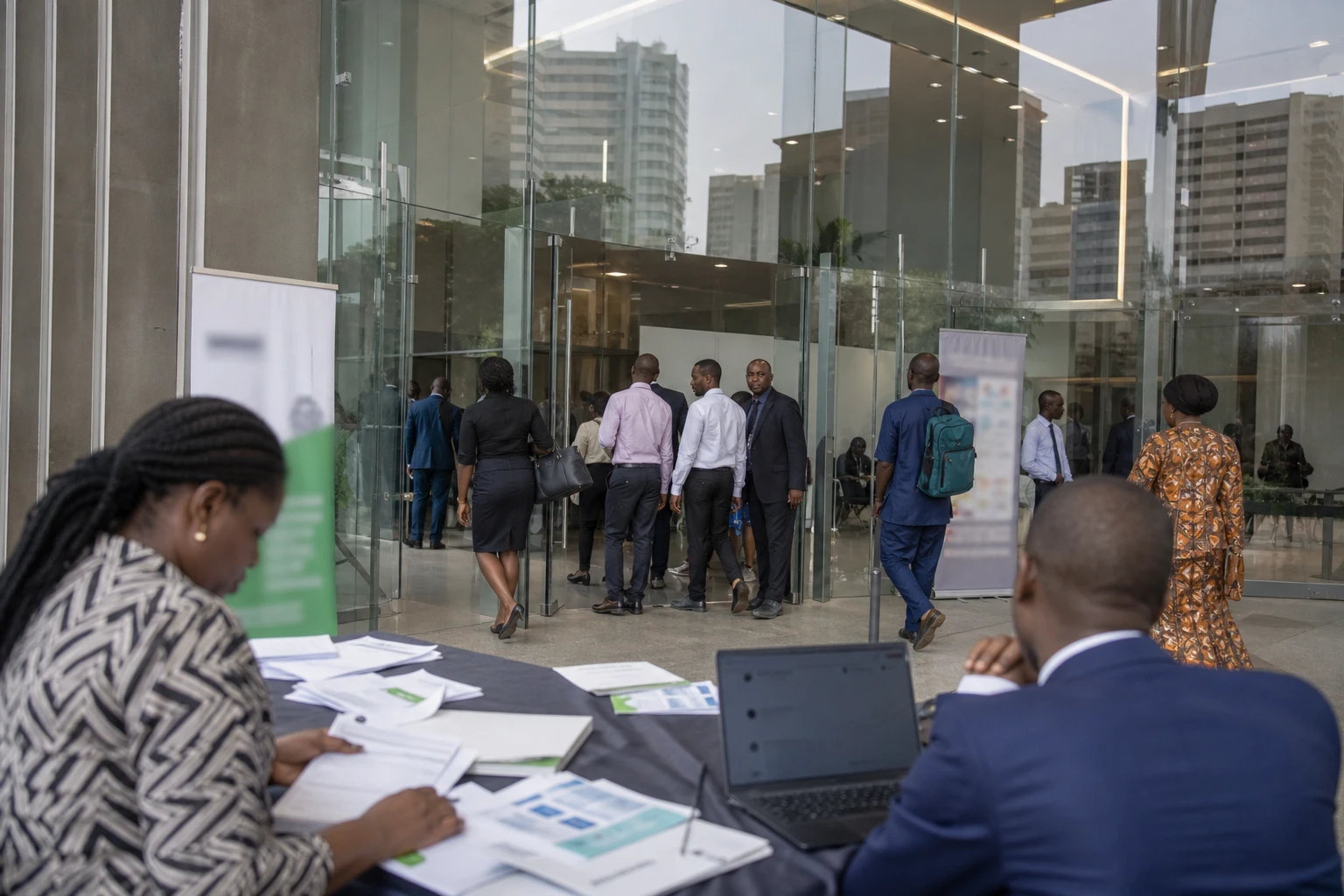
In Nigeria, a private refinery becomes a major test for the financial market
In Lagos, a company long seen as a national industrial symbol has entered a new phase. Aliko Dangote’s refinery has opened part of its capital to the public, aiming to raise 2.15 trillion naira, or around $1.6 billion, in what is being billed as the largest initial public offering ever held in Africa. The offer opened on 14 September 2026, after approval from Nigeria’s Securities and Exchange Commission, and is aimed at both retail and institutional investors.
The move is more than a simple fundraising exercise. It comes in a country where oil has long been extracted but little of it processed locally, and where public refining capacity remained dysfunctional for years. The growth of Dangote’s refinery has already reshaped Nigeria’s petroleum-product flows, while regulators and markets are now seeking to assess what this stock-market listing will change for industry, savings and the country’s energy sovereignty.
An offer designed to broaden the shareholder base
The prospectus presented to the market provides for the sale of 4.1 billion shares. The price cited in the documents and press reports is 525 naira per share, with a minimum investment of 5,250 naira for ten shares, or around $4. This structure allows modest savers to buy into the company, although actual participation will depend on their ability to withstand the volatility of a share linked to a major industrial asset.
Nigeria’s SEC, for its part, has urged caution. In its public notice, it recommends using only official channels, checking any intermediary and reading the approved prospectus before subscribing. This reminder matters in a market where high-profile offers can attract inexperienced investors.
Enthusiasm was immediate. Digital platforms experienced major disruption on the first day of the offer, signalling intense public interest. For many Nigerians, the idea is not just to buy a share. It is also a chance, for once, to become an owner of an asset that already shapes their daily lives.
What the refinery has already changed in Nigeria’s economy
At the heart of the issue is the refinery’s place in Nigeria’s energy system. Dangote’s site and the OGFZA describe a facility brought up to 700,000 barrels per day after debottlenecking in February 2026, with scope to expand to 1.4 million barrels per day. The US EIA, meanwhile, notes that in the second quarter of 2026, maritime shipments of petroleum products from Nigeria averaged 561,000 barrels per day, up from 79,000 in 2023, as a direct result of the refinery ramping up operations.
This shift is affecting the external balance. The EIA also says maritime imports of refined products fell below 130,000 barrels per day in the second quarter of 2026, compared with nearly 400,000 barrels per day in 2023. At the same time, exports to Europe and other African countries have increased. In other words, Nigeria is no longer just a crude-oil exporter that then buys back fuel refined elsewhere. It is beginning to regain control of part of the value chain.
This change explains Dangote’s central argument: selling a stake would allow citizens to share in an asset that reduces the country’s dependence on imports. The idea resonates in a country of more than 210 million people, where the cost of refined products has long weighed on public finances and prices at the pump. But it does not eliminate the risks of a model centred to such a great extent on a dominant private player.
Between economic patriotism and fears of concentration
Aliko Dangote is no newcomer. His group has dominated cement, sugar, salt and fertiliser in Nigeria for decades, and its listed companies carry significant weight on the local stock exchange. Company documents now present his conglomerate as a pillar of Nigerian industry. This industrial depth lends weight to his case for local manufacturing and import substitution — producing in Nigeria what the country used to buy from abroad.
But this model also raises concerns. Critics point to a near-monopoly in cement, and some analysts fear that an already powerful position in industry could extend into energy. AP reports that Dangote retains 87% of the refinery’s capital after the offer, fuelling debate over how genuinely “public” the offer is. The group, for its part, says it has invested where the state failed to act and is filling structural gaps.
The tension is real, but it also reflects Nigeria’s debate over industrialisation. Should the country favour national champions capable of building major infrastructure quickly, or protect wider competition to prevent private rent-seeking from replacing public rent-seeking? In Nigeria, this question goes beyond Dangote. It affects sectors where the state has withdrawn without the market always making enough room for new players.
What this IPO says about Nigeria and West Africa
The issue resonates well beyond Lagos. Regionally, it forms part of a West Africa where ECOWAS is, in theory, pushing for the freer movement of goods and capital, but where value chains remain fragmented. If Dangote’s refinery increases sales to neighbouring countries, it could become a major fuel supplier for part of the region, affecting transport costs, product availability and competition with traditional importers.
The market is now watching another milestone: whether the share can hold its value over time. If current margins contract, global oil prices return to normal or the expansion to 1.4 million barrels per day is delayed, the valuation will have to be justified by strong and consistent cash flows. This is where the IPO stops being a symbol and becomes a test of governance, profitability and confidence in Nigeria’s market institutions.
For the continent, the significance is clear. Nigeria is showing that a major industrial asset, financed locally and partly opened to the public, can attract African savings around a project of real economic transformation. But it is also a reminder that industrialisation does not automatically mean redistribution. The next thing to watch will be whether the company can maintain its volumes, genuinely broaden its shareholder base and prove that the rise of a private giant can serve something beyond its own power.