Algeria
 Egypt
 Libya
 Morocco
 Sudan
 Tunisia
 Benin
 Burkina Faso
 Cabo Verde
 Côte d'Ivoire
 Ghana
 Guinea
 Guinea-Bissau
 Liberia
 Mali
 Mauritania
 Niger
 Senegal
 Sierra Leone
 The Gambia
 Togo
 Cameroon
 Central African Republic
 Chad
 DR Congo
 Equatorial Guinea
 Gabon
 Republic of the Congo
 São Tomé and Príncipe
 Burundi
 Comoros
 Djibouti
 Eritrea
 Ethiopia
 Kenya
 Madagascar
 Malawi
 Mauritius
 Mozambique
 Rwanda
 Seychelles
 Somalia
 South Sudan
 Tanzania
 Uganda
 Angola
 Botswana
 Eswatini
 Lesotho
 Namibia
 South Africa
 Zambia
 Zimbabwe
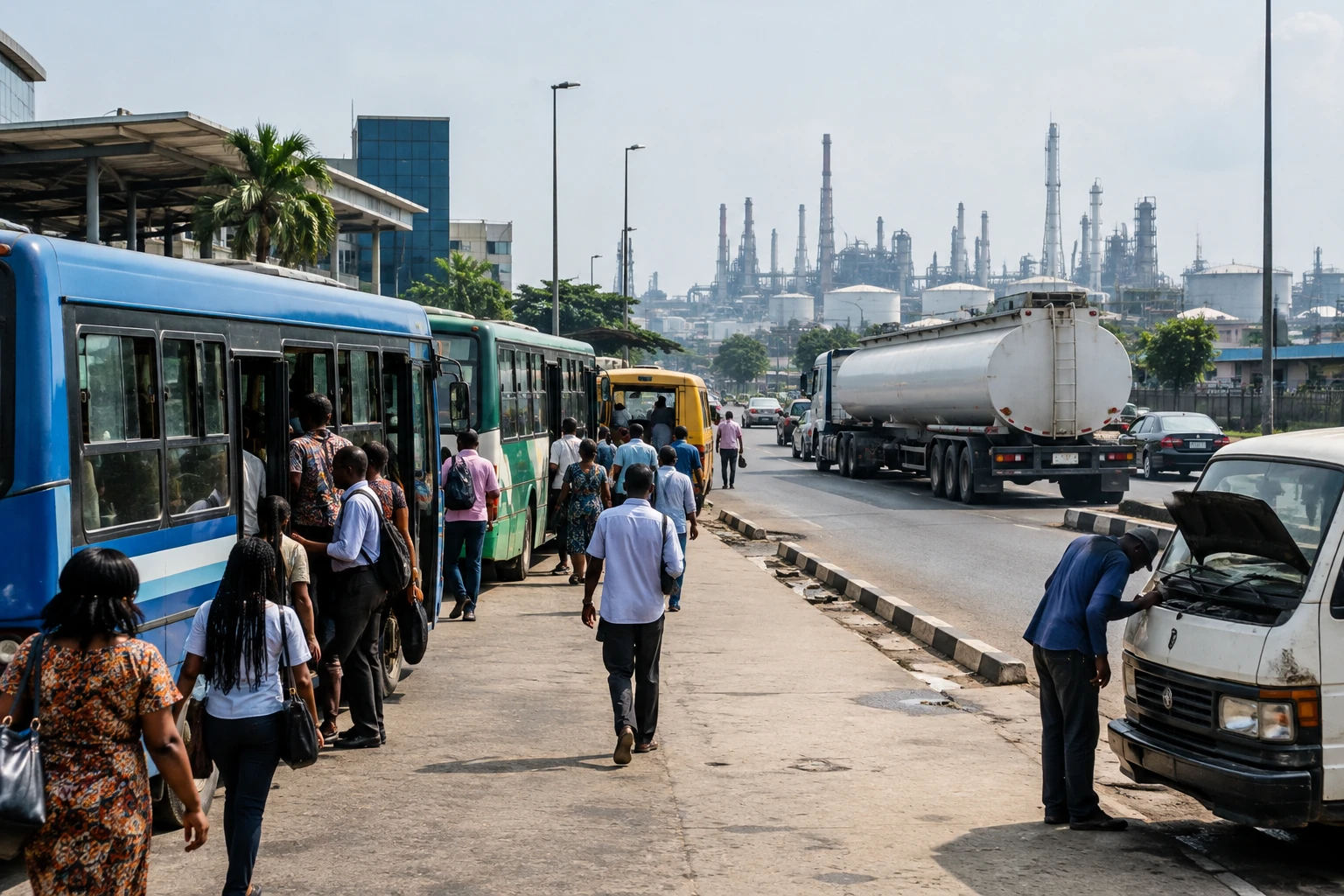
When fuel cargoes from the Gulf become scarce, distance matters as much as price. In Nigeria, the Lekki refinery can bring some supply closer to African markets. But turning this opportunity into lasting energy security means resolving challenges specific to the country: access to crude, distribution and the cost of fuel.
An external shock reshuffles the deck
The Strait of Hormuz links the Gulf to the Gulf of Oman and is a major passage for hydrocarbons. Disruptions linked to the conflict in the Middle East have reduced some flows and prompted buyers to seek other suppliers. In March 2026, Reuters reported an increase in Nigerian exports of petroleum products, particularly to African countries. Maritime tracking data cited by the agency indicated that Nigeria exported around 214,000 barrels per day of refined products in March, compared with a February average of 100,000. Volumes destined for other African countries reached around 90,000 barrels per day, up from 38,000 previously. Reuters, republished by Business Day, on the rise in Nigerian exports
This does not mean Nigeria is replacing Gulf suppliers on its own. Rather, it shows how an international shock can increase interest in closer sources. For African importers, cargoes loaded in Lagos can reduce delivery times and some transport costs. The advantage, however, depends on prices, available volumes and the regularity of deliveries.
From crude producer to fuel supplier
Nigeria’s paradox is a longstanding one: the country extracts oil but has for years imported a large share of the fuel consumed in its domestic market. State-owned refineries, including those at Port Harcourt, Warri and Kaduna, have experienced long periods of limited operation. The gradual commissioning of the private Dangote facility in Lekki, near Lagos, has therefore changed the industrial equation.
The refinery’s initially announced capacity was 650,000 barrels of crude per day. In February 2026, it reached this nameplate capacity, according to Reuters and reports carried by the Nigerian press. This capacity refers to the volume of crude the facility can process under specified conditions; it does not, by itself, guarantee constant output or the same availability of every fuel. The refinery has also exported products to several African markets. Nigerian daily Punch on the first cargoes destined for five African countries
The destinations mentioned include Côte d’Ivoire, Cameroon, Tanzania, Ghana and Togo. This list illustrates a market extending beyond West Africa. It does not mean that all these countries now depend on Nigeria: purchases follow the contracts, prices and needs of each market.
Industrial capacity does not solve everything
A large refinery can reduce dependence on imports of finished products. It does not automatically eliminate dependence on external markets. It needs enough crude, foreign currency, transport infrastructure and buyers able to pay. Nigeria faces precisely a challenge in securing its raw material.
On 9 October 2026, Nigeria’s finance minister, Taiwo Oyedele, said domestic crude production was not sufficient to supply the Dangote refinery and meet the needs of other local operations. He also noted that the company imported crude. The statement, reported by Channels Television, is a reminder that being a major producer does not guarantee that the oil extracted will be available in the right place, at the right time and on the commercial terms sought. The minister’s statement, reported by Channels Television
Price remains just as sensitive an issue. Export sales can earn foreign currency and support industrial activity. But Nigerian consumers also judge the refinery’s success by fuel availability and the price at the pump. Distributors, meanwhile, weigh local supply against imports, depending on permits and margins. The commercial decisions of a major private operator therefore carry weight in an essential market, without being the same as public policy.
A regional issue, with competition to watch
For ECOWAS, the Economic Community of West African States, a closer regional supply can strengthen trade between neighbouring countries. It could also limit some disruptions linked to long supply chains. However, this advantage will depend on predictable rules, port capacity and suitable distribution networks. Importing countries will remain alert to competition between suppliers and to the possibility of diversifying their purchases.
The project therefore provides an important industrial response, but not an automatic solution to Africa’s energy vulnerability. A surge in demand during a crisis opens a commercial window for Nigeria. To make it lasting, it will be necessary to monitor the regularity of exports, crude supply, domestic prices and the space left for other distributors. In Abuja, decisions on the oil sector will have direct consequences for motorists, businesses and households. Regionally, the challenge will be to turn refining capacity located in Nigeria into reliable trade, rather than dependence on a single supplier.