Algeria
 Egypt
 Libya
 Morocco
 Sudan
 Tunisia
 Benin
 Burkina Faso
 Cabo Verde
 Côte d'Ivoire
 Ghana
 Guinea
 Guinea-Bissau
 Liberia
 Mali
 Mauritania
 Niger
 Senegal
 Sierra Leone
 The Gambia
 Togo
 Cameroon
 Central African Republic
 Chad
 DR Congo
 Equatorial Guinea
 Gabon
 Republic of the Congo
 São Tomé and Príncipe
 Burundi
 Comoros
 Djibouti
 Eritrea
 Ethiopia
 Kenya
 Madagascar
 Malawi
 Mauritius
 Mozambique
 Rwanda
 Seychelles
 Somalia
 South Sudan
 Tanzania
 Uganda
 Angola
 Botswana
 Eswatini
 Lesotho
 Namibia
 South Africa
 Zambia
 Zimbabwe
Can a refinery built in Nigeria attract investment from savers in Dakar, Nairobi or Gaborone without every financial border imposing a new regulatory process? Dangote’s share offer has made this question concrete. It reveals both investors’ appetite and the limits of integration among African markets.
A Nigerian offer with continental implications
In Nigeria, the Dangote refinery in Lagos has become a major industrial asset. Its listing therefore concerns far more than its owner: it touches on the financing of major infrastructure and the role of African investors in its development.
The public offering, launched on 14 September and closed on 28 October 2026, aimed to raise $1.6 billion. Applications reportedly reached about 6.4 trillion naira, or nearly $4.77 billion. This figure, reported by people familiar with the matter, is around three times the amount on offer. The shares are due to be admitted to trading on the Nigerian Exchange, subject to the announced timetable. Reports on the close of the offer and subscriptions give an indication of the interest it generated in Nigeria.
But the stated aim went beyond the Nigerian market. As early as April, Dangote had begun discussions with several African stock exchanges to broaden access to the offering. Edoh Kossi Amenounve, chief executive of the Bourse régionale des valeurs mobilières (BRVM), based in Abidjan, confirmed the talks on 4 November on the sidelines of the Africa Financial Summit in Luanda. Africanews also reported on the initiative and its regulatory obstacles.
Regulatory borders between stock exchanges
African financial markets do not operate under a single set of rules. A company seeking to have its securities traded in several countries must obtain approval from the relevant regulators. Listing requirements, investor-protection rules and settlement procedures may differ. Technology alone is therefore not enough to make markets compatible.
One option is to use global depositary receipts, or GDRs. These instruments represent shares held in the country of origin and allow them to be traded on another financial market. Such arrangements have been used to make the offer accessible to investors in Kenya and Botswana, although their implementation remains subject to local rules and approvals.
The BRVM serves eight countries in the West African Economic and Monetary Union. It is already a regional market, but its operations do not eliminate regulatory differences with Nigeria, which is not part of that monetary union. ECOWAS, the economic community of West African countries, promotes regional integration, but that does not mean capital markets automatically have a common regulator.
Amenounve is calling for rules to be harmonised and regulators’ decisions to be mutually recognised. In other words, an approval granted in one country could be more readily accepted by another. He believes the infrastructure for cross-border transactions is already in place, notably through the African Exchanges Linkage Project, which connects several African stock exchanges. The main obstacle is now regulatory.
Who can actually invest?
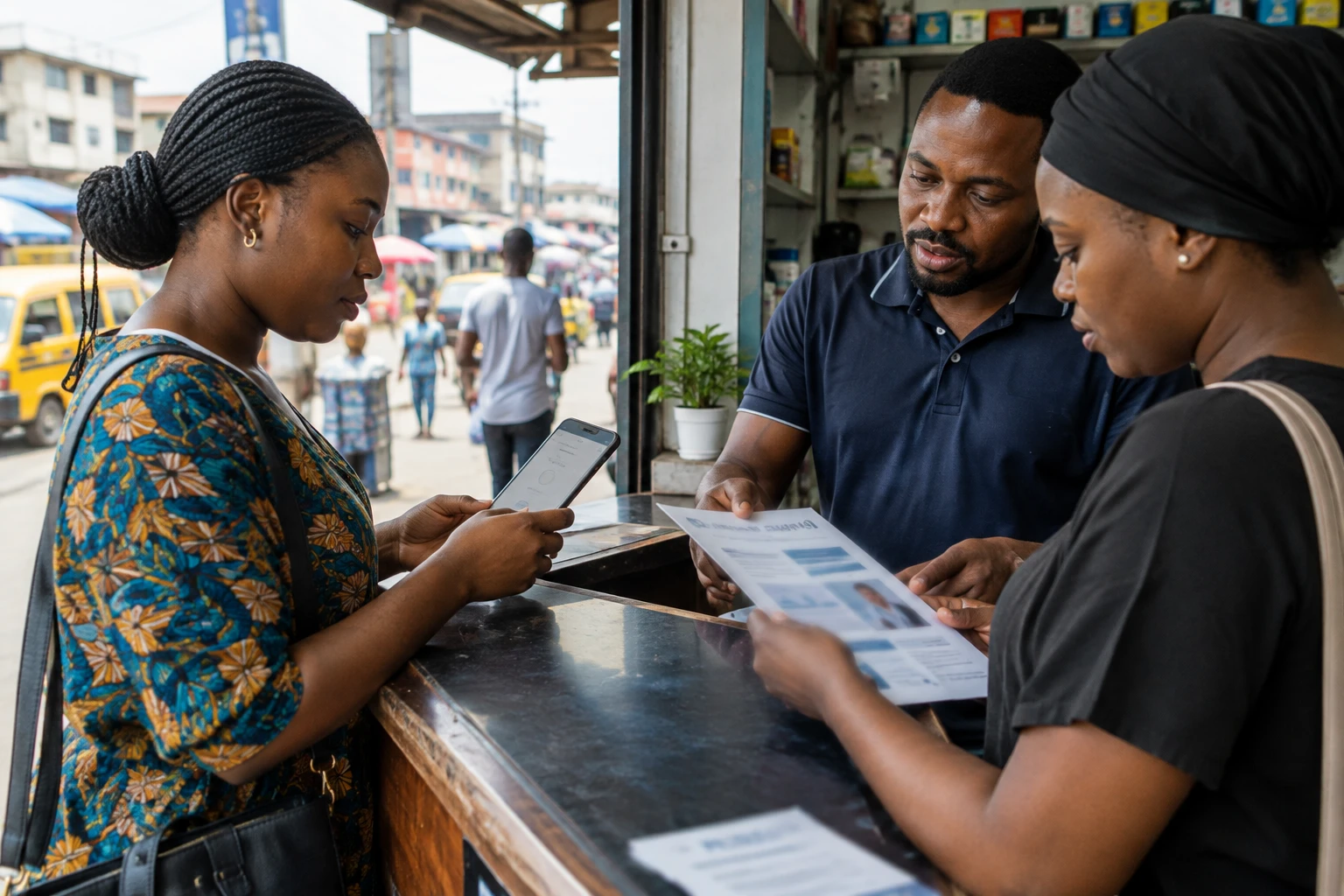
Opening an offer to several countries does not guarantee equal access. Individuals must be able to open an account, pass identity checks, transfer funds and understand the fees and risks. Financial intermediaries and country-specific procedures can also make investing more expensive or complex.
Large institutions generally have more resources to navigate these steps. For small savers, access depends more directly on the minimum investment required and the availability of a broker. The commercial success of the offer therefore does not, by itself, answer the question of what share of the stock will actually go to ordinary investors, in Nigeria or elsewhere.
Nor does the sale of shares mean that control of the refinery is changing hands. The offer covers a fraction of the company. Dangote’s retained stake, the valuation and the refinery’s ability to generate sustainable revenue remain important considerations for future shareholders.
For Nigeria, the industrial stakes are also significant. The refinery could reduce dependence on imports of refined products and support economic activity. But these potential benefits are not automatic: the company’s performance, its crude-oil supplies and market conditions will affect its results. Investors must distinguish the site’s strategic importance from the future profitability of its shares.
BRVM plans its own changes
The discussions around Dangote come as the BRVM continues to develop its tools. Its derivatives market, intended to offer contracts linked to indices or certain shares, has been postponed until 2027. Regulatory and technological work remains to be completed.
The regional exchange also hopes to welcome one or two new companies in 2027, beyond the banking and telecommunications sectors, which are already well represented. Energy, industry, mining and agriculture are among the sectors that could broaden the market. This diversification matters for companies seeking capital, but also for investors who want to avoid concentrating their investments in a few sectors.
At continental level, the case tests a specific ambition: enabling African capital to finance African companies without requiring a wholly separate structure for every transaction. It does not, by itself, create a pan-African financial market. What happens next will depend on regulators’ decisions, listing arrangements and investors’ actual access after the offer closes.
The next steps to watch are the admission of the shares to the Nigerian Exchange and continued discussions between stock exchanges and financial authorities. If these lead to more compatible rules, the effects could extend beyond Dangote. If the obstacles remain, investors across the continent will continue to rely on ad hoc arrangements to participate in major cross-border offerings.