Algeria
 Egypt
 Libya
 Morocco
 Sudan
 Tunisia
 Benin
 Burkina Faso
 Cabo Verde
 Côte d'Ivoire
 Ghana
 Guinea
 Guinea-Bissau
 Liberia
 Mali
 Mauritania
 Niger
 Senegal
 Sierra Leone
 The Gambia
 Togo
 Cameroon
 Central African Republic
 Chad
 DR Congo
 Equatorial Guinea
 Gabon
 Republic of the Congo
 São Tomé and Príncipe
 Burundi
 Comoros
 Djibouti
 Eritrea
 Ethiopia
 Kenya
 Madagascar
 Malawi
 Mauritius
 Mozambique
 Rwanda
 Seychelles
 Somalia
 South Sudan
 Tanzania
 Uganda
 Angola
 Botswana
 Eswatini
 Lesotho
 Namibia
 South Africa
 Zambia
 Zimbabwe
A deal that goes beyond the refinery
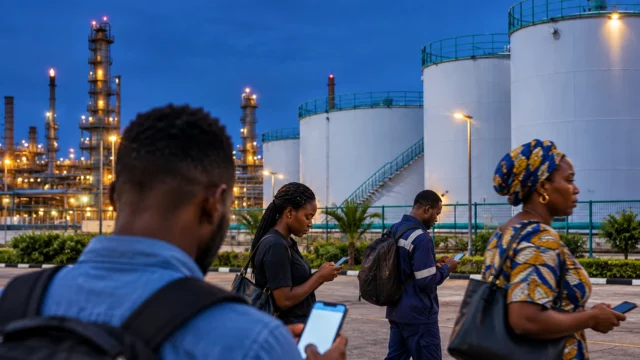
In Lagos, the issue is no longer just about producing fuel. It is now a question of who finances major African industrial assets, who owns them, and on what terms they enter the markets. In the case of the Dangote refinery, this debate touches on the oil industry, the Nigerian stock exchange and the credibility of a project presented as a symbol of economic sovereignty.
Nigeria, West Africa’s largest economy and a key member of ECOWAS, remains dependent on imports of refined products despite its oil wealth. An IPO for an asset of this size would therefore be more than a financial event. It would also say something about the depth of the Nigerian market, which remains limited relative to the capital needs of major infrastructure projects.
On Thursday 3 September, Aliko Dangote told investors and analysts during a visit to Botswana that the IPO of his refinery would open in 10 to 12 days. He also said he wanted to increase the site’s capacity to 1.4 million barrels a day, from 650,000 currently. The refinery is targeting a fundraise of about $5 billion, according to information reported by Reuters.
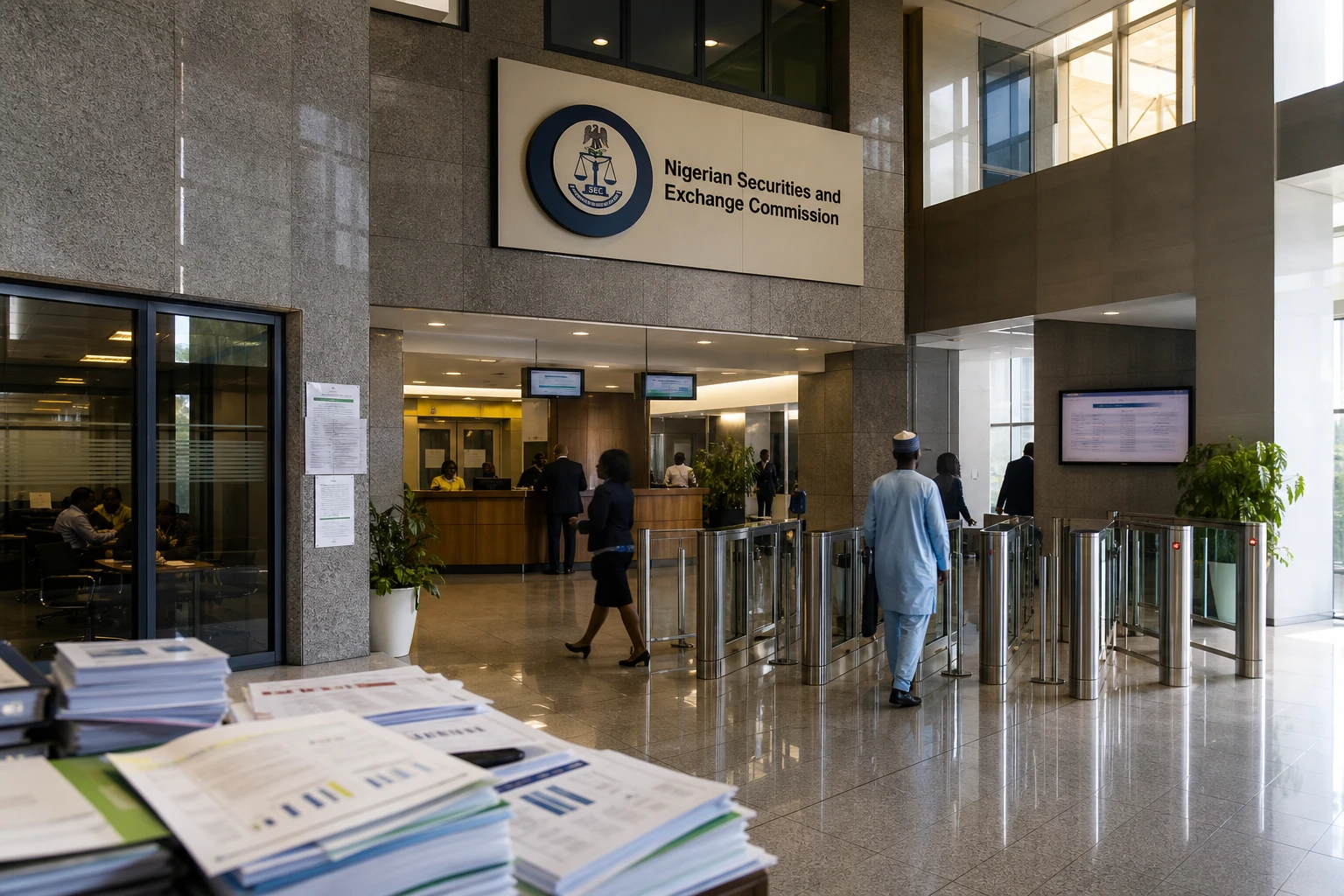
The announced timetable comes, however, amid a sensitive regulatory climate. In June, Nigeria’s Securities and Exchange Commission said that no application to register an IPO or public share offering for the refinery had been filed or approved at that point. The commission also warned against solicitations it considered misleading in connection with a purported offer. In other words, the project is moving forward, but regulatory approval remains crucial.
What the figures say, and what they reveal
The Dangote refinery is designed to transform Nigeria’s fuel market. The site reached its nameplate capacity of 650,000 barrels a day in February 2026, then was tested at 700,000 barrels a day, showing there is technical headroom before expansion. David Bird, its chief executive, has confirmed that the group is aiming for a continued ramp-up.
This industrial trajectory carries particular significance in a country where fuel imports weigh heavily on the trade balance and public finances. Tensions in the Middle East have also supported global refining margins by boosting demand for alternative supplies. The Dangote project is therefore benefiting from favourable market conditions, as well as strategic interest for Nigeria, which has for years sought to reduce its dependence on imported products.
The group has already made progress. In August, Dangote Industries announced a $1 billion financing programme, structured around a $600 million private tranche that has already been subscribed and a further $400 million commitment. In July, the group also completed a $2.5 billion private fundraising, described as the largest private primary placement ever announced on the continent. This is no small detail: the planned IPO already has a base of institutional investors.
The African perspective on the deal is straightforward. A major refinery is valuable not only because of its size. Its value also lies in its ability to attract local capital and African funds, and to broaden its shareholder base beyond the founding circle. This is also one reason why the deal is being closely watched on the Nigerian Exchange Group, where such a listing could expand the range of large industrial assets available to investors.
A pan-African strategy, between London and East Africa
Dangote is not talking only about Nigeria. He links this IPO to two other projects. First, Dangote Cement is preparing a secondary listing in London, which the group has described as a way to broaden its international investor base. Second, the group wants to launch a refinery project on the Kenyan coast on 30 September in partnership with East African governments, according to Reuters.
This second front is important for East Africa. The project is ultimately intended to supply fuel to Kenya and neighbouring countries, reducing their dependence on imports. It is part of a broader regional discussion, raised in April by Kenyan President William Ruto, who spoke of a joint refinery in the Tanga region of Tanzania to serve Kenya, Uganda, South Sudan and the Democratic Republic of the Congo.
For Nairobi as for Abuja, the issue goes beyond Aliko Dangote alone. It points to regional value chains, energy security and the ability of African capital to finance major infrastructure without relying systematically on external markets. In both cases, the logic is the same: produce more on the continent, then organise the regional distribution of these essential goods.
One decisive uncertainty remains: regulation. In Nigeria, the SEC has already made clear that nothing has yet been approved. In South Africa, Kenya and the United Kingdom, investors will also scrutinise the ownership structure, debt levels, governance and actual timetable for the market launch. If the deal goes ahead, it could become a benchmark for African stock exchanges. If it is delayed, it will mainly serve as a reminder that major industrial projects on the continent are now progressing under the exacting scrutiny of the markets.