Algeria
 Egypt
 Libya
 Morocco
 Sudan
 Tunisia
 Benin
 Burkina Faso
 Cabo Verde
 Côte d'Ivoire
 Ghana
 Guinea
 Guinea-Bissau
 Liberia
 Mali
 Mauritania
 Niger
 Senegal
 Sierra Leone
 The Gambia
 Togo
 Cameroon
 Central African Republic
 Chad
 DR Congo
 Equatorial Guinea
 Gabon
 Republic of the Congo
 São Tomé and Príncipe
 Burundi
 Comoros
 Djibouti
 Eritrea
 Ethiopia
 Kenya
 Madagascar
 Malawi
 Mauritius
 Mozambique
 Rwanda
 Seychelles
 Somalia
 South Sudan
 Tanzania
 Uganda
 Angola
 Botswana
 Eswatini
 Lesotho
 Namibia
 South Africa
 Zambia
 Zimbabwe
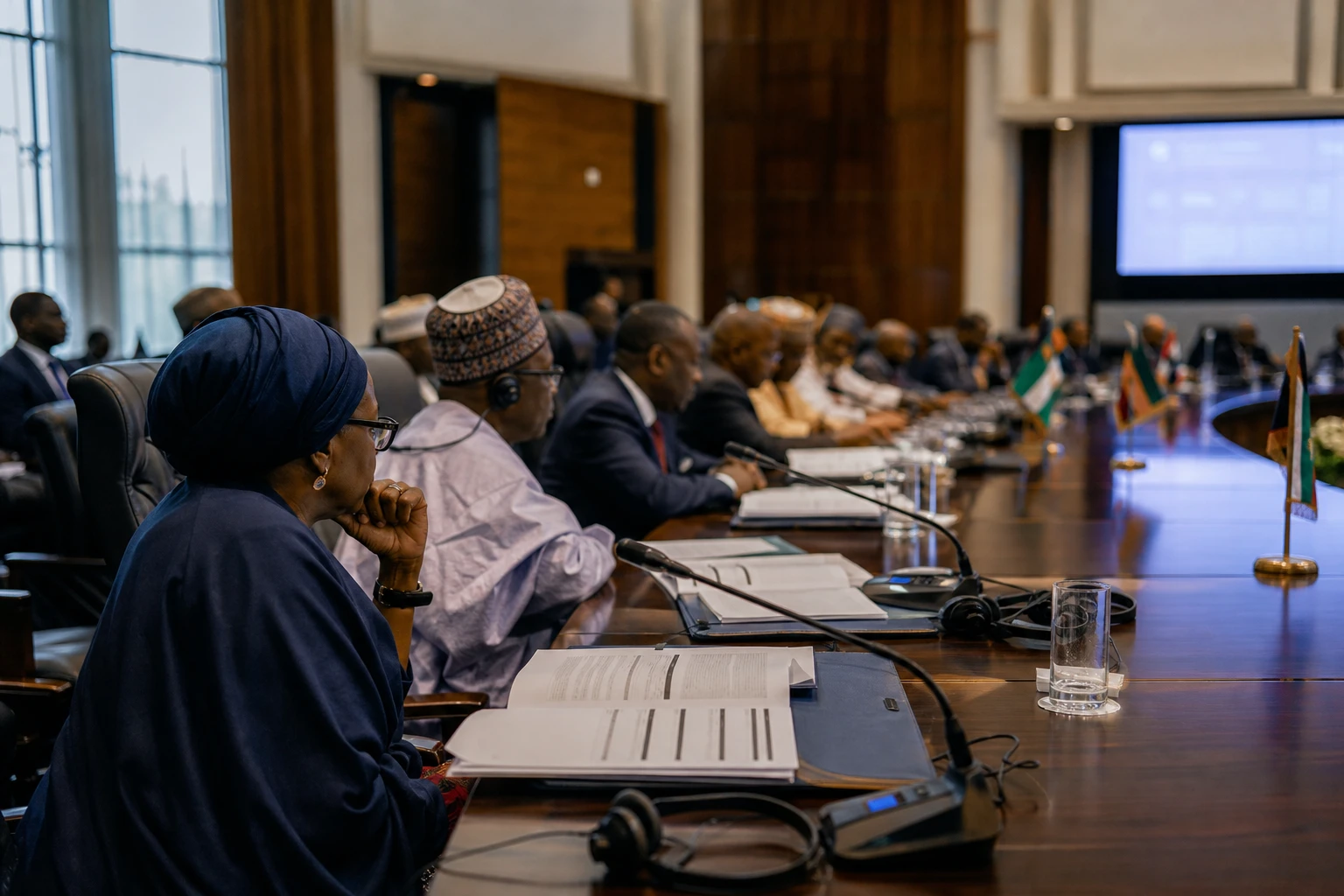
When a share offering promises to speak to Africa, the rules are still mostly national
In Lagos, the deal billed as the continent’s biggest share sale aims to attract small investors as well as large funds. The message is simple: buy into a strategic industrial asset with a very low minimum investment. But for a saver based in Abidjan, Dakar or Lomé, the real question is not the quoted price. It is whether they can actually access the market, still hampered by currencies, intermediaries and the rules of each jurisdiction.
The issue goes beyond Nigeria alone. It concerns West Africa’s ability to channel savings between its financial markets. The Nigerian Exchange, the BRVM and the AELP project are all part of the regional landscape. But a technical link alone is not enough to create a single capital market. WAEMU, meanwhile, strictly regulates residents’ investments abroad, mechanically limiting direct purchases of Nigerian securities from within the West African monetary union.
In Nigeria, a hotly anticipated offer under close scrutiny
The publication of the offering documents marked a turning point. According to Reuters, the deal comprises 4.1 billion ordinary shares offered at 525 naira each, with the order book opening on 14 September 2026 and closing on 13 October 2026. At the chosen price, the group is targeting about 2.15 trillion naira, or nearly $1.63 billion. The offer could be increased by 30% in the event of strong demand, subject to regulatory approval.
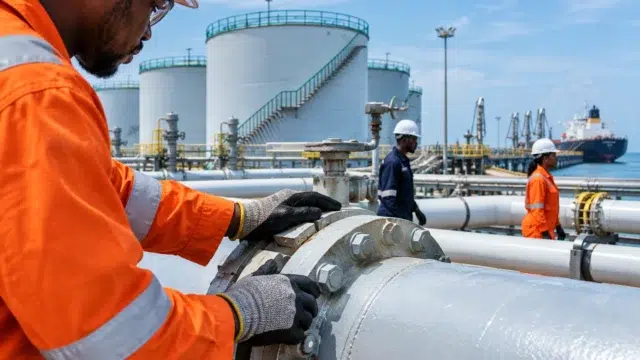
Dangote refinery has also highlighted its recent performance. Reuters says it made $1.82 billion in profit after tax in the first half of 2026, following a loss of $476 million for the whole of 2025. At the same time, the group announced plans to invest a further $14.3 billion to double the processing capacity of its complex. The project is therefore not just financial. It is also industrial, energy-related and symbolic for Nigeria, which is seeking to reduce its dependence on fuel imports.
The timing is no coincidence. In June 2026, Nigeria’s Securities and Exchange Commission warned against what it deemed misleading solicitations relating to an offer that had not yet been registered. The company had then reiterated that no subscription facility was active until formal approvals had been obtained. The episode was a reminder of an obvious point: in such a sought-after market, regulatory compliance remains the first condition for credibility.
What the gap between Lagos and WAEMU reveals
The tension is not just between individual investors and large institutions. It also lies between stock-market infrastructure and foreign-exchange rules. The AELP project, launched by the African Securities Exchanges Association and the African Development Bank, was designed to facilitate cross-border transactions between African stock exchanges. The BRVM says the AELP Link platform went live in 2022 and that Nigeria is part of the network. The JSE, for its part, says execution remains subject to the law, regulations and practices of the host market. In other words, orders are connected, but financial sovereignty is not.
For a WAEMU resident, the barrier runs deeper. Regulation No. 06/2024/CM/WAEMU, published by the BCEAO, requires prior authorisation for investments abroad and, in several cases, stipulates that they must be financed mainly from external sources. The text also governs the repatriation of income and proceeds from sales. In practice, this makes a simple, large-scale direct purchase of Nigerian shares from within the CFA franc zone very difficult. This is not a political rejection of integration. It is a foreign-exchange control framework that prioritises monetary stability and the traceability of capital outflows.
This has very tangible effects. In Lagos, the offer can attract households, pension funds and institutional investors. In WAEMU, it is more likely to be followed from a distance, through intermediary vehicles, authorised platforms or professional investors. The pan-African market exists in rhetoric, in some infrastructure and in issuers’ ambitions. But for ordinary savers, capital flows remain fragmented, country by country, currency by currency.
A test for Nigeria, a signal for the continent
For Abuja, the stakes are twofold. First, to show that a major industrial asset can be opened up to the market without losing its strategic coherence. Second, to prove that the Nigerian financial market can absorb an operation of exceptional scale while remaining accessible to local investors. Nigeria, with its capital in Abuja, wants to strengthen its position as a West African financial centre, as competition between Lagos, Johannesburg, Nairobi, Casablanca and Abidjan intensifies.
For the region, the signal is broader. West Africa has already established links between its stock exchanges. It has not yet created a fluid capital market comparable to one enabled by extensive regulatory harmonisation. This is where the Dangote IPO becomes a useful indicator. It shows that trading infrastructure is not enough if foreign-exchange regimes, depositories, public-offering approvals and national eligibility rules remain disconnected.
Across Africa, the deal will therefore serve as a barometer. It will show whether the continent’s major industrial groups can genuinely raise funds from African shareholders beyond their home markets. It will also show whether initiatives such as AELP remain a tool for technical connectivity or gradually become a lever for financial integration. For now, the answer is somewhere in between. Africa has connected more stock exchanges. It has not yet removed the frictions that prevent savings from travelling as freely as industrial ambitions.