Algeria
 Egypt
 Libya
 Morocco
 Sudan
 Tunisia
 Benin
 Burkina Faso
 Cabo Verde
 Côte d'Ivoire
 Ghana
 Guinea
 Guinea-Bissau
 Liberia
 Mali
 Mauritania
 Niger
 Senegal
 Sierra Leone
 The Gambia
 Togo
 Cameroon
 Central African Republic
 Chad
 DR Congo
 Equatorial Guinea
 Gabon
 Republic of the Congo
 São Tomé and Príncipe
 Burundi
 Comoros
 Djibouti
 Eritrea
 Ethiopia
 Kenya
 Madagascar
 Malawi
 Mauritius
 Mozambique
 Rwanda
 Seychelles
 Somalia
 South Sudan
 Tanzania
 Uganda
 Angola
 Botswana
 Eswatini
 Lesotho
 Namibia
 South Africa
 Zambia
 Zimbabwe
The return of a cinema without walls
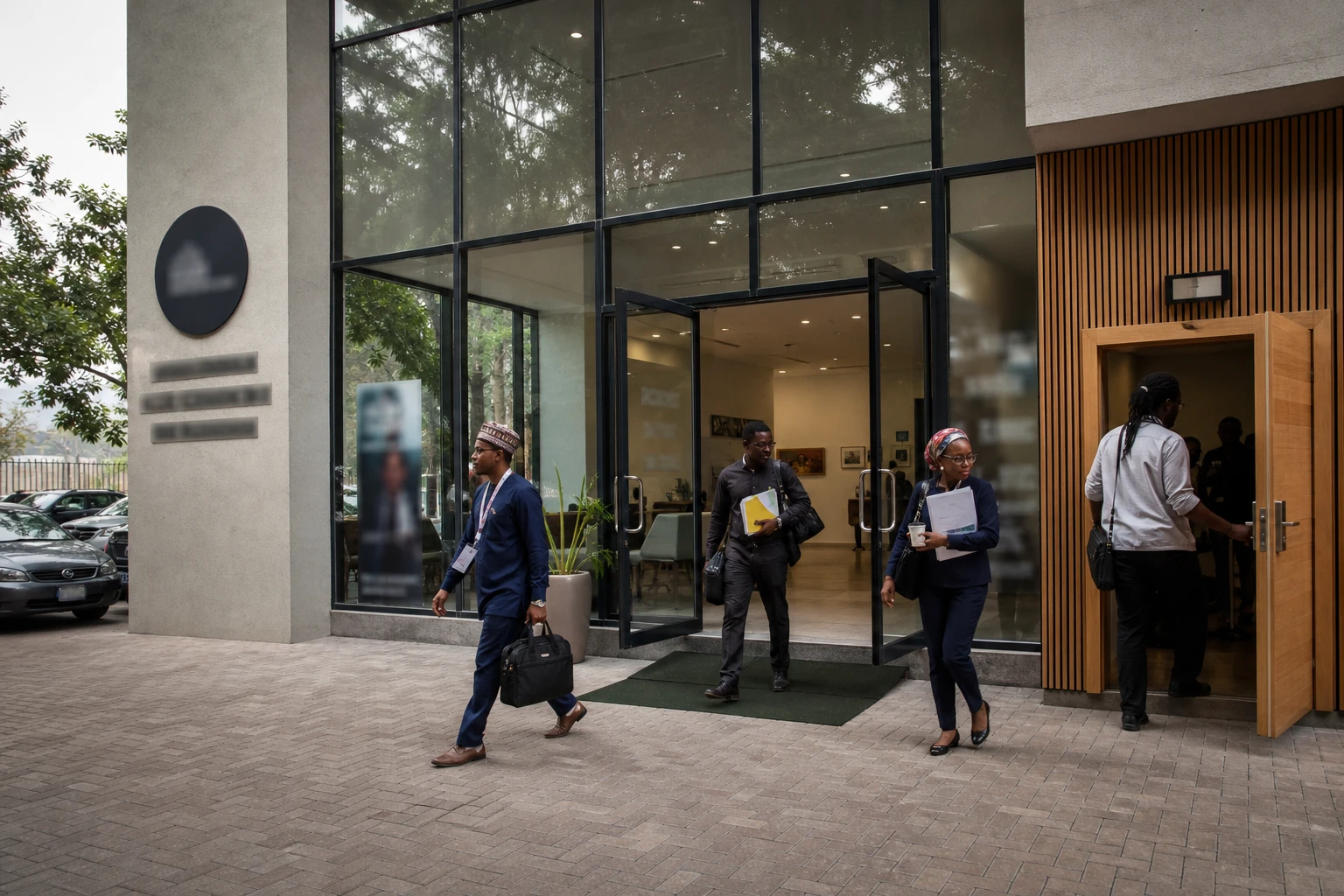
In the world of Nigerian cinema, the battle is no longer being fought only in Lagos, or even in multiplexes. It is shifting to less conspicuous ground, but often more decisive territory: the neighbourhood, the parish, the schoolyard, the square where a film can once again become a shared event. This approach is now reappearing in the distribution strategy of some Nollywood productions, even as digital platforms and commercial cinemas have come to dominate access to screens.
Nigeria, with Abuja as its political capital, remains the industrial heart of Nollywood, but its audiovisual ecosystem continues to seek more sustainable models. The sector’s regulatory authorities classified 304 films between January and April 2026, a sign that production volumes remain high. At the same time, distribution remains a central issue, because profitability depends not only on filming, but on how a film reaches its audience.
A film, a method, a gamble
The project Daddy Bear, still in post-production, is part of this search. The feature film is being made by a predominantly female team and is supported by the Entertainment and Media Hubs programme, implemented by Africa No Filter with CcHUB and the Gates Foundation to support more inclusive storytelling in film, television, podcasts and digital media. The programme operates in Nigeria and Kenya and offers mentoring, training and grants for stories that challenge gender norms.
The film is due for release in 2026, after filming wrapped at the end of August. Its originality lies less in its plot than in its planned distribution route. Rather than relying from the outset on major exhibition circuits, the project is prioritising local screenings designed to rebuild a direct connection between the work, its audiences and the communities hosting it. This approach moves away from the instinct to opt for a single cinema release or an all-streaming strategy, without ruling either out.
Producer Fulfilment “Fuchi” Nwaturuocha champions a simple idea: community cinema can become a tool for audience development, discussion and more flexible circulation of independent works. This view reflects a trend already visible in Nigeria, where several filmmakers are experimenting with releases outside traditional circuits, including community tours and screenings in non-traditional venues.
Why distribution matters as much as filming
In Nollywood, distribution has long been the weakest link. Digital platforms have opened up new outlets, but they have also intensified competition and dependence on dispersed audiences. Meanwhile, cinema operators remain concentrated in a handful of major cities, leaving out part of the Nigerian cinema-going public. Industry professionals also point out that the value chain remains difficult for independent producers to make profitable.
Community cinema addresses this imbalance through a local approach. A screening becomes a social occasion, not just an act of consumption. It can bring families, associations, young film enthusiasts and local leaders together around the same story. In the case of Daddy Bear, the stakes are also cultural: the film explores grief, fatherhood, family responsibility and life in a Muslim family. Stories of this kind, rooted in Nigerian realities, often gain strength when they are discussed where they are shown.
The regional context makes this gamble easier to understand. West Africa is looking to its creative industries to diversify its economies, while cinema revenues remain vulnerable to piracy and distribution costs. UNESCO estimates that piracy diverts between 50% and more than 75% of revenue from Africa’s film and audiovisual industries. This loss affects producers, but also technicians, cinemas, distributors and informal jobs linked to film tours.
In this context, local initiatives are not an exercise in nostalgia. They are seeking a more flexible business model. They are also testing a different relationship with audiences: more local, more conversational and less dependent on algorithms. In this way, they complement cinemas and platforms rather than replacing them. This is precisely the complementarity advocated by several industry players, including those who have already used community tours for successful films.
What this choice says about Nigerian cinema
The signal is important for Nollywood because it shows that innovation is not only about technology. It is also about how audiences are organised. Nigeria remains a giant of African production, with an industrial capacity that continues to grow, but value is still too often created outside the local exhibition market. Rethinking distribution therefore also means keeping a greater share of that value on the continent.
This development is also of interest to ECOWAS, the Economic Community of West African States, because a film made for a community can travel more easily between secondary cities, diasporas and the region’s French- and English-speaking audiences. The model could inspire other African cultural industries, especially where cinemas are scarce and digital subscriptions are too expensive for some audiences. It is also a reminder that an African cultural market cannot be reduced to major cities or global platforms.
At continental level, the experiment matters for another reason: it is part of the battle over narratives. Africa No Filter champions projects that highlight African innovation, opportunity and agency. A film such as Daddy Bear does more than tell a family story; it also tests a more sovereign way of bringing that story to audiences. This is where part of Nollywood’s future will be shaped: less by sheer volume than by control over the routes from filming to meeting audiences.