Algeria
 Egypt
 Libya
 Morocco
 Sudan
 Tunisia
 Benin
 Burkina Faso
 Cabo Verde
 Ghana
 Guinea
 Guinea-Bissau
 Liberia
 Mali
 Mauritania
 Niger
 Nigeria
 Senegal
 Sierra Leone
 The Gambia
 Togo
 Cameroon
 Central African Republic
 Chad
 DR Congo
 Equatorial Guinea
 Gabon
 Republic of the Congo
 São Tomé and Príncipe
 Burundi
 Comoros
 Djibouti
 Eritrea
 Ethiopia
 Kenya
 Madagascar
 Malawi
 Mauritius
 Mozambique
 Rwanda
 Seychelles
 Somalia
 South Sudan
 Tanzania
 Uganda
 Angola
 Botswana
 Eswatini
 Lesotho
 Namibia
 South Africa
 Zambia
 Zimbabwe
A chocolate bar rarely tells its whole story. Behind its flavour are farmers, processing plants and companies sharing a global value chain. For Côte d’Ivoire, the world’s largest cocoa producer, the challenge is therefore not just to promote its beans, but also to increase the share of wealth created in the country.
The Paris edition of the Salon du Chocolat took place from 28 October to 1 November 2026. Côte d’Ivoire was presented there as a central player in the sector, at an event showcasing products, expertise and producing countries. But an international showcase alone does not reveal who processes the cocoa, who sets prices or what share goes to producing communities.
An agricultural powerhouse faces the challenge of adding value
Cocoa plays a major role in Côte d’Ivoire’s economy. It supports the livelihoods of millions of people, directly or indirectly, and is an important source of export revenue. West Africa accounts for most of global production: Côte d’Ivoire and Ghana are the two leading producing countries. Their proximity creates shared interests, but also leaves them both highly exposed to the same climate risks and market fluctuations.
Harvests vary by season and crop year. To avoid conflating the figures, it is important to distinguish production in a calendar year from estimates for a cocoa season. The International Cocoa Organization (ICCO), headquartered in Abidjan, estimated Côte d’Ivoire’s production at 1.681 million tonnes for the 2024-2025 season. This figure confirms the country’s importance, but does not in itself sum up farmers’ incomes or the situation in every region.
The central issue is local processing. Turning beans into intermediate or finished products — butter, powder, liquor and then chocolate — makes it possible to develop industrial activity and expertise beyond growing and exporting beans. According to the Coffee and Cocoa Council, the local processing rate reached 39% during the 2024-2025 season. This progress must be considered alongside export volumes and the value actually captured by Ivorian businesses and workers.
The challenge cannot be solved simply by building factories. Supply must also be secured, equipment financed, workers trained and markets won. Large industrial plants can increase processing volumes. Small businesses and local chocolatiers, meanwhile, need reliable access to beans, energy, credit and distribution networks. Their constraints differ from those of exporting groups.
From farmgate prices to market requirements
For farmers, the daily concern remains the income earned from the harvest. In Côte d’Ivoire, the government sets a guaranteed minimum producer price at the start of each main season. For 2025-2026, the announced price was 2,800 CFA francs per kilogram. The scheme is intended to protect farmers from international market fluctuations, but its effectiveness also depends on the price being honoured at collection points and buyers being able to pay without delay.
The price on offer does not tell the whole story. Farms have different yields, and farmers must cover the costs of labour, inputs and maintaining their plots. In rural areas, a poor harvest can directly affect household spending. In Abidjan and industrial centres, processing can create jobs and market opportunities, but these benefits do not automatically reach farming communities in more remote areas.
Traceability rules add another pressure. Companies selling in certain markets, particularly in Europe, must be able to document the origin of cocoa and link it to the plots where it was grown. This development increases the importance of reliable data and support for cooperatives. It can also be costly for smallholders if tracking requirements are passed on to them without adequate resources.
Sustainability is therefore tied to several practical issues: protecting forests, renewing ageing plantations, improving yields without expanding cultivation into natural areas, and ensuring better working conditions. Traceability can help monitor these commitments. It cannot, however, replace independent checks or the transparent sharing of costs among farmers, processors and buyers.
A Paris showcase, a West African challenge
A chocolate fair gives producers, processors and brands the chance to present their products to buyers and the public. For Ivorian players, the aim is to promote locally made chocolate and build commercial partnerships. But taking part in an international event alone does not show how many contracts were signed, what new markets were secured or how much income was passed on to farmers.
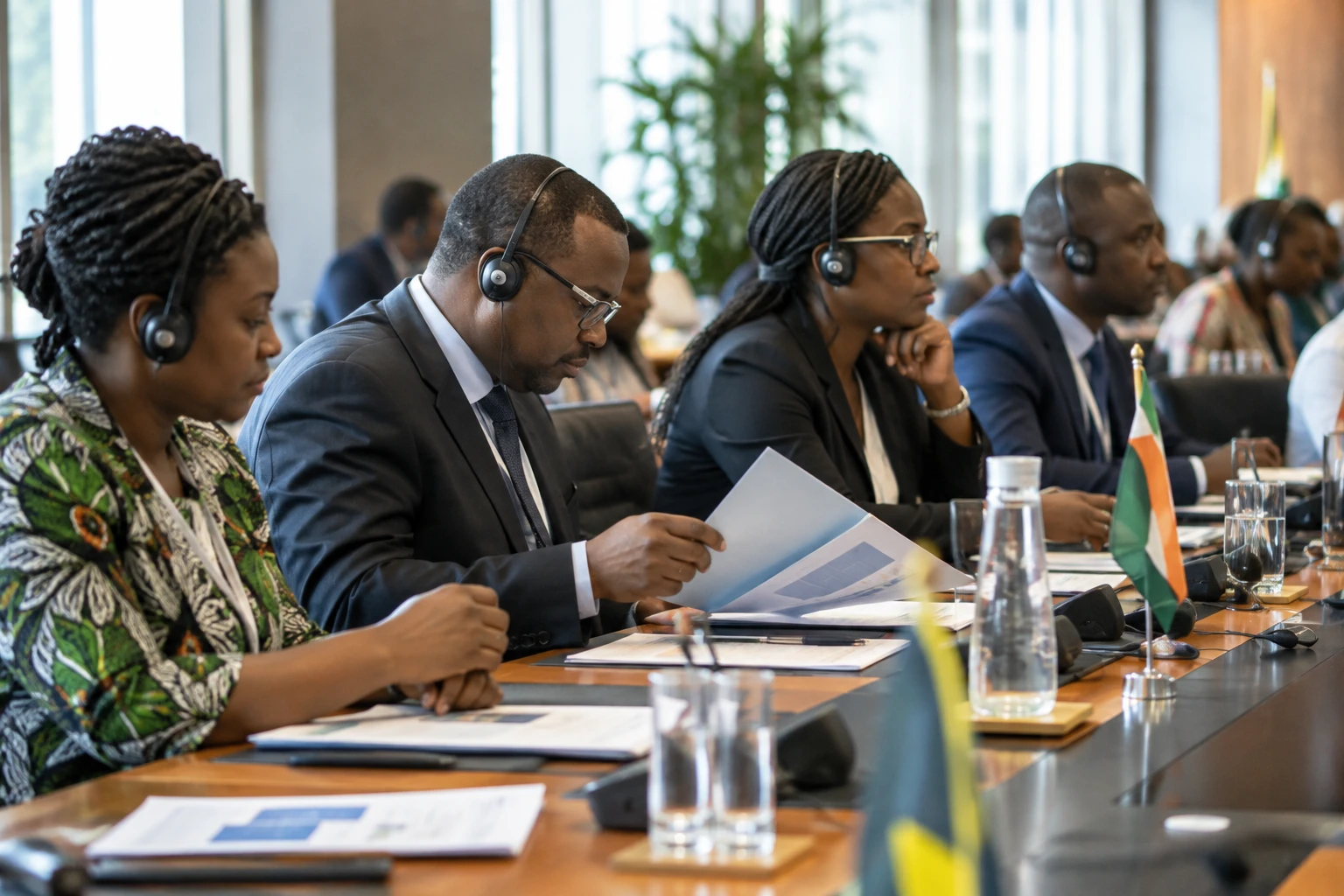
Côte d’Ivoire shares this ambition with Ghana and other producing countries in the region. Closer cooperation can strengthen their ability to defend shared interests in a sector where prices, processors and brands transcend national borders. ECOWAS, the West African regional integration organisation, provides a framework for such exchanges, although agricultural policies and marketing arrangements remain largely national.
The Paris event therefore highlights a lasting tension: Côte d’Ivoire supplies an essential share of the world’s cocoa, but recognition of that role does not guarantee a fair distribution of value. The next indicator to watch will not be only the volume harvested. It will also be the growth of local processing, the income farmers actually receive and the ability of Ivorian companies to sell their products in sustainable markets.
Background sources: dates of the Paris Salon du Chocolat, 2024-2025 annual report of the International Cocoa Organization, Coffee and Cocoa Council announcement on the guaranteed price and processing, assessment in the 2026-2030 National Development Plan.