Algeria
 Egypt
 Libya
 Morocco
 Sudan
 Tunisia
 Benin
 Cabo Verde
 Côte d'Ivoire
 Ghana
 Guinea
 Guinea-Bissau
 Liberia
 Mali
 Mauritania
 Niger
 Nigeria
 Senegal
 Sierra Leone
 The Gambia
 Togo
 Cameroon
 Central African Republic
 Chad
 DR Congo
 Equatorial Guinea
 Gabon
 Republic of the Congo
 São Tomé and Príncipe
 Burundi
 Comoros
 Djibouti
 Eritrea
 Ethiopia
 Kenya
 Madagascar
 Malawi
 Mauritius
 Mozambique
 Rwanda
 Seychelles
 Somalia
 South Sudan
 Tanzania
 Uganda
 Angola
 Botswana
 Eswatini
 Lesotho
 Namibia
 South Africa
 Zambia
 Zimbabwe
When gold becomes a test of economic sovereignty
In N’Djamena, the debate is no longer just about how much gold Chad has. The real question is simpler and more political: how much of this wealth will remain in official channels, and how much will continue to flow into value chains invisible to the Chadian state? The government wants to make gold a lever for diversification in a country still heavily dependent on oil.
This ambition is part of Chad Connection 2030, the national development plan presented by the Ministry of Finance. The document sets a clear target: to raise the mining sector’s share of nominal GDP to 5% by 2030, from 1% in 2023, alongside efforts to modernise the regulatory framework and exploration. The same plan also emphasises industrialisation, particularly gold refining.
A suspension that signals a tighter grip by the state
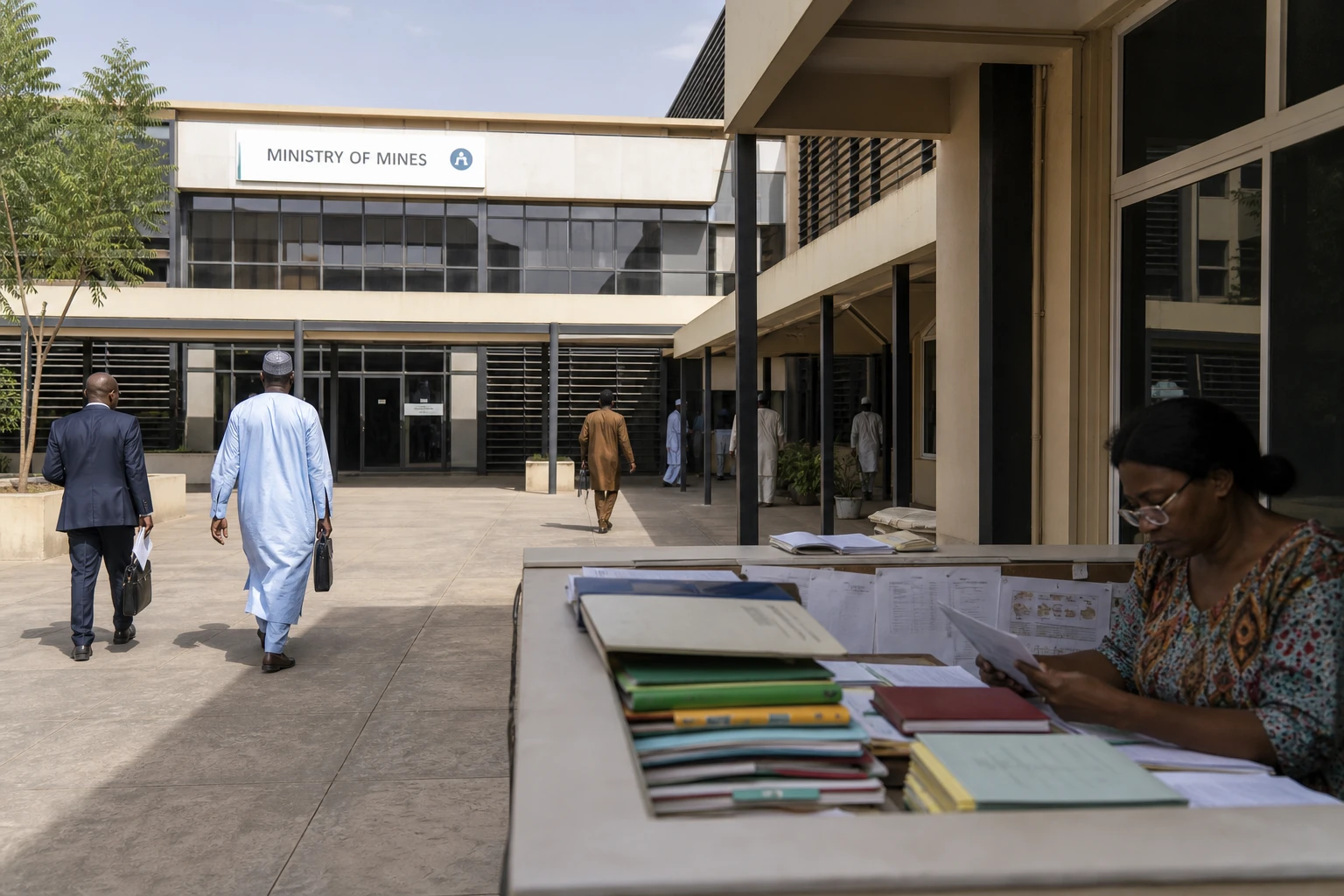
On 10 September 2026, the Chadian authorities suspended the granting of new mining prospecting authorisations throughout the country until further notice. The measure was publicly announced on 11 September in N’Djamena, as the Ministry of Mines seeks to regain control over licences, sites and flows.
This decision does not mean the sector is being abandoned. On the contrary, it is part of a drive to bring order. The government’s strategic document provides for accelerating geological mapping, modernising the legal framework, granting at least 10 exploration permits by 2030 and industrialising mining production. The aim is to move from a diffuse extractive economy to a more controlled, transparent and taxable value chain.
The Ministry of Mines and SONEMIC, the National Mining and Marketing Company, are at the heart of this refocusing. The state-owned company says it is working to formalise artisanal mining sites in Tibesti, create a one-stop shop and conduct geological studies in several high-potential provinces. It also presents the adoption of a national framework for artisanal mining as a step towards structuring the sector.
The gap between what is extracted and what reaches the public coffers
The official assessment shows a huge gap between production volumes and the revenue collected. According to EITI Chad, payments from the extractive sector, hydrocarbon refining and transport reached 1,638.53 billion CFA francs in 2023, but mining accounted for only a tiny share, while hydrocarbons remain dominant in the national economy. The report also notes that the extractive sector accounted for 14.5% of GDP in 2020 and more than 70.9% of exports.
The contrast is even more striking for gold. EITI data show artisanal production of 2,660 kg in 2023, compared with 4.34 kg from industrial mining. The report also notes that international trade channels tell a different story, with flows far exceeding the quantities officially recorded in Chad. This gap suggests that artisanal gold continues to escape, at least in part, traceability and taxation mechanisms.
The government, for its part, estimates that more than 10 tonnes of gold are extracted artisanally each year under Chad Connection 2030. This difference from the figures published by EITI should not be read as a straightforward contradiction. Rather, it illustrates a familiar problem in countries where artisanal gold mining dominates: the state sees part of the activity, but not the entire chain.
What formalisation means for Chadians and the region
For artisanal miners, formalisation could open up more stable prospects. It could also bring more rules, checks and compliance costs. For the state, the stakes are fiscal, but also related to security and the environment. In areas such as Tibesti, gold attracts workers, traders, transporters and economic lifelines that extend far beyond the mining sector alone. When the sector is unstructured, the benefits often evaporate before reaching the public budget or local authorities.
Chad’s choice is not an isolated one. In West and Southern Africa, several states are seeking to regain control of their artisanal gold. In Ghana, the creation of GoldBod gave the state a much firmer grip on gold purchases and exports, with artisanal-sector exports rising spectacularly in 2025. This kind of reform shows that tighter regulation, when credible, can increase official revenue rather than break the supply chain.
Chad is also part of a continental framework shaped by EITI transparency standards, which are widely used in Africa’s extractive economies. The country has already used this framework to make its oil and mining contracts more visible. This is important: the battle over gold is being fought not only in N’Djamena, but also through the quality of public data, administrative discipline and the ability to ensure that value added stays in the country.
At regional level, the stakes are clear for CEMAC, of which Chad is a member: better formalisation of gold flows also means better securing revenue, foreign exchange and traceability in an area where borders remain porous. If the suspension of new prospecting is followed by a cleaner mining cadastre, a clarified mining code and a credible collection system, Chad could turn a long-marginal sector into a genuine support for its economic strategy. The next test will be implementation: permits, oversight, refining, declared exports and the actual share of public revenue.