Algeria
 Egypt
 Libya
 Morocco
 Sudan
 Tunisia
 Benin
 Burkina Faso
 Cabo Verde
 Côte d'Ivoire
 Ghana
 Guinea
 Guinea-Bissau
 Liberia
 Mali
 Mauritania
 Niger
 Nigeria
 Senegal
 Sierra Leone
 The Gambia
 Togo
 Central African Republic
 Chad
 DR Congo
 Equatorial Guinea
 Gabon
 Republic of the Congo
 São Tomé and Príncipe
 Burundi
 Comoros
 Djibouti
 Eritrea
 Ethiopia
 Kenya
 Madagascar
 Malawi
 Mauritius
 Mozambique
 Rwanda
 Seychelles
 Somalia
 South Sudan
 Tanzania
 Uganda
 Angola
 Botswana
 Eswatini
 Lesotho
 Namibia
 South Africa
 Zambia
 Zimbabwe
When a voice becomes a shared benchmark
In many Cameroonian homes, certain songs stand the test of time. They play on the radio, circulate on phones, resurface at family celebrations and return, above all, at karaoke sessions and school performances. Céline Dion is one of those names that several generations recognise immediately, even if they do not speak the same language or grew up with the same playlists.
In Cameroon, this loyalty says more than simply that people admire an international star. It reveals the lasting place of French-language songs in a country where French holds a central position in urban life, education and a large part of cultural consumption. It also shows the power of strong voices, melodic choruses and lyrics about love, separation and hope — three themes that travel easily from one audience to another.
A musically open country, from Yaoundé to Douala
Cameroon does not listen to just one genre. The local scene ranges from bikutsi to makossa, from Afropop to urban ballads, with constant movement between national languages, French and English. In this diverse landscape, international classics readily find their place, especially when performed by a recognised vocalist and built around choruses that are easy to sing along to.
This circulation is evident even in cultural venues. In Yaoundé, the Institut français du Cameroun recently held a karaoke singing competition for Fête de la musique, showing that the format remains popular with young audiences. At another event organised by the same branch, an amateur singer performed a Céline Dion song, confirming the lasting presence of the Quebec diva in the repertoire that Cameroonians learn, sing and pass on.
This reception is also part of a broader regional environment. In Central Africa, French-language music circulates between Cameroon, Congo, Gabon, the Central African Republic and the Democratic Republic of the Congo. Urban scenes influence one another, radio stations share the same hits, and social media accelerate these exchanges further. Céline Dion’s popularity is therefore not simply a matter of her global fame. It also stems from her ability to fit into a listening culture already familiar with ballads and powerful voices.
A repertoire passed on in schools and homes
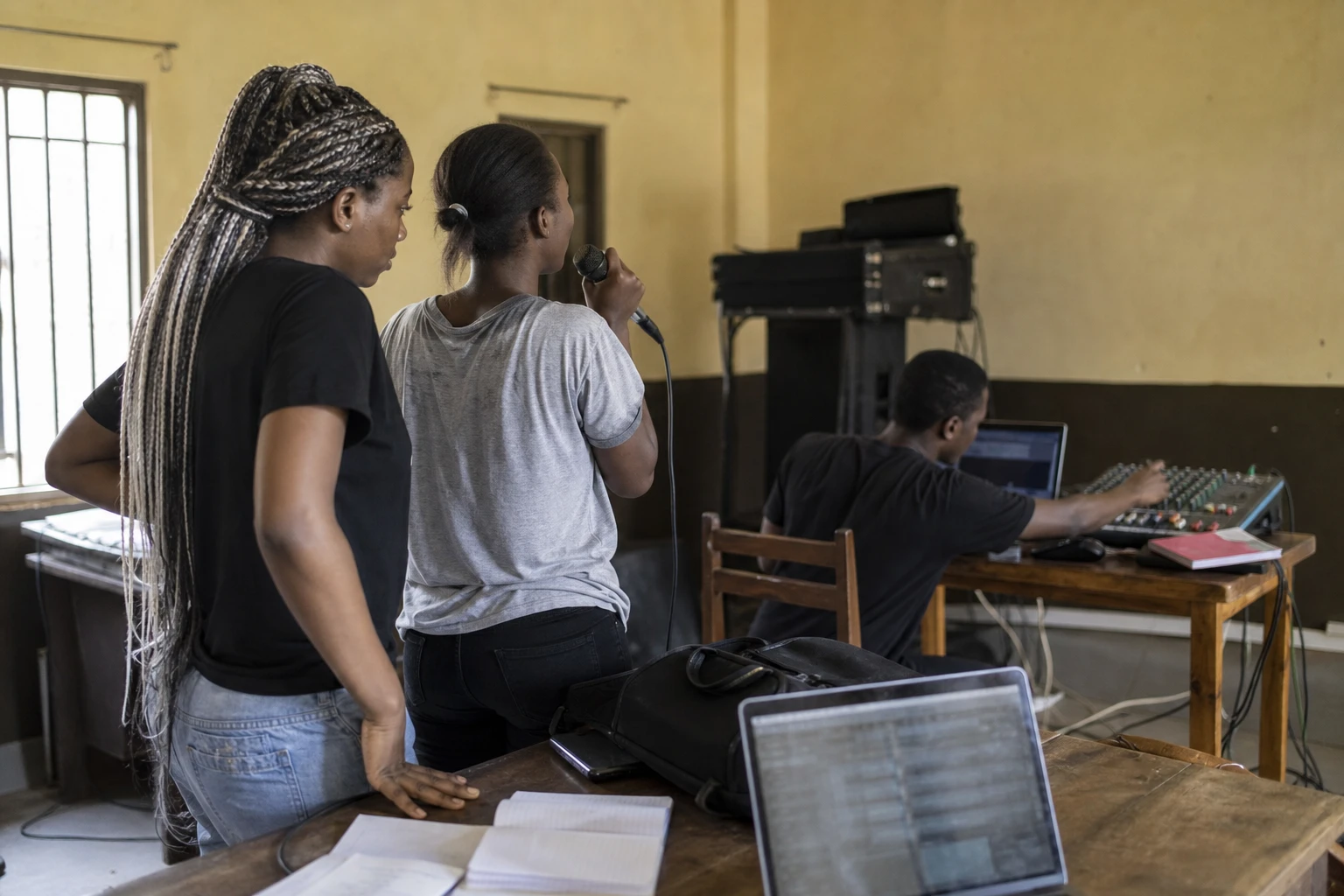
Accounts gathered in cultural circles point to a very practical use of her songs. Some students listen to them at home. Others sing them at school concerts. Still others perform them at karaoke nights, where the enjoyment comes as much from the song’s difficulty as from sharing it with others. This is where Céline Dion becomes more than a famous artist. She becomes a vocal benchmark, almost a rite of passage for testing one’s own pitch.
This transmission through imitation is no trivial matter. It shows how musical tastes are shaped in Cameroon, a country where young people move quickly from one world to another: local music, gospel, French variété, global pop, church singing and hip-hop. Céline Dion’s songs offer common ground. They demand technique, yet remain instantly recognisable. That makes them ideal for schools, amateur competitions and neighbourhood stages.
The singer’s recent return to the international stage has revived this interest. Several media outlets have noted that her return to Paris was due to take place as part of a much-anticipated series of concerts, after several years away because of her health problems. In conversations in Cameroon, this news has rekindled an old reflex: people listen to her classics again, compare voices and rediscover an artist who was part of many parents’ childhoods and their children’s adolescence.
What this enthusiasm says about Cameroon today
Céline Dion’s popularity in Cameroon is not a passing fad. It shows how people locally make global culture their own without giving up national points of reference. Cameroonian fans do not simply consume a foreign star. They reinterpret her within their own social settings: school, family, church, university, karaoke stage and neighbourhood celebration. This circulation gives songs a role in learning and social connection.
The phenomenon should also be viewed through the question of access to culture. In cities, concerts, French-speaking cultural venues and digital platforms encourage this circulation. In more remote areas, radio, phones and community gatherings remain essential. The same chorus can therefore travel by different routes while having the same effect: bringing people together, offering reassurance and getting them to sing as one.
For Cameroonian artists, the lasting presence of a highly distinctive international repertoire is both an inspiration and a benchmark. It is a reminder that Cameroonian audiences appreciate strong voices, assured performances and songs that make room for emotion. It also confirms that a pan-African or international career can be built on a command of French, without shutting out other languages or markets. This is an important lesson in a cultural space where movement between identities has become the norm.
A reach that goes beyond nostalgia
Across the continent, this kind of loyalty is a reminder that French-speaking stars retain a real audience in Central and West Africa, even in the age of streaming and fast-changing trends. Songs that endure are often those that become part of everyday life, far from major promotional campaigns alone. Céline Dion continues to live on in precisely this way: in homes, schools, rehearsals, competitions and evenings when people sing together to feel more connected.
What happens next will depend less on a short-lived media moment than on whether these repertoires continue to be passed on. If the singer returns to the French stage on a lasting basis, the response will be felt in Africa too, particularly in French-speaking countries where her voice has already become part of a shared memory. In Cameroon, that memory remains alive. It does not look only to the past. It still shapes how one generation teaches the next to sing.