Algeria
 Egypt
 Libya
 Morocco
 Sudan
 Tunisia
 Benin
 Burkina Faso
 Cabo Verde
 Côte d'Ivoire
 Ghana
 Guinea
 Guinea-Bissau
 Liberia
 Mali
 Mauritania
 Niger
 Nigeria
 Senegal
 Sierra Leone
 The Gambia
 Togo
 Cameroon
 Central African Republic
 Chad
 DR Congo
 Equatorial Guinea
 Gabon
 Republic of the Congo
 São Tomé and Príncipe
 Burundi
 Comoros
 Djibouti
 Eritrea
 Ethiopia
 Kenya
 Madagascar
 Malawi
 Mauritius
 Mozambique
 Rwanda
 Seychelles
 Somalia
 South Sudan
 Tanzania
 Uganda
 Angola
 Botswana
 Eswatini
 Lesotho
 Namibia
 South Africa
 Zambia
 Zimbabwe
A football market that has become strategic for African screens
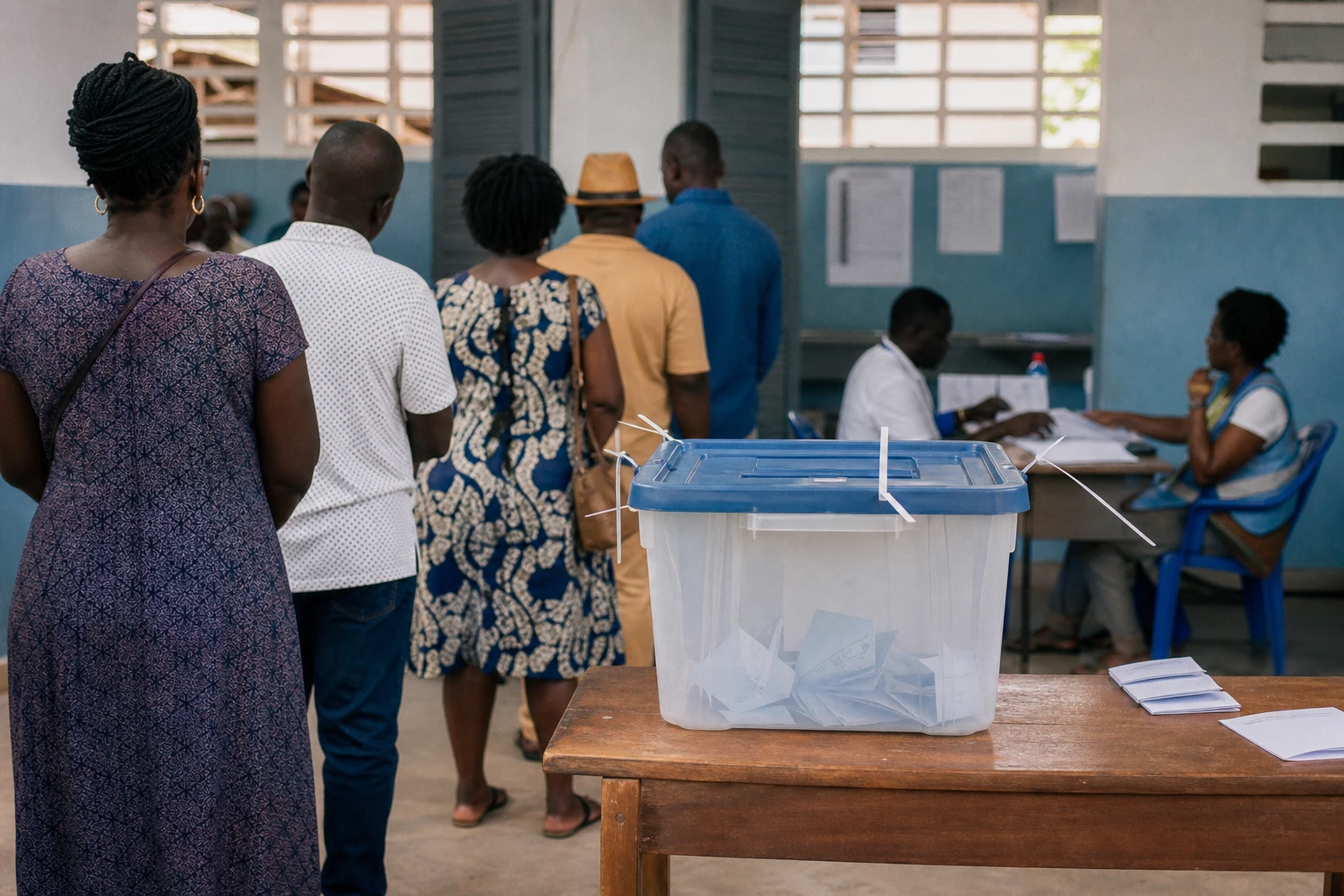
In sub-Saharan Africa, television rights are no longer decided solely by the quality of the match. They also depend on the language of the commentary, the cost of a subscription, mobile access and the ability to retain audiences in a landscape where pay-TV, streaming platforms and free-to-air channels are competing for the same viewers. In this context, the battle over the Champions League goes far beyond sport. It concerns access to a mass-market cultural product and the economic value of European football for millions of African households.
The deal comes amid an already highly competitive environment. UC3, the commercial entity established through a partnership between UEFA and European clubs, launched the sale of media rights in 2025 for the 2027–2031 cycle across several territories, including sub-Saharan Africa. At the same time, Canal+ confirmed that it had taken effective control of MultiChoice in 2025, giving it a broader base in the continent’s English- and Portuguese-speaking markets, with more than 40 million subscribers in nearly 70 countries for the combined group.
What has been awarded to Canal+
The French group has won the broadcasting rights to UEFA’s European men’s club competitions in sub-Saharan Africa for the 2027/2028 to 2030/2031 cycle, according to its official announcements and UC3 tender documents. The package covers the Champions League, Europa League and Europa Conference League, with broadcasts announced in all the languages offered by the group in the region. The rights period will begin with the 2027/2028 season, not in the middle of calendar year 2027.
Canal+ has not made the exact value of the deal public. However, the group has indicated, in line with the usual approach to premium rights purchases, that it represents a major investment. Estimates cited in some media outlets put the figure at several hundred million euros, but this has not been confirmed by the parties. In a market where football audiences remain strong, the bet is clear: sell more subscriptions, generate more advertising revenue and build loyalty around content that remains one of the most powerful fixtures on the sporting calendar.
The move extends a long-standing strategy. Canal+ already held UEFA rights in French-speaking sub-Saharan Africa for the 2024–2027 cycle, and the group highlighted its offering of more than 1,000 football matches a year in the region, particularly through major European leagues. The new deal therefore consolidates an established position, as competition takes shape among players able to offer commentary in French, English, Portuguese and several local languages.
Why this acquisition matters beyond television studios
The deal’s impact is primarily economic. For Canal+, premium sports content remains a tool for retaining subscribers. For African viewers, it represents a practical choice: pay for a service to watch major European nights, or turn to other options, which may be cheaper but sometimes more fragmented. MultiChoice’s integration changes the group’s scale on the continent. It gives it a stronger foothold in markets where SuperSport has long dominated, while also increasing Canal+’s reach in French-speaking areas.
The issue is also linguistic and cultural. In sub-Saharan Africa, the value of a sports right is not limited to the match footage. It depends on the commentary, availability by satellite or streaming, and the ability to speak to audiences in languages they understand. UC3 also notes that the African market is treated as a distinct region in its tenders. This reflects a simple reality: football broadcasting is not uniform across the continent, and the winning strategies are those that adapt to local habits rather than ignore them.
Competition, meanwhile, is not going away. New World TV remains active in several areas related to continental football, while SuperSport retains a strong presence across much of English- and Portuguese-speaking Africa. For African competitions, the Confederation of African Football has itself issued separate tenders for its media rights, with packages in local languages and English, confirming that the market is becoming more sophisticated. In short, the battle is no longer just about “who broadcasts”. It is about “who broadcasts where, in which language and at what price”.
For fans, the impact will be tangible. In major cities, where paid services and connectivity are more widely available, the issue will be the quality of service and the cost of access. In rural and peri-urban areas, the challenges will remain more acute: network availability, decoder distribution, account sharing and the possible availability of hybrid solutions. European club football remains a highly desirable product, but actual access still depends on a frequently invisible supply and commercial chain.
What the decision says about the regional balance of power
Across the continent, the deal confirms that sub-Saharan Africa has become a decisive territory in the global circulation of sports rights. UEFA, through UC3, is seeking to maximise the commercial value of its competitions over several upcoming cycles. Media groups, for their part, are seeking to secure content capable of guaranteeing a stable audience in a fragmented market. In this contest, Africa is not simply an outlet. It is a space for growth, competition and negotiation, where operators must accommodate very different local habits in Dakar, Abidjan, Douala, Lagos, Nairobi and Johannesburg.
The deal will also have a knock-on effect on future tenders for African football. Through its own club competitions, CAF has shown that it now expects broadcasters to make more segmented, linguistically tailored and commercially ambitious offers. This is pushing operators to invest more in local editorial production, multilingual commentary and more flexible broadcasting solutions. The message for industry leaders is clear: value no longer comes solely from the match. It comes from the ecosystem built around it.
In the short term, the next milestone to watch will be the practical implementation of the 2027/2031 cycle, including the arrangements for distribution country by country and the language offerings. That is where the deal’s true reach will become clear: in the number of households actually served, the level of prices and the space left for competitors. On a continent where football brings people together but markets remain highly diverse, the challenge is not simply to own the rights. It is to turn them into real access.