Algeria
 Egypt
 Libya
 Morocco
 Sudan
 Tunisia
 Benin
 Burkina Faso
 Cabo Verde
 Côte d'Ivoire
 Ghana
 Guinea
 Guinea-Bissau
 Liberia
 Mali
 Mauritania
 Niger
 Nigeria
 Senegal
 Sierra Leone
 The Gambia
 Togo
 Central African Republic
 Chad
 DR Congo
 Equatorial Guinea
 Gabon
 Republic of the Congo
 São Tomé and Príncipe
 Burundi
 Comoros
 Djibouti
 Eritrea
 Ethiopia
 Kenya
 Madagascar
 Malawi
 Mauritius
 Mozambique
 Rwanda
 Seychelles
 Somalia
 South Sudan
 Tanzania
 Uganda
 Angola
 Botswana
 Eswatini
 Lesotho
 Namibia
 South Africa
 Zambia
 Zimbabwe
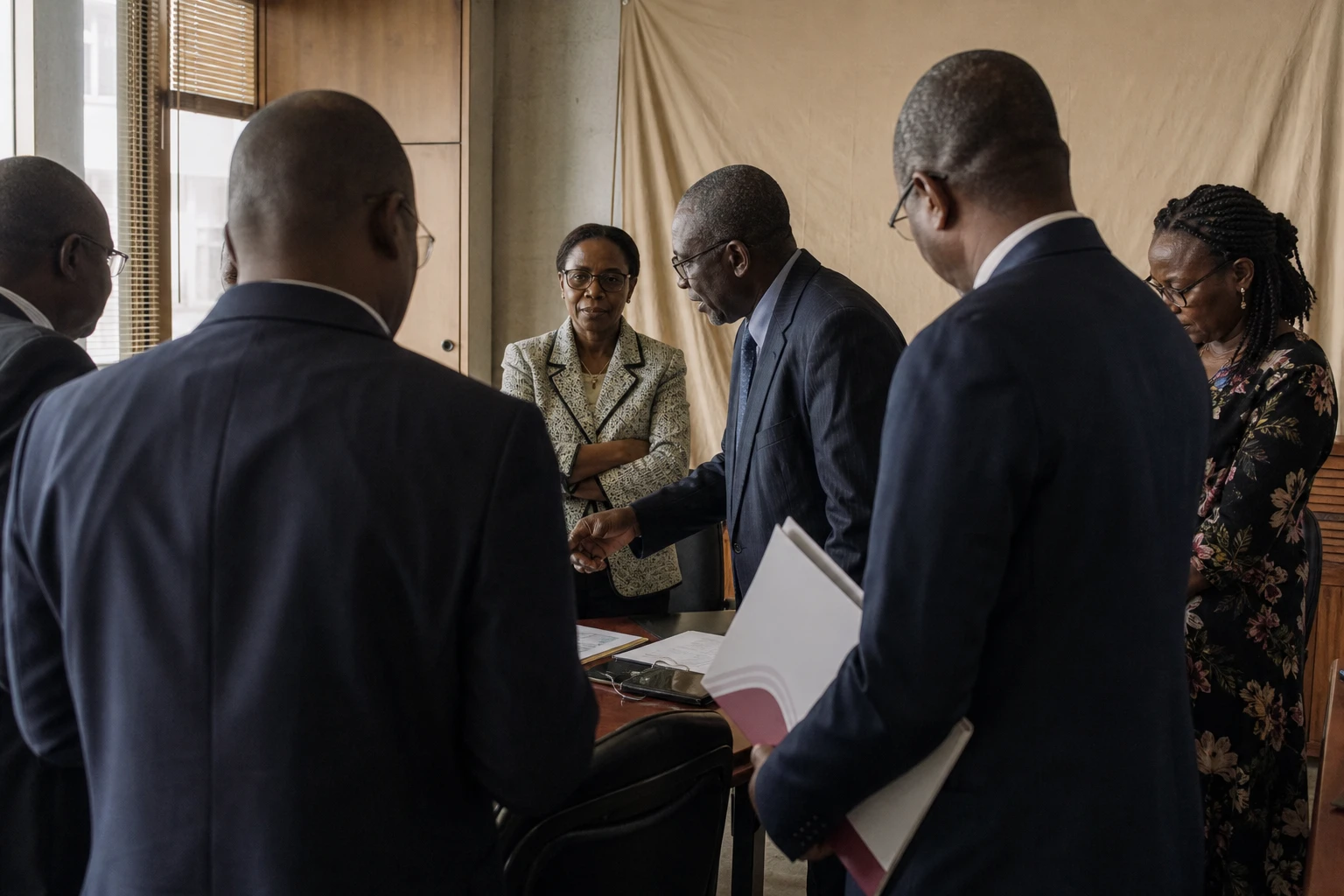
At Cameroon’s public universities, a return to lecture halls still hinges on a simple question: are the announced payments enough to restore trust? Three weeks after the start of the action, the National Union of Higher Education Teachers (Synes) is maintaining its indefinite strike, despite several disbursements by the state.
A stand-off takes hold in Yaoundé
The action began on 3 September 2026. The union is demanding full payment of the special allowance intended to modernise university research. This quarterly bonus is for academic staff at state universities.
Synes is also calling for academic debt accumulated between 2000 and 2021 to be cleared. This includes, among other things, overtime hours, the supervision of dissertations and theses, and several services related to university activities.
The figures cited vary according to the sources and the scope used. The Ministry of Higher Education puts the overall debt at CFA francs 16.959bn, of which CFA francs 7.294bn is said to have been paid since October 2025. The outstanding balance is therefore about CFA francs 9.696bn.
A separate estimate, reported by the Cameroonian press, puts the debt under review at eight universities at CFA francs 15.498bn. The difference appears to reflect the accounting scope used. It nevertheless confirms the existence of a longstanding financial dispute that remains largely unresolved.
Partial payments fail to defuse the strike
On 18 September 2026, a consultation was held in Yaoundé between Jacques Fame Ndongo, the Minister of State in charge of Higher Education, Synes representatives and financial administration officials.
After the meeting, the ministry announced several transactions. Payment of the special allowance for the fourth quarter of 2025, estimated at about CFA francs 5.4bn, was said to have been completed by bank transfer on 26 July 2026.
For the first quarter of 2026, the ministry says an outstanding balance of CFA francs 1.769bn was paid on 18 September. Total payments relating to that period amount to CFA francs 4.861bn, according to its figures.
Transfers for the second quarter of 2026 also began on 18 September. The announced allocation amounts to CFA francs 4.919bn. Teachers due to be paid in cash were invited to report to the ministry’s accounting agency from 23 September.
The announcements represent significant financial progress. However, they do not meet Synes’s central demand: full payment of the sums owed and a precise timetable for clearing the academic debt.
At an extraordinary session on 20 September, the union’s national executive bureau therefore decided to maintain the strike. The union considers that the payments under way are not yet enough to ensure a lasting resolution to the crisis.
Students caught up in a lasting crisis
The mobilisation is directly affecting the running of campuses. Teaching, research and assessment activities have been disrupted at the institutions concerned. The union puts its membership rate at between 65% and 70%, although this figure is its own estimate.
Final-year students are the most exposed. Master’s and doctoral defences remain suspended at several institutions. For them, the disruption means more than an administrative delay. It can postpone entry into employment, enrolment in doctoral training or the submission of an application for mobility.
The effects also vary by location. Students in university capitals may sometimes have more alternative options. In the regions, postponing a defence or a validation can mean additional transport, accommodation and food costs.
The disruption also affects families financing students’ education and businesses located around campuses. Private residences, transport, photocopying services and small shops depend directly on the university calendar.
Beyond arrears, the question of funding knowledge
The dispute is not limited to the payment of bonuses. It highlights the fragility of research funding in Cameroon. An allowance intended to modernise research can fulfil its purpose only if it is paid regularly and according to predictable rules.
For academic staff, delays make it harder to buy equipment, attend conferences, publish articles and supervise students. They also reduce laboratories’ ability to connect their work to African and international scientific networks.
For the state, there are two challenges. It must address accumulated social debt while maintaining fiscal balance. In a context of constrained cash flow, phased payments can release funds. But this approach also sustains uncertainty when deadlines remain unclear.
The ministry says it wants to continue dialogue and clear the remaining sums according to available funds. Synes, for its part, is seeking verifiable commitments. The disagreement is therefore about the amounts as much as the method and timetable.
A signal for Central Africa
The university crisis in Cameroon extends beyond the campuses. Cameroon is one of the main economies in the Economic and Monetary Community of Central Africa, CEMAC, which comprises six states that share, among other things, a common currency, the CFA franc.
Universities in the region train a significant proportion of public-sector professionals, engineers, teachers and researchers. When their operations are disrupted, the effects last well beyond a semester. They affect the production of knowledge, vocational training and the ability of states to implement public policies.
The next flashpoint will be the actual delivery of the announced payments and the publication of a credible timetable for the academic debt. The resumption of defences will also provide a concrete indicator of how the dispute is evolving.
Dialogue in Yaoundé has therefore not broken down. But it remains contingent on a question of trust: will the announced financial commitments be turned into full and regular payments?
The Cameroonian daily’s account of discussions between the ministry and Synes
Available information on the continuation of the strike after the first payments
Details of the sums announced for allowances and academic debt