Algeria
 Egypt
 Libya
 Morocco
 Sudan
 Tunisia
 Benin
 Burkina Faso
 Cabo Verde
 Côte d'Ivoire
 Ghana
 Guinea
 Guinea-Bissau
 Liberia
 Mali
 Mauritania
 Niger
 Nigeria
 Senegal
 Sierra Leone
 The Gambia
 Togo
 Central African Republic
 Chad
 DR Congo
 Equatorial Guinea
 Gabon
 Republic of the Congo
 São Tomé and Príncipe
 Burundi
 Comoros
 Djibouti
 Eritrea
 Ethiopia
 Kenya
 Madagascar
 Malawi
 Mauritius
 Mozambique
 Rwanda
 Seychelles
 Somalia
 South Sudan
 Tanzania
 Uganda
 Angola
 Botswana
 Eswatini
 Lesotho
 Namibia
 South Africa
 Zambia
 Zimbabwe
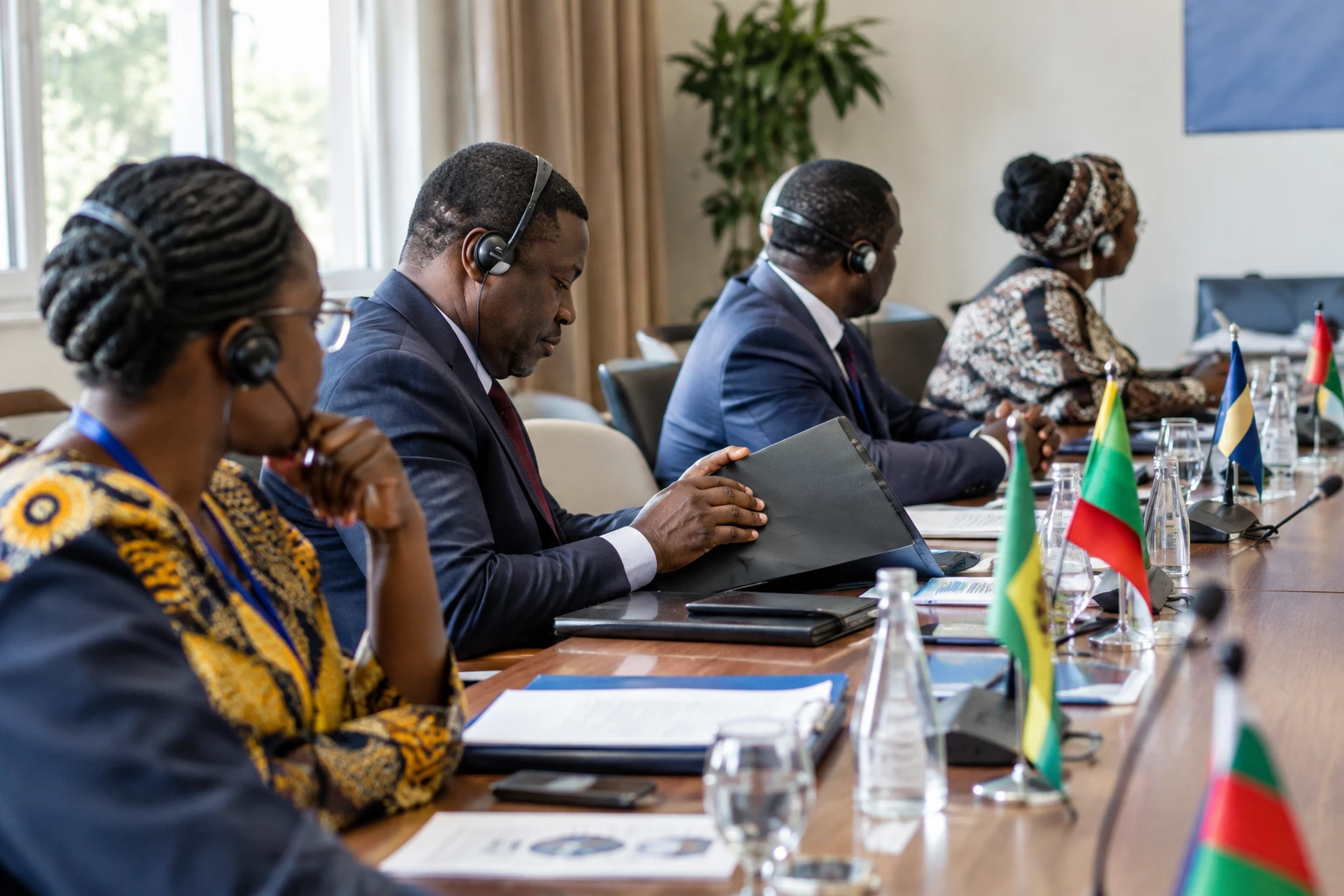
In Yaoundé, the change of leadership at the Movement for the Renaissance of Cameroon (MRC) opens a new chapter for one of the country’s most prominent opposition parties. But Tiriane Balbine Noah’s election does not immediately resolve questions of internal cohesion, political recognition and preparations for the next elections.
A succession organised amid tensions
On 17 October 2026, the MRC held an extraordinary convention at its headquarters in Yaoundé. Tiriane Balbine Noah was elected president, according to several Cameroonian media outlets. She succeeds Maurice Kamto, who left the party leadership on 8 September, along with his first vice-president, Mamadou Mota.
The meeting required an administrative receipt authorising it to take place. The document, issued by the local authorities, enabled the party to go ahead with the convention despite tensions over its organisation. For national secretary Joseph Emmanuel Ateba, obtaining it marked the culmination of a process the MRC considered difficult. The party says it has faced obstruction since its creation. This assessment reflects its political position and does not, on its own, constitute an independent finding on the state’s responsibility.
The succession was initially presented as a contest between Tiriane Balbine Noah and Pierre Emmanuel Binyam. However, Binyam and members of his team announced their withdrawal a few days before the vote, citing irregularities in the process and the electoral roll. These allegations are attributed to his team; the information available does not allow their significance to be independently established. Noah was therefore the only candidate when the convention took place.
The vote brings to a close Kamto’s 14 years as party president. Cameroonian media confirm the outcome, but their reports do not all give consistent figures for the number of voters and votes cast. It is therefore preferable to report the announced result without giving an uncertain total. The original text referred to 1,200 delegates expected to vote, a figure that should not be confused with the number of votes cast.
A party tasked with strengthening its cohesion
The new president’s first challenge will be to unite the MRC after a contested transition. The withdrawal of a candidate who alleged irregularities leaves internal questions unresolved, even though the election went ahead. The leadership will need to maintain the commitment of party members while addressing concerns over selection rules, the transparency of the vote and the place of the party’s different tendencies.
In her speech, Noah paid tribute to party members who, in her words, had paid for their commitment with the loss of their freedom, security or lives. This statement reflects the party’s political narrative and the memory of its members. It does not provide a verified account of victims. The national context includes episodes of tension between the MRC and the authorities, notably after the 2018 presidential election and the protests that followed. Each event must nevertheless be described on its own facts, without treating all protests as part of a single episode.
The new president will also need to turn the organisation into a vehicle for mobilisation beyond the capital. National leaders can set a political direction, but the party’s local presence depends on local teams, available resources and the ability to engage with voters in the regions. Urban party members, branches in secondary cities and supporters far from political centres do not face the same obstacles to participating in party life.
The MRC has already announced plans to prepare for the 2027 local elections. This prospect will be central to testing its support beyond national rallies. Official election dates should not, however, be inferred from this party announcement: the timetable remains a decision for the competent electoral authorities. For the party, the challenge will be to select its candidates, strengthen its structures and convince voters that its programme addresses their everyday priorities.
National significance in a region with distinct institutions
The change in leadership comes in a political system where executive power remains dominated by the Cameroon People’s Democratic Movement. The opposition faces challenges that go beyond the succession of a leader: access to meeting spaces, the ability to compete on terms accepted by the players and confidence in electoral procedures. The MRC criticises restrictions it says it faces; the available information does not indicate that the authorities have acknowledged these allegations in those terms. The disagreements should therefore remain attributed.
Regionally, Cameroon belongs to the Economic and Monetary Community of Central Africa (CEMAC), which brings together six states for economic and monetary cooperation. This organisation does not arbitrate the internal politics of Cameroonian parties. The significance of the change is therefore primarily national, even as the trajectory of Cameroon’s opposition is watched in Central Africa, where parties, institutions and political calendars differ from one country to another.
Noah’s election is also a milestone in representation: she becomes the first woman to lead the MRC. This matters, but it is not enough to measure the real power she will wield. Her ability to exert influence will depend on the party’s bodies, her team, her relationship with Kamto and the choices made for the next elections. The immediate challenge is to make this succession a leadership recognised by party members, including those who contest the process.
The coming months will show whether the new team publishes clear rules, maintains internal dialogue and prepares for elections without confusing its preferred timetable with a confirmed one. For Cameroonians, the practical test will be whether the MRC can turn its mobilisation into a lasting presence in local authorities and the national political debate.