Algeria
 Egypt
 Libya
 Morocco
 Sudan
 Tunisia
 Benin
 Burkina Faso
 Cabo Verde
 Côte d'Ivoire
 Ghana
 Guinea
 Guinea-Bissau
 Liberia
 Mali
 Mauritania
 Niger
 Nigeria
 Senegal
 Sierra Leone
 The Gambia
 Togo
 Central African Republic
 Chad
 DR Congo
 Equatorial Guinea
 Gabon
 Republic of the Congo
 São Tomé and Príncipe
 Burundi
 Comoros
 Djibouti
 Eritrea
 Ethiopia
 Kenya
 Madagascar
 Malawi
 Mauritius
 Mozambique
 Rwanda
 Seychelles
 Somalia
 South Sudan
 Tanzania
 Uganda
 Angola
 Botswana
 Eswatini
 Lesotho
 Namibia
 South Africa
 Zambia
 Zimbabwe
A return that goes beyond one NGO
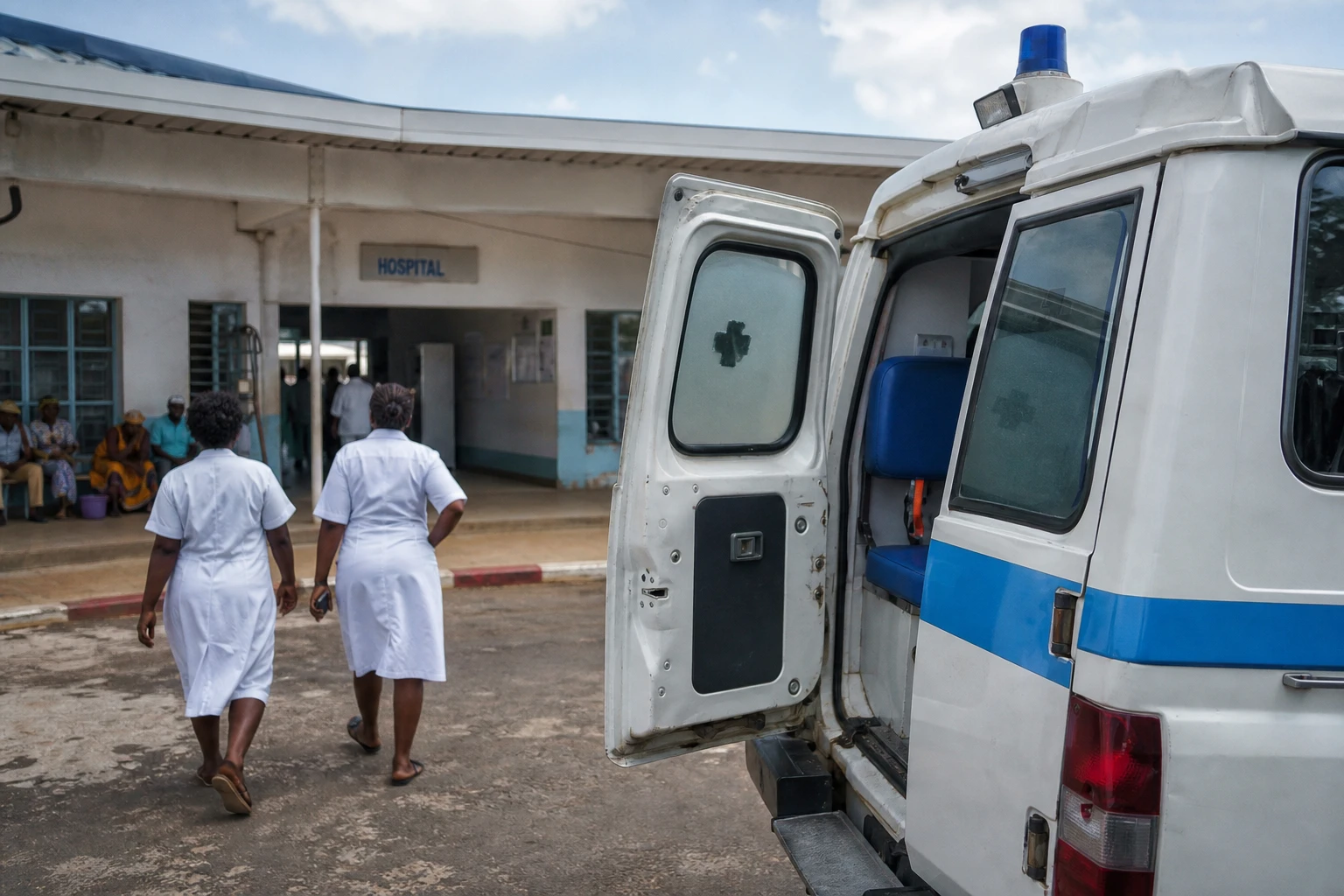
In Cameroon’s Anglophone regions, access to healthcare is not determined by hospitals alone. It also depends on security on the roads, trust between stakeholders and the ability to get an ambulance, a vaccine or a surgeon through without incident. That is what is at stake in the possible return of Médecins Sans Frontières to the North-West and South-West, two areas where the armed crisis has profoundly disrupted public life since 2017.
The issue is part of a broader national context. Cameroon has ten regions, two official languages and pronounced territorial divides, with humanitarian needs still very high in 2026. In recent months, health institutions have sent out several signals of openness towards their partners, including on health emergencies and care for vulnerable populations. In April 2026, the Ministry of Public Health held talks with Médecins Sans Frontières on cholera, emergency response and improving access to healthcare, while also raising the prospect of reassessing the situation in the North-West and South-West.
What the facts say and where relations stand
The first fact is straightforward: Médecins Sans Frontières has not worked in the Anglophone regions since April 2022, following the suspension of its activities in the North-West, decided in late 2020, and a gradual deterioration of its operations in the South-West. The organisation says it had worked in Cameroon since 1984, including in the Far North, the two Anglophone regions and Yaoundé, before withdrawing from those areas.
The breakdown followed accusations of bias by the Cameroonian authorities and the prosecution of five NGO employees, accused of complicity in secession. They were tried by the Buea military tribunal in 2021 and acquitted in 2022. The episode weighed heavily on relations between the state and the medical organisation.
Since then, the tone has changed. In April 2026, the Ministry of Public Health confirmed “constructive” discussions with the NGO on national health priorities. The same official statement says the organisation wants to step up its work in community, primary and secondary healthcare, especially in the Far North, while proposing a reassessment of the situation in the North-West and South-West. MSF, for its part, says it is continuing the dialogue to resume its medical support in the Anglophone regions.
Why this matters to local communities
A possible return by MSF would be more than symbolic. It would affect areas where access to essential services remains weakened by insecurity, forced displacement and the partial closure of many schools and health facilities. In 2026, the European Union estimates that 2.9 million people in Cameroon will need humanitarian assistance, including 1.2 million in the North-West and South-West. It also says that more than 580,000 people have been displaced in the two regions.
On the ground, the stakes are tangible. An open maternity ward without medicines changes very little. A surgical emergency without a safe route costs lives. A campaign against cholera or malaria is also less effective if it does not reach the most exposed communities. This is why the return of an actor such as MSF could ease pressure on public facilities, while requiring the government to coordinate more closely with the Ministry of Public Health, the Ministry of Defence and local administrative authorities.
A return, however, would not resolve the Anglophone crisis. The conflict has become a long-running humanitarian emergency, marked by displacement, violence against civilians and damaged public services. The classification of the Cameroon crisis among the world’s most neglected displacement situations in 2025 is a reminder of another problem: waning international attention and underfunded responses. In this context, the possible resumption of a medical presence could chiefly reopen a channel for healthcare where needs continue to exceed provision.
Regional significance beyond Cameroon
The issue also carries weight across Central Africa. Cameroon is a humanitarian crossroads between Nigeria, Chad, the Central African Republic, Gabon and Equatorial Guinea. Its internal tensions have spillover effects on neighbouring countries, notably through refugees living in Nigeria and internal displacement extending to other parts of Cameroon. Public health thus becomes an indicator of regional stability, alongside security and the movement of people.
Across the region, the return of a leading NGO would also be seen as a test of governance. It would show whether the Cameroonian state can accept a robust humanitarian presence without seeing it as a threat, and whether non-state armed actors will allow medical action a minimum of space. Humanitarian partners, Central African regional institutions and donors already monitoring the crisis in the North-West, South-West and Far North are watching closely.
What happens next will depend on the parties’ ability to set clear rules: secure access, coordination with health authorities, staff protection and a precise definition of areas of operation. These factors, more than the announcements themselves, will show whether Cameroon is moving towards a sustained resumption of medical assistance in its Anglophone regions.