
 Algeria
 Egypt
 Libya
 Morocco
 Sudan
 Tunisia
 Benin
 Burkina Faso
 Cabo Verde
 Côte d'Ivoire
 Ghana
 Guinea
 Guinea-Bissau
 Liberia
 Mali
 Mauritania
 Niger
 Nigeria
 Senegal
 Sierra Leone
 The Gambia
 Togo
 Central African Republic
 Chad
 DR Congo
 Equatorial Guinea
 Gabon
 Republic of the Congo
 São Tomé and Príncipe
 Burundi
 Comoros
 Djibouti
 Eritrea
 Ethiopia
 Kenya
 Madagascar
 Malawi
 Mauritius
 Mozambique
 Rwanda
 Seychelles
 Somalia
 South Sudan
 Tanzania
 Uganda
 Angola
 Botswana
 Eswatini
 Lesotho
 Namibia
 South Africa
 Zambia
 Zimbabwe
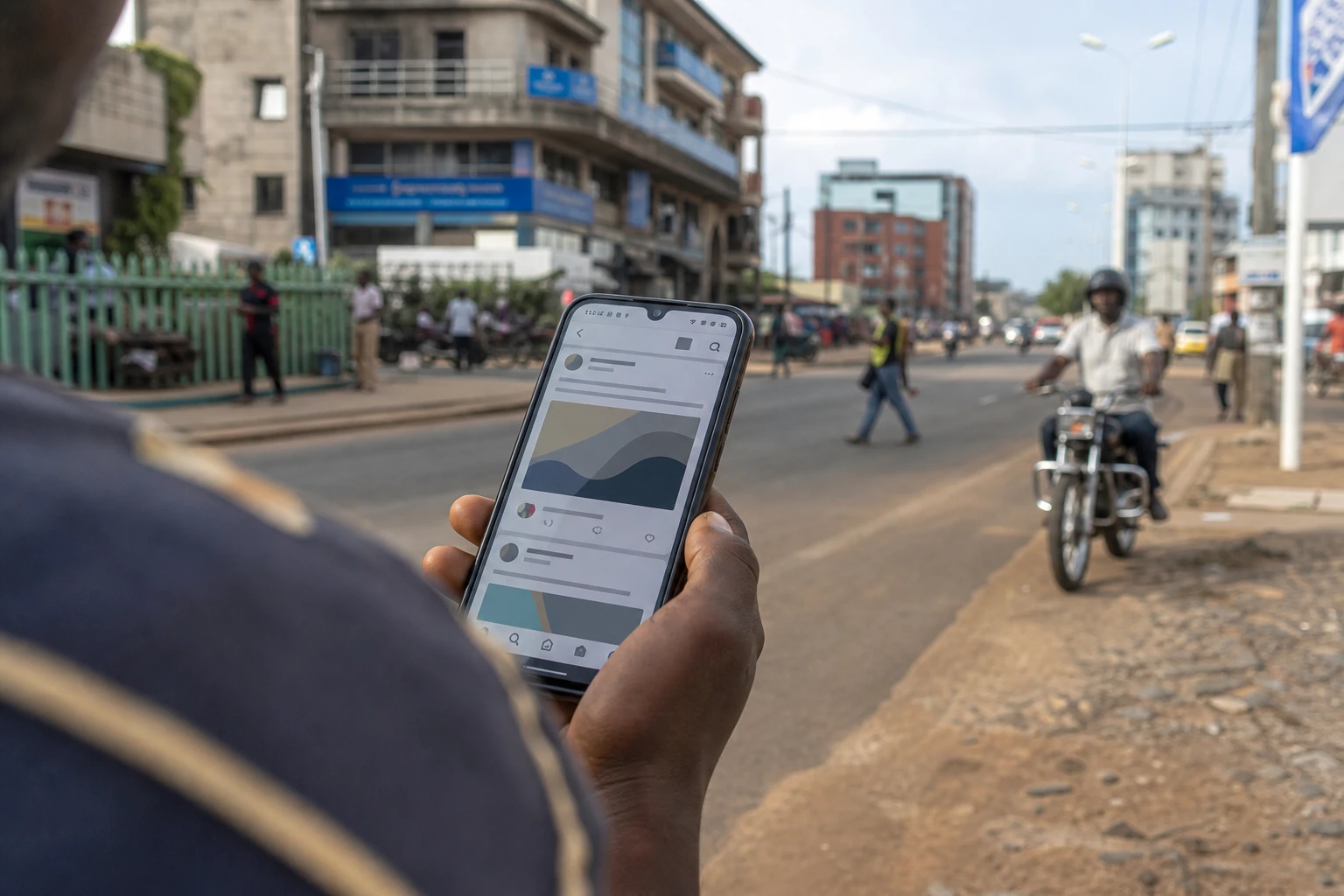
When an online comment ends up in court
In Cameroon, a simple post can quickly move from public debate into the realm of criminal law. In a country where social media have become a political arena in their own right, the line between criticism, irony and “insult” remains narrow, especially in Yaoundé, where institutions and sensitive decisions are concentrated.
The Yaoundé Court of First Instance sentenced Patrick Mengue to six months in prison on 26 July 2026 for insulting the president of the Republic. The man had published a message deemed offensive by the public prosecutor following the announcement in April 2026 of the death, aged 92, of Marcel Niat Njifenji, president of the Senate. Although the head of state was not named in the text, the court found him guilty of insulting the president.
The ruling was delivered in Yaoundé in the presence of the defendant’s relatives and his defence team. According to several local press reports, Patrick Mengue had been detained since the spring, before the judgment. He may appeal the decision within the time limit set by procedure, but the sentence confirms the continued severity of the judicial response to posts considered offensive to the presidency.
A criminal code still strongly protective of the top of the state
Cameroon has no shortage of legal grounds for prosecuting cases of this kind. The 2016 Penal Code provides for a specific offence of insulting the president of the Republic. Article 153, as worded, exposes the perpetrator to a prison sentence of between one and five years, as well as a fine. The law therefore allows for a harsher penalty than the one ultimately handed down in this case.
This is where part of the debate lies. For the defence, the case was baseless and the public prosecutor’s interpretation excessive. The lawyers also challenged the fairness of the trial, arguing that the prosecution was, in effect, acting to protect the head of state. This view echoes broader concerns about how the Cameroonian authorities regulate critical expression, particularly on Facebook, TikTok and WhatsApp.
The judicial context reinforces this impression. Human Rights Watch documented several arrests in 2024 and again in 2026 linked to social media posts or statements deemed hostile to the authorities. The organisation has also noted growing restrictions on freedom of expression and association ahead of the electoral cycle. As early as July 2024, an order by the head of the Mfoundi division threatened to ban from the area anyone who “dangerously insults” the institutions or “the person who embodies them”.
In this climate, the Mengue case goes beyond his personal circumstances. It is a reminder that in Cameroon, digital speech is seen not only as a space for discussion but also as a means of political control. For ordinary citizens, this creates a chilling effect. For the authorities, it is a tool to deter speech deemed destabilising, especially when it concerns the president.
What this case says about Cameroon today
Cameroon is entering a period in which the question of civil liberties is becoming even more sensitive. Electoral stakes, the rapid spread of rumours and tensions over the digital space are prompting the authorities to take a harder line on online “excesses”. But this strategy comes at a cost. It fuels distrust of the justice system, which some lawyers and human rights advocates already accuse of responding too readily to the interests of those in power.
The social impact is immediate. In urban centres such as Yaoundé and Douala, where political debate now circulates as much by phone as at rallies, every conviction of this kind sends a signal. In rural areas, where access to information still depends largely on community networks and local radio stations, the effect is different but real: the message is that criticism of the top of the state can be costly.
Regionally, the case is part of a broader trend in Central Africa and beyond: a rise in legal cases over statements published online in states where institutional stability is often invoked to justify restrictions. Cameroon, a member of CEMAC, shares with several neighbours the same tension between digital modernisation, control of expression and preservation of presidential authority. This is a balance the African Union and regional organisations are watching ever more closely, as it affects the quality of democratic life across the continent.
One simple but central question remains: how far can a state go in protecting its institutions without turning criticism into a routine offence? The Patrick Mengue case does not settle this debate. It does, however, show that in Cameroon, the judicial response to online speech continues to shape the political climate far beyond a single court in Yaoundé.



