Algeria
 Egypt
 Libya
 Morocco
 Sudan
 Tunisia
 Benin
 Burkina Faso
 Cabo Verde
 Côte d'Ivoire
 Ghana
 Guinea
 Guinea-Bissau
 Liberia
 Mali
 Mauritania
 Niger
 Nigeria
 Senegal
 Sierra Leone
 The Gambia
 Togo
 Central African Republic
 Chad
 DR Congo
 Equatorial Guinea
 Gabon
 Republic of the Congo
 São Tomé and Príncipe
 Burundi
 Comoros
 Djibouti
 Eritrea
 Ethiopia
 Kenya
 Madagascar
 Malawi
 Mauritius
 Mozambique
 Rwanda
 Seychelles
 Somalia
 South Sudan
 Tanzania
 Uganda
 Angola
 Botswana
 Eswatini
 Lesotho
 Namibia
 South Africa
 Zambia
 Zimbabwe
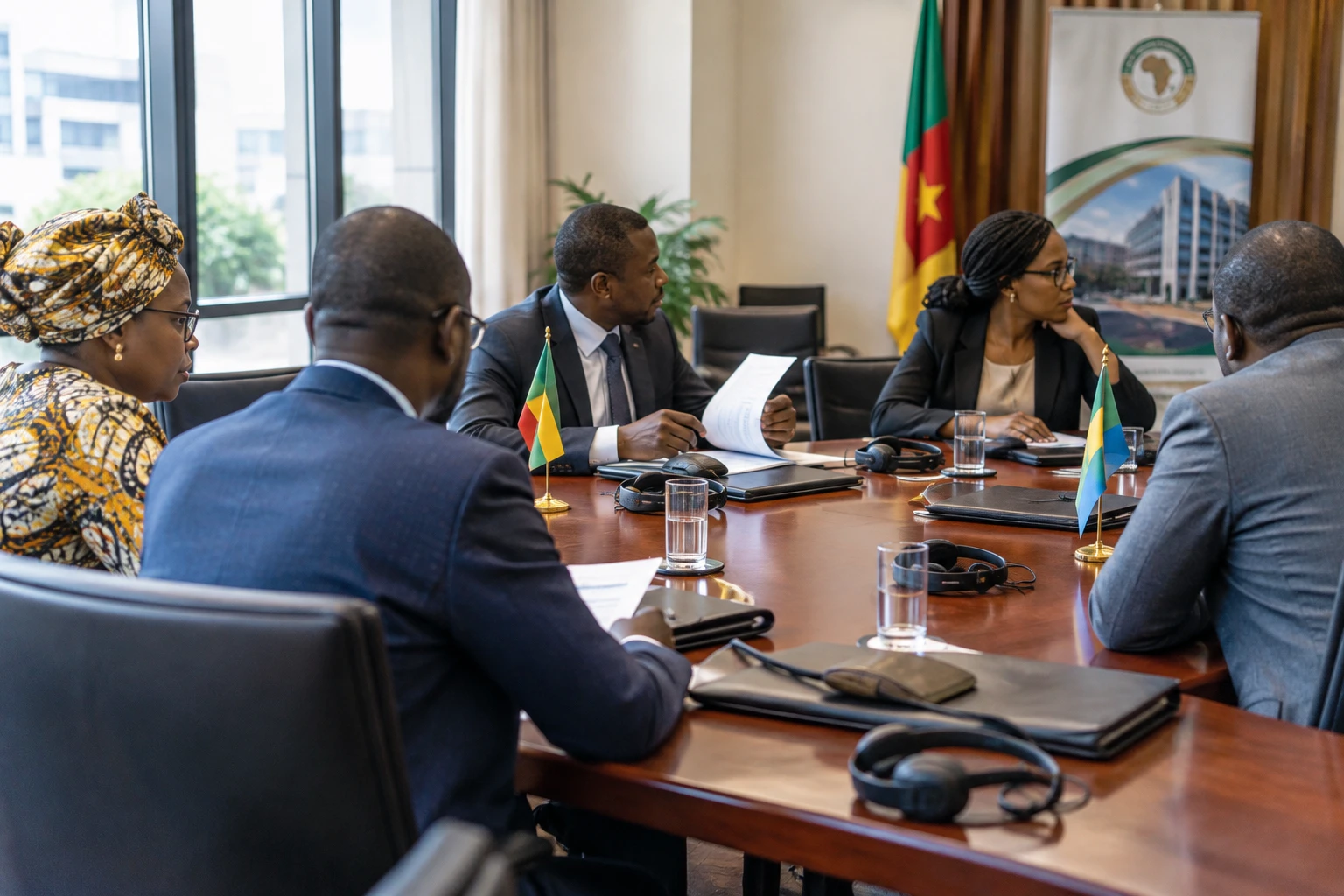
For people arrested after a disputed election, waiting for a trial can prolong uncertainty long after the demonstrations. In Cameroon, a first ruling concerning 66 detainees provides some answers through the courts, but does not conclude either the appeals or the other proceedings linked to the tensions of 2025.
A disputed presidential election, with proceedings still under way
The presidential election was held on 12 October 2025. The Constitutional Council declared Paul Biya the winner on 27 October, with 53.66% of valid votes cast. The announcement came after opposition challenges and tensions in several Cameroonian cities. The government’s official document on the proclamation of the results confirms the date and the score.
The demonstrations and arrests that followed presented the authorities with two challenges: restoring public order and safeguarding the rights of those detained. Human Rights Watch documented mass arrests and reports of deaths and injuries. The government, for its part, said dozens of people had died and that investigations were under way, according to the organisation’s account. The tolls varied by source and over time, so they should be attributed rather than presented as a definitive count.
This period unfolded against a political backdrop marked by electoral disputes and prosecutions of demonstrators. The African Commission on Human and Peoples’ Rights expressed concern after the post-election violence and called for respect for the freedoms and safeguards set out in the African Charter. This regional position is a reminder that the handling of arrests also falls under commitments Cameroon has made within continental institutions.
66 convictions, with sentences of six to 15 months
On 8 October 2026, the Yaoundé military court tried 66 people arrested in the post-election context. They were found guilty of offences including spreading false news, rebellion, unlawful assembly and failure to carry a national identity card. Reported sentences range from six months suspended to 15 months in prison. The details of the convictions and individual cases have not been established by the information cross-checked here; these details should therefore be understood as the reported outcome of the hearing, not as independent verification of each judgment.
Maître Ndam, a member of the defence team, said the lawyers intended to pursue the available appeals. He also explained that some of those convicted could be released soon, while those given the longest sentences should be released during February, according to comments reported after the hearing. These timelines depend, however, on the calculation of time already spent in detention and the circumstances of each case.
The lawyer described the ruling as « a form of relief » for the 66 people, because it ends a period of uncertainty about their immediate fate. He immediately qualified this: the detainees were not satisfied with the decisions and the defence intended to challenge them. He also said that around 100 other people remained under the collective’s supervision. This figure comes from the lawyer; it is not a national count of those still detained after the events.
The verdict does not settle the question of safeguards
For those convicted, the most tangible effects are the length of their sentences and the possibility of regaining their freedom. For their relatives, a court ruling provides a date to work towards, without erasing the consequences of a lengthy detention or the costs of legal steps and visits. Lawyers can now challenge the convictions through the prescribed channels. Other detainees are still waiting for hearings or decisions in their cases.
The offences cover acts of different kinds. Their application, the evidence presented at trial and the possibility of independent review are therefore essential to assessing each case. In its October 2025 statement, the African Commission recalled Cameroon’s obligations concerning freedom, expression, association and peaceful assembly. This institutional appeal does not decide individual cases, but it provides a relevant regional framework for assessing respect for rights in the proceedings.
The use of a military court to try civilians is also a subject of broader debate in Cameroon. Proceedings against activists after earlier demonstrations have already prompted lawyers to challenge the jurisdiction of this court. Each case must be assessed on its own facts and rules; the precedent nevertheless underscores the importance of effective judicial safeguards and reasoned decisions.
An issue extending beyond Yaoundé
The case primarily concerns the Cameroonians who were arrested, their families and the communities affected by the tensions. It also highlights a regional question: how do Central African states manage electoral disputes without conflating the maintenance of public order with restrictions on freedoms? Cameroon belongs to the Economic and Monetary Community of Central Africa (CEMAC), an economic integration bloc; human rights issues, meanwhile, fall under separate national, African and international mechanisms.
The next steps are twofold: follow the announced appeals by the 66 people convicted and check the timetable for cases involving the other detainees. Future decisions will show whether this hearing marks the beginning of faster case handling or remains an isolated step. For now, it gives some defendants a timeline, but does not bring the post-election proceedings in Cameroon to an end.