Algeria
 Egypt
 Libya
 Morocco
 Sudan
 Tunisia
 Benin
 Burkina Faso
 Cabo Verde
 Côte d'Ivoire
 Ghana
 Guinea
 Guinea-Bissau
 Liberia
 Mali
 Mauritania
 Niger
 Nigeria
 Senegal
 Sierra Leone
 The Gambia
 Togo
 Central African Republic
 Chad
 DR Congo
 Equatorial Guinea
 Gabon
 Republic of the Congo
 São Tomé and Príncipe
 Burundi
 Comoros
 Djibouti
 Eritrea
 Ethiopia
 Kenya
 Madagascar
 Malawi
 Mauritius
 Mozambique
 Rwanda
 Seychelles
 Somalia
 South Sudan
 Tanzania
 Uganda
 Angola
 Botswana
 Eswatini
 Lesotho
 Namibia
 South Africa
 Zambia
 Zimbabwe
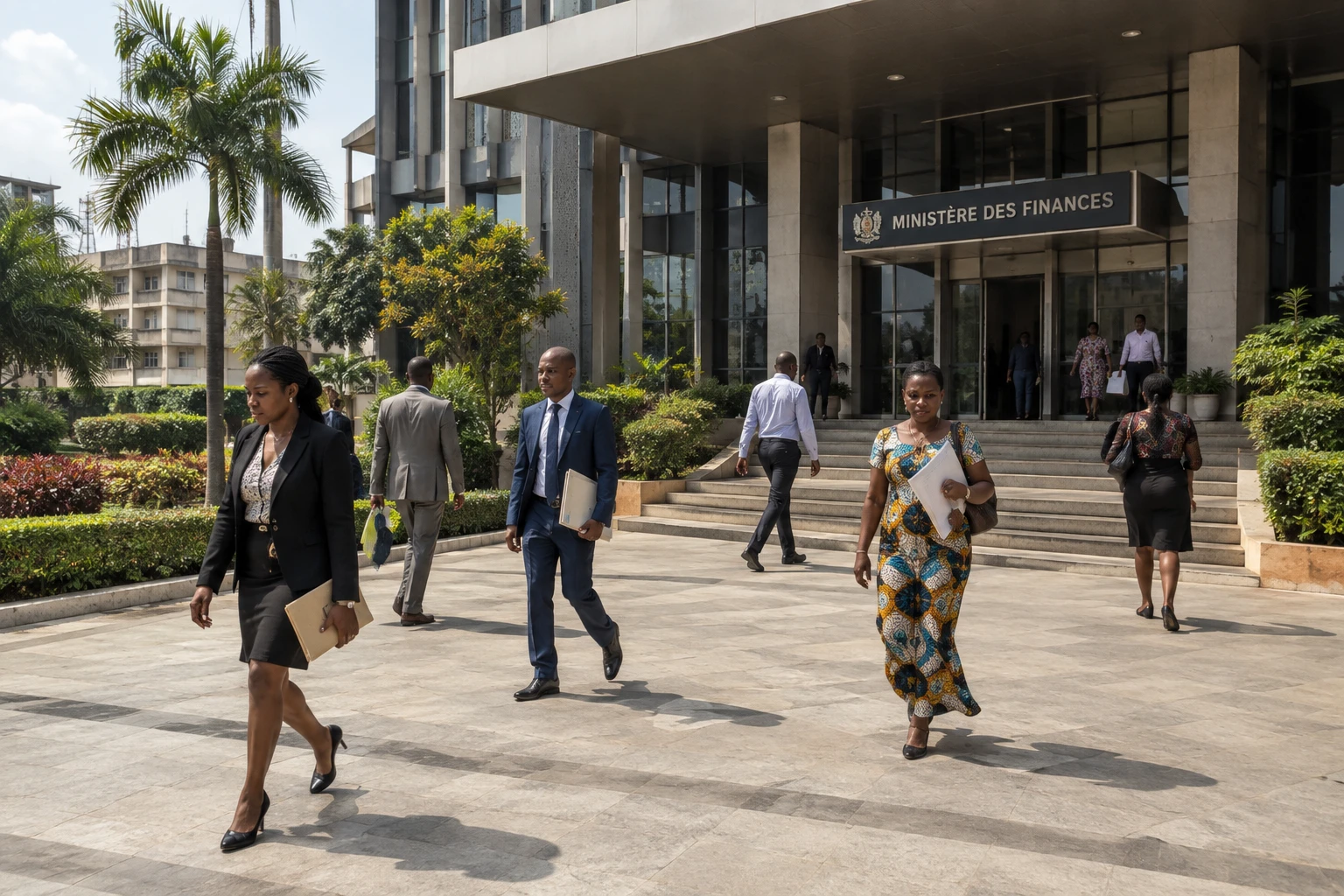
Borrowing abroad can help a state pay its expenses when available resources are insufficient. But the cost and use of those funds matter as much as the amount raised. In Cameroon, a new bond operation brings both issues to the fore: financing the 2026 budget and settling payment arrears.
An existing bond line familiar to markets
Cameroon’s Ministry of Finance announced on Tuesday 6 October 2026 that it intends to raise an additional $300 million. The operation is to build on an international bond issued in 2021, with an initial value of $850 million, a coupon of 8.875% and a maturity date in January 2033.
This is therefore not a new bond, but an addition to an existing line. This technique, known as a “tap”, allows a state to increase the outstanding amount of a loan already familiar to investors. If the full $300 million is raised, the nominal value of this line will reach $1.15 billion.
The ministry says Standard Chartered Bank is arranging the operation. Horus Investment Group and Blend Finance are advising the state. The announcement confirms the planned framework, but does not yet specify the amount actually subscribed or the final placement terms. The 8.875% coupon is the same as that of the original bond; on its own, it does not reveal the precise cost of the new tranche, which also depends on its issue price.
Funds for the budget and arrears
Yaoundé presents the operation as part of its financing programme for the 2026 financial year. The funds sought are intended to support the state’s budget priorities and help clear payment arrears — that is, bills or amounts owed that have not yet been paid.
This second objective has tangible consequences beyond the public accounts. Settling claims can improve the cash flow of the companies and suppliers concerned, particularly those working with the administration. But the announcement gives no details of the intended beneficiaries, the timetable or the exact share of the funds earmarked for arrears. It will therefore be important to distinguish the amount announced from the money actually raised and disbursed.
Reopening an existing bond line can also avoid launching a new loan with entirely new characteristics. The security already has a track record in the markets, which can make it easier to monitor and trade among investors. The ministry believes the operation will improve liquidity along Cameroon’s international bond curve. This rationale must, however, be considered alongside the final cost and the state’s capacity to repay.
A choice in a constrained financing environment
Cameroon combines several sources of financing: tax revenues, external borrowing and securities sold on the regional market. The latter is shared by the six countries of CEMAC, the Economic and Monetary Community of Central Africa, which includes Cameroon, Gabon and Chad. Regional government securities allow states to borrow from investors, including banks based in the zone.
The International Monetary Fund’s 2026 report notes that the regional market is showing signs of saturation and that banks are heavily exposed to sovereign debt. It also observes that Cameroon remains largely dependent on external financing to cover its budget deficit. These findings shed light on the recourse to a dollar-denominated issue, without proving that this option is less costly or risk-free.
A dollar loan exposes the budget to exchange-rate movements: repayments must be made in that currency, while a significant share of public revenues is collected in CFA francs. CEMAC’s currency is pegged to the euro, not the dollar. If the dollar rises against the euro, debt-servicing costs may weigh more heavily in local currency. The impact will depend in particular on exchange-rate movements, state revenues and repayment terms.
What the coming months will show
For investors, the immediate appeal lies in the existence of an already-traded bond line. For public finances, the challenge is broader: turning the financing into budget spending and actual payments, while managing future costs. Households do not generally subscribe directly to this type of international bond; they may nevertheless feel the consequences of budgetary choices through public services, payments to suppliers or the resources available for other spending.
Monitoring should focus on the amount actually raised, its price, the associated interest costs and the allocation of the funds. It will also be necessary to track progress in clearing arrears and changes in borrowing needs on the CEMAC market. These factors will help determine whether the operation effectively diversifies sources of financing or mainly increases future obligations.
Across Central Africa, the issue illustrates a tension shared by several states: meeting immediate financing needs when regional markets have limited capacity to absorb more debt. Cameroon’s decision does not predetermine the choices of other CEMAC members. It does, however, underline that access terms on international markets and transparency over the use of borrowing will affect the region’s budgetary room for manoeuvre.
Background sources: announcement by Cameroon’s Ministry of Finance on the additional issue, the IMF’s 2026 report on Cameroon and recent data on the CEMAC Treasury securities market.