
 Algeria
 Egypt
 Libya
 Morocco
 Sudan
 Tunisia
 Benin
 Burkina Faso
 Cabo Verde
 Côte d'Ivoire
 Ghana
 Guinea
 Guinea-Bissau
 Liberia
 Mali
 Mauritania
 Niger
 Nigeria
 Senegal
 Sierra Leone
 The Gambia
 Togo
 Central African Republic
 Chad
 DR Congo
 Equatorial Guinea
 Gabon
 Republic of the Congo
 São Tomé and Príncipe
 Burundi
 Comoros
 Djibouti
 Eritrea
 Ethiopia
 Kenya
 Madagascar
 Malawi
 Mauritius
 Mozambique
 Rwanda
 Seychelles
 Somalia
 South Sudan
 Tanzania
 Uganda
 Angola
 Botswana
 Eswatini
 Lesotho
 Namibia
 South Africa
 Zambia
 Zimbabwe
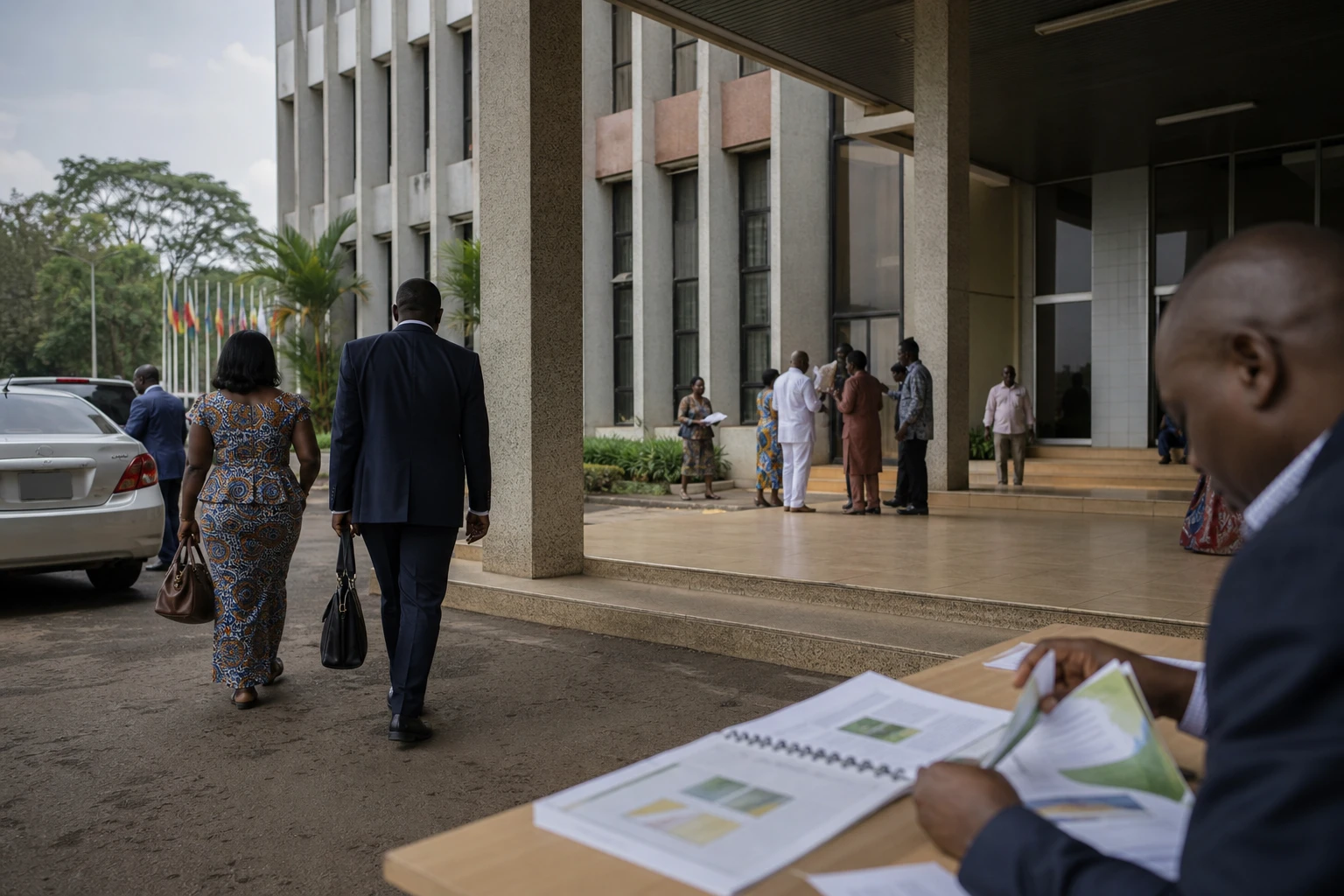
Rural funding with ambitions beyond agriculture
In southern and eastern Cameroon, the real obstacle is not just producing crops. It is often getting the harvest out, finding a buyer and securing finance at the right time. When tracks are long, warehouses scarce and public services far away, added value evaporates before it reaches villages. The new rural development project linked to the Dja basin aims to address this broken chain.
Cameroon is a Central African country and a member of CEMAC, where the economy remains closely tied to the weight of rural areas, cash crops and local markets. Nationally, the latest World Bank data show that poverty remains markedly higher in rural areas than in cities, with 56.3% of rural residents below the national poverty line in 2021-2022, compared with 21.6% in urban areas.
What the PDRI-Dja plans to do, and why the timing matters
On 14 September 2026, Yaoundé signed a financing agreement with the Islamic Development Bank worth €41.92 million, or about CFAF 27.4 billion, for the Dja Integrated Rural Development Project, known as PDRI-Dja. The Cameroonian government is also expected to contribute to the funding package, bringing total announced financing to around €46.43 million, according to the budget monitoring documents consulted.
The project targets about 250,000 direct beneficiaries and 800,000 indirect beneficiaries in the South and East regions. It is to fund the development of about 420 hectares, the rehabilitation of about 300 kilometres of rural roads, and infrastructure related to water, health and education. Its stated ambition is clear: to raise household incomes by 10% and reduce poverty by 5% through the adoption of improved agricultural technologies.
The PDRI-Dja is not operating in an institutional vacuum. It is part of the wider PADI-Dja programme, led by Cameroon’s Ministry of the Economy, Planning and Regional Development. Public planning documents show that the project has already entered an operational phase, with works and services listed in public procurement contracts for 2026.
What this could change on the ground
In the South and East regions, food crops such as cassava, maize and plantain, as well as poultry and fish, are important to food supplies and incomes. Cocoa also remains crucial in several production basins in Cameroon. But without passable rural roads, reliable water points and nearby processing facilities, households get lower prices, lose more after harvest and invest less. The project is therefore less about distributing aid than removing market bottlenecks.
For farmers, the stakes are immediate: lower transport costs, better access to inputs and somewhat greater certainty about markets. For local authorities, the challenge is different: they will have to coordinate roads, water, health, education and agricultural support without spreading resources too thinly. This is often where rural projects succeed or fail, since their real impact depends on keeping infrastructure in good repair, maintenance and services’ ability to stay engaged with villages beyond the launch phase.
Financing is not a secondary issue either. The World Bank notes that Cameroon remains a lower-middle-income country, with rural poverty still high and growth still insufficient to meet all employment needs. The PDRI-Dja project is therefore also a test of credibility: can a funding announcement be turned into tangible gains in areas long served by uneven roads and patchy public services?
A project with implications beyond the Dja
At the national level, this project says something broader: the centre of gravity of development remains rural, even when public debate focuses on cities and major infrastructure. At the level of CEMAC and Central Africa, it is also a reminder that an economic corridor is only valuable if it genuinely connects producers to markets, rather than merely linking capitals. The Dja basin is becoming a testing ground for this combination of agriculture, roads, social services and food security.
The next focus will be implementation. The contracts listed for 2026 show that the project has already begun on paper, but the real measure will be in the villages: hectares actually developed, kilometres of road genuinely repaired, equipment delivered and incomes actually raised. That is where the difference between a well-funded project and a useful one will be made.



