
 Algeria
 Egypt
 Libya
 Morocco
 Sudan
 Tunisia
 Benin
 Burkina Faso
 Cabo Verde
 Côte d'Ivoire
 Ghana
 Guinea
 Guinea-Bissau
 Liberia
 Mali
 Mauritania
 Niger
 Nigeria
 Senegal
 Sierra Leone
 The Gambia
 Togo
 Central African Republic
 Chad
 DR Congo
 Equatorial Guinea
 Gabon
 Republic of the Congo
 São Tomé and Príncipe
 Burundi
 Comoros
 Djibouti
 Eritrea
 Ethiopia
 Kenya
 Madagascar
 Malawi
 Mauritius
 Mozambique
 Rwanda
 Seychelles
 Somalia
 South Sudan
 Tanzania
 Uganda
 Angola
 Botswana
 Eswatini
 Lesotho
 Namibia
 South Africa
 Zambia
 Zimbabwe
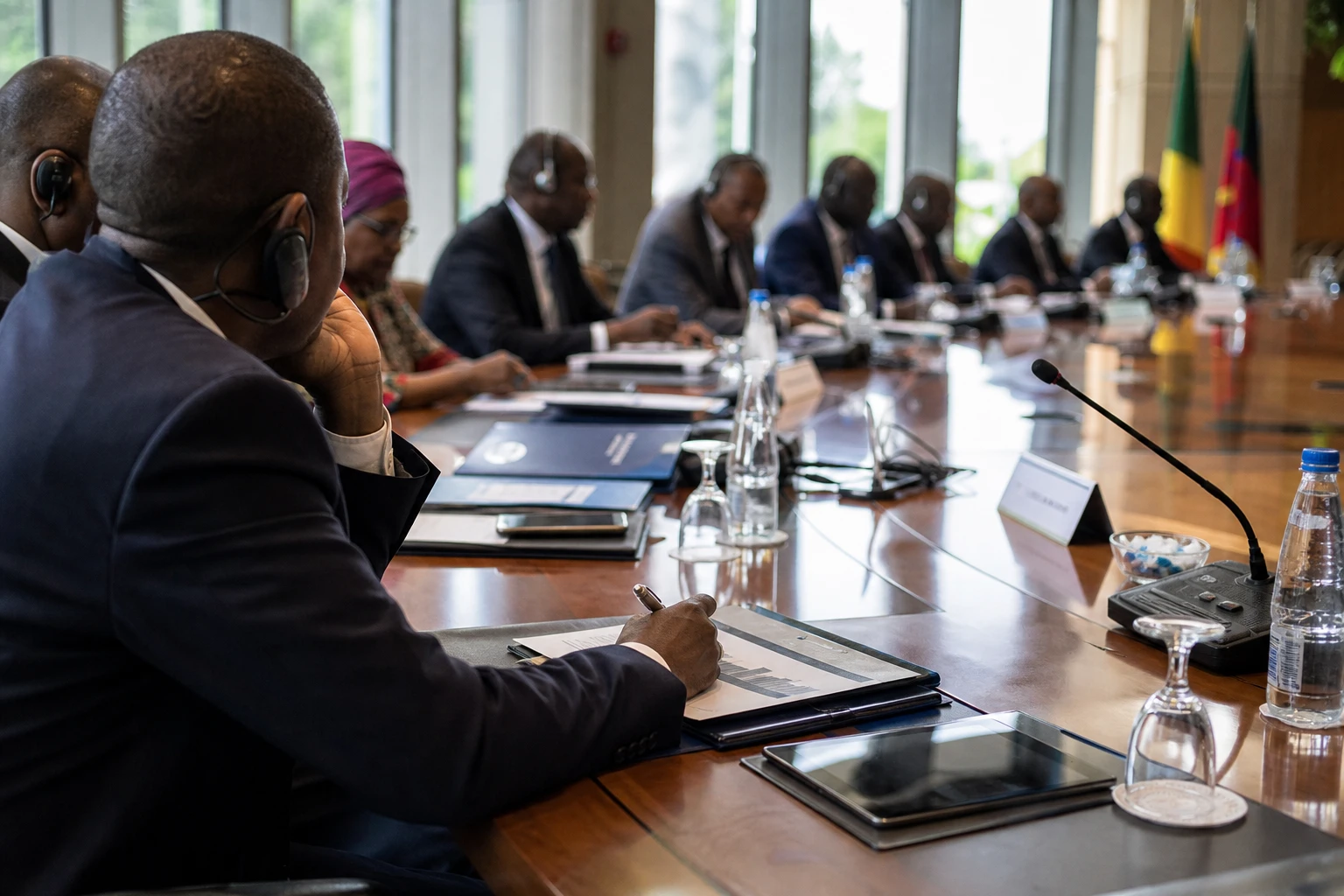
In Yaoundé and at Cameroon’s major markets, a cheaper phone can now become unusable if it is not registered in the customs system. Since 1 April 2026, Cameroon has linked taxation, the technical identification of devices and access to mobile networks.
A reform that moves the border to the phone
The new mechanism applies to mobile phones, tablets and several other digital devices imported into Cameroon. It relies on identifying each device by its IMEI number, a unique code that distinguishes every phone connected to a network.
In practice, Cameroon’s Customs authorities cross-check clearance data with information from telecommunications operators. A device imported after 1 April 2026 and missing from the customs database can therefore be detected when it first connects to the national network.
The system does not officially introduce a new tax. Instead, it mainly changes how existing duties and taxes are collected. The Ministry of Finance presents the change as a digital procedure designed to simplify payments, improve traceability and reduce fraud.
Phones already connected to Cameroonian networks before 1 April 2026 are covered by a tax amnesty, according to details published by the authorities. Devices used by tourists on short stays and those operating through international roaming are also exempt from the planned blocking.
Revenue multiplies, but the bill is disputed
Between 1 April and the beginning of September 2026, duties and taxes collected on imported phones exceeded CFA francs 1.8 billion, or about €2.7 million. The figures from the Directorate General of Customs were reported by the Cameroonian press.
Over a comparable period a year earlier, revenue stood at about CFA francs 400 million. It has therefore risen nearly four and a half times. The authorities also compare the result with a monthly average that had fallen to around CFA francs 100 million before the reform.
The increase first reflects better detection of imported devices. It does not necessarily mean that phone sales have grown by the same proportion. Part of the effect comes from devices that were previously invisible to the tax system now being linked to an identifier and a payment obligation.
Customs authorities say the system applies an overall rate of 33.33%, with a schedule of eight categories. The amounts charged vary according to the category and the accepted value of the device, from CFA francs 5,000 to 400,000. The stated aim is to prevent disparities between importers and limit the undervaluation of goods.
Before the reform, the authorities cited a steep fall in revenue from phones. Collections reportedly declined from about CFA francs 2 billion a month in the 2000s to nearly CFA francs 100 million in 2025. Customs attributes this trend to fraud, smuggling, informal entry points and the limitations of physical inspections.
Importers and sellers face a new constraint
At shops on Avenue Kennedy in Yaoundé, businesses describe a difficult period of adjustment. Importers of second-hand phones are particularly concerned about incomplete registration of IMEI numbers and messages sent to customers when their devices risk being blocked.
The issue is especially sensitive for second-hand models. Their prices cater to customers on limited budgets. If customs clearance costs are added to the sale price, some devices could become significantly more expensive, or even lose their advantage over new entry-level models.
Some sellers report substantial price increases for certain phones. A device sold for around CFA francs 45,000 could cost CFA francs 85,000 after regularisation, according to accounts gathered in the capital. These figures relate to individual cases and are not a general tariff applicable to all models.
Customs offers a different interpretation. Its officials say importers who were already paying duties on the transaction value should not face an automatic increase. The reform is intended instead to end the advantage enjoyed by those who had previously avoided payment.
This difference in interpretation highlights a central issue. The final cost depends not only on the model being sold, but also on the importer’s customs status, the category assigned and the quality of the data provided about the device.
The phone as a new tool of economic control
In May 2026, the authorities said they had detected about 700,000 phones connected to the Cameroonian network without prior customs clearance. A period for regularisation was opened before the affected devices were blocked. The measure targets the device identified by its IMEI, not the SIM card or the subscriber’s number.
For the state, this system has three aims. First, it is intended to increase revenue. It also seeks to make importers and users accountable. Finally, it is designed to strengthen efforts to combat stolen devices, false declarations and certain forms of cybercrime linked to the circulation of unidentified devices.
For consumers, the risk varies depending on the circumstances. Someone buying a new phone from an operator or established retailer can ask for proof that it is compliant. By contrast, customers buying second-hand devices through informal channels have fewer guarantees about their origin and registration.
The reform could therefore accelerate the professionalisation of the phone trade. It could also undermine small-scale sellers if procedures remain difficult to understand or devices are blocked after sale. Clear messages to users will be essential.
A test for economic integration in Central Africa
Cameroon is a member of CEMAC, the Economic and Monetary Community of Central Africa, which brings together six countries that share, among other things, the Central African CFA franc. Digital phone checks therefore form part of a regional space where goods move between neighbouring markets, with varying levels of oversight and formalisation.
If the Cameroonian system generates the expected revenue, it could attract the interest of other customs administrations in the region. The Cameroonian authorities have already reported interest in the mechanism from African countries. But adopting it elsewhere would require compatible databases, co-operation with operators and common rules for devices that are roaming or re-exported.
The next challenge will be to measure the real effect on prices, imports and informal trade. It will also be necessary to check whether revenue continues to rise after the launch phase. For Cameroonians, the reform’s success will be judged as much by the state’s coffers as by the reliability of the phone they buy and the ease of regularising it.



