Algeria
 Egypt
 Libya
 Morocco
 Sudan
 Tunisia
 Benin
 Burkina Faso
 Cabo Verde
 Côte d'Ivoire
 Ghana
 Guinea
 Guinea-Bissau
 Liberia
 Mali
 Mauritania
 Niger
 Nigeria
 Senegal
 Sierra Leone
 The Gambia
 Togo
 Central African Republic
 Chad
 DR Congo
 Equatorial Guinea
 Gabon
 Republic of the Congo
 São Tomé and Príncipe
 Burundi
 Comoros
 Djibouti
 Eritrea
 Ethiopia
 Kenya
 Madagascar
 Malawi
 Mauritius
 Mozambique
 Rwanda
 Seychelles
 Somalia
 South Sudan
 Tanzania
 Uganda
 Angola
 Botswana
 Eswatini
 Lesotho
 Namibia
 South Africa
 Zambia
 Zimbabwe
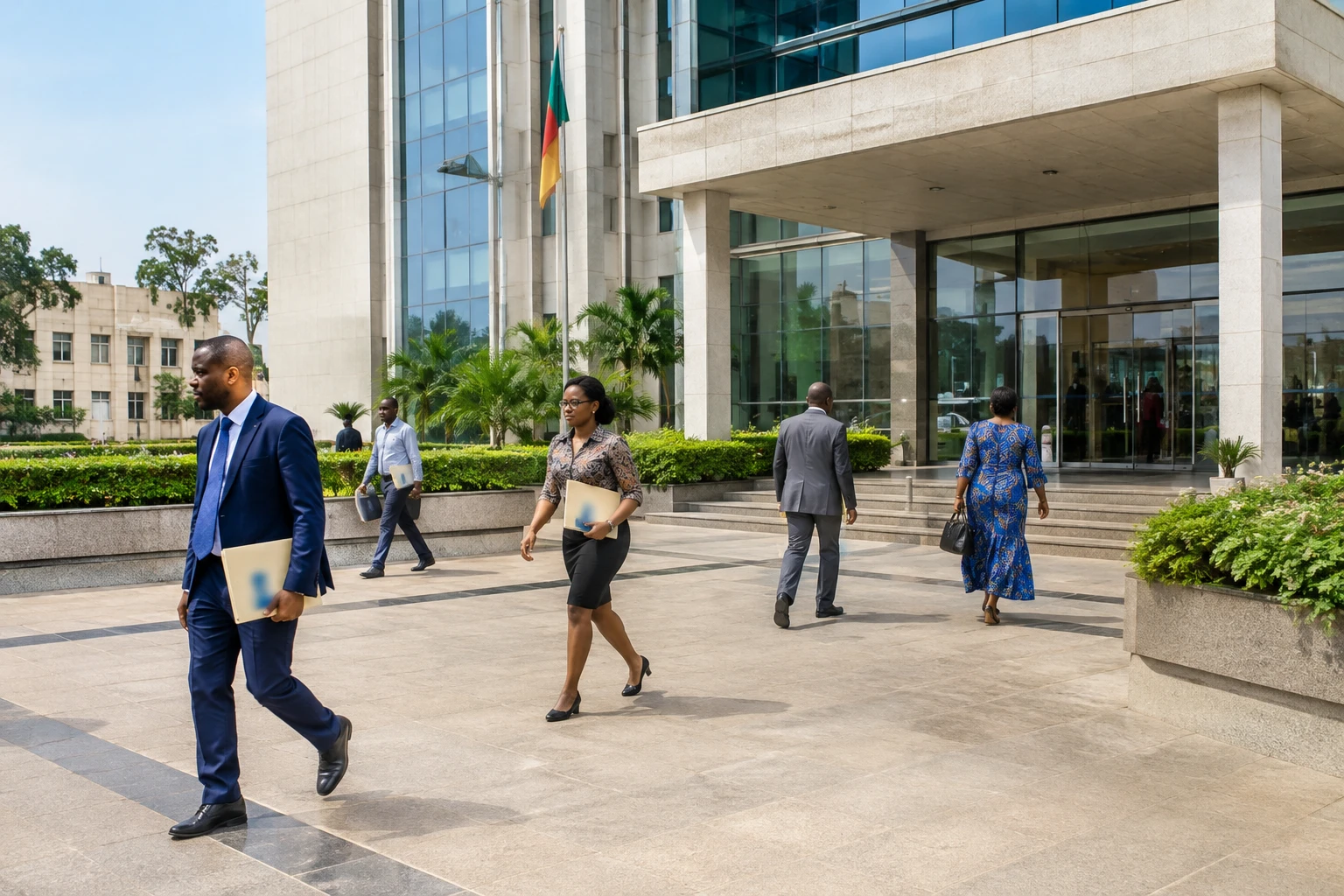
A state can have moderate public debt and yet pay increasingly high costs to borrow. That is the signal sent this week by Cameroon’s international bonds: investors are demanding higher returns as Yaoundé seeks to fund spending amid political uncertainty and without a new loan programme from the International Monetary Fund (IMF).
Financing costs climb
On Monday 19 October 2026, the yield on Cameroon’s eurobond maturing in 2033 reached 10.65%, after rising by nearly 30 basis points, according to market data reported by several financial media outlets. The yield on the 2031 bond rose by about 20 points to 10%. The moves mark a fourth consecutive session of increases.
Yield here refers to the rate the market associates with the price at which an already-issued bond is trading. It does not automatically correspond to the coupon paid by the state. But when yields rise, a new issue risks costing the borrower more, all else being equal.
The increase followed Fitch Ratings’ decision on Friday 16 October to lower Cameroon’s sovereign rating from “B” to “B-”, while maintaining a stable outlook. The rating assesses a state’s ability to meet its obligations. Cameroonian financial publication EcoMatin and pan-African financial service Sika Finance also reported the downgrade.
Financing the state through external markets and CEMAC
Fitch cites two risks: uncertainty surrounding the succession of President Paul Biya and rising public financing needs. The agency forecasts that gross financing needs will reach 7.3% of gross domestic product in 2026, up from 5% in 2025, before falling to 6.5% in 2027. These are Fitch’s projections, not outcomes already recorded.
Cameroon is part of the Economic and Monetary Community of Central Africa (CEMAC), which brings together six countries that share, among other things, a currency and a central bank, the BEAC. Its regional government securities market is a source of financing in CFA francs. However, it cannot easily replace foreign-currency borrowing needed to cover certain spending and external obligations.
The BEAC regularly publishes statistics on securities issued by CEMAC states. The central bank also documents trends in yields and domestic issuance. This regional market provides governments with funding, but its capacity is shared among several states and its terms depend on demand from banks and investors in the sub-region.
The previous IMF financing programme came to an end in 2025. On 24 July that year, the Fund’s executive board concluded its final reviews and approved disbursements, while stressing that maintaining fiscal progress would remain important for debt sustainability. In October 2026, the IMF said its team had carried out a post-financing assessment in Cameroon, without announcing a new programme in that statement.
Markets are also pricing in political risk
Fitch’s downgrade is not solely about public finances. The agency believes uncertainty around the succession of the head of state could complicate a political transition. This is a risk assessment by a rating agency, not confirmation that an institutional crisis is under way.
This political dimension weighs on investors’ perceptions because a change at the top can affect budget priorities, continuity in decision-making and the ability to implement reforms. For the authorities, the challenge is to preserve financial confidence. For households and businesses, the state’s borrowing costs can also matter: if financing becomes more expensive, budget trade-offs between debt, investment and public services become tighter.
Cameroon’s finance ministry announced in early October its intention to raise an additional $300m by reopening the 2033 eurobond, which has a coupon of 8.875%. The rise in yields observed on the secondary market does not on its own determine the price of this operation, but could make its terms more difficult. The secondary market is where securities already held by investors are traded.
The two dollar-denominated bonds, maturing in 2031 and 2033, together represent about $1.7bn in circulation, according to market data reported. Their decline since the beginning of October contrasts with the rise in the Bloomberg Emerging Markets USD Bond Index, according to the same reports. This comparison suggests particular pressure on Cameroonian bonds, although it is not enough on its own to explain price movements.
Contained debt, but maturities to manage
Fitch estimates that Cameroon’s public debt will amount to 42.5% of GDP at the end of 2025, a level it considers relatively contained compared with that of peer countries. The IMF, for its part, said in October 2026 that Cameroon remained at high risk of debt distress, while calling for public finances to remain stable. These assessments are not necessarily contradictory: the overall level of debt and the ability to find the necessary funds quickly are two distinct issues.
The distinction is tangible. A state may have a manageable debt stock but face difficulties if revenue arrives late, maturities are concentrated or lenders demand higher rates. The additional cost can reduce the room available for public investment. At regional level, increased government demand for bank financing can also heighten banks’ exposure to sovereign debt, an issue monitored by CEMAC institutions.
For Yaoundé, Cameroon’s capital, the next indicators to watch will be the terms of any new issuance, budget decisions and the ability to mobilise financing without excessively increasing its cost. Investors will also be watching political prospects and relations with the IMF. Across Central Africa, the episode is a reminder that access to international markets and the depth of the regional market are linked: when one comes under strain, pressure can shift to the other.
Documentary sources: EcoMatin on Cameroon’s rating, Sika Finance on the downgrade and financing projections, the IMF’s July 2025 statement, the IMF’s October 2026 assessment and BEAC statistics on the government securities market.