
 Algeria
 Egypt
 Libya
 Morocco
 Sudan
 Tunisia
 Benin
 Burkina Faso
 Cabo Verde
 Côte d'Ivoire
 Ghana
 Guinea
 Guinea-Bissau
 Liberia
 Mali
 Mauritania
 Niger
 Nigeria
 Senegal
 Sierra Leone
 The Gambia
 Togo
 Central African Republic
 Chad
 DR Congo
 Equatorial Guinea
 Gabon
 Republic of the Congo
 São Tomé and Príncipe
 Burundi
 Comoros
 Djibouti
 Eritrea
 Ethiopia
 Kenya
 Madagascar
 Malawi
 Mauritius
 Mozambique
 Rwanda
 Seychelles
 Somalia
 South Sudan
 Tanzania
 Uganda
 Angola
 Botswana
 Eswatini
 Lesotho
 Namibia
 South Africa
 Zambia
 Zimbabwe
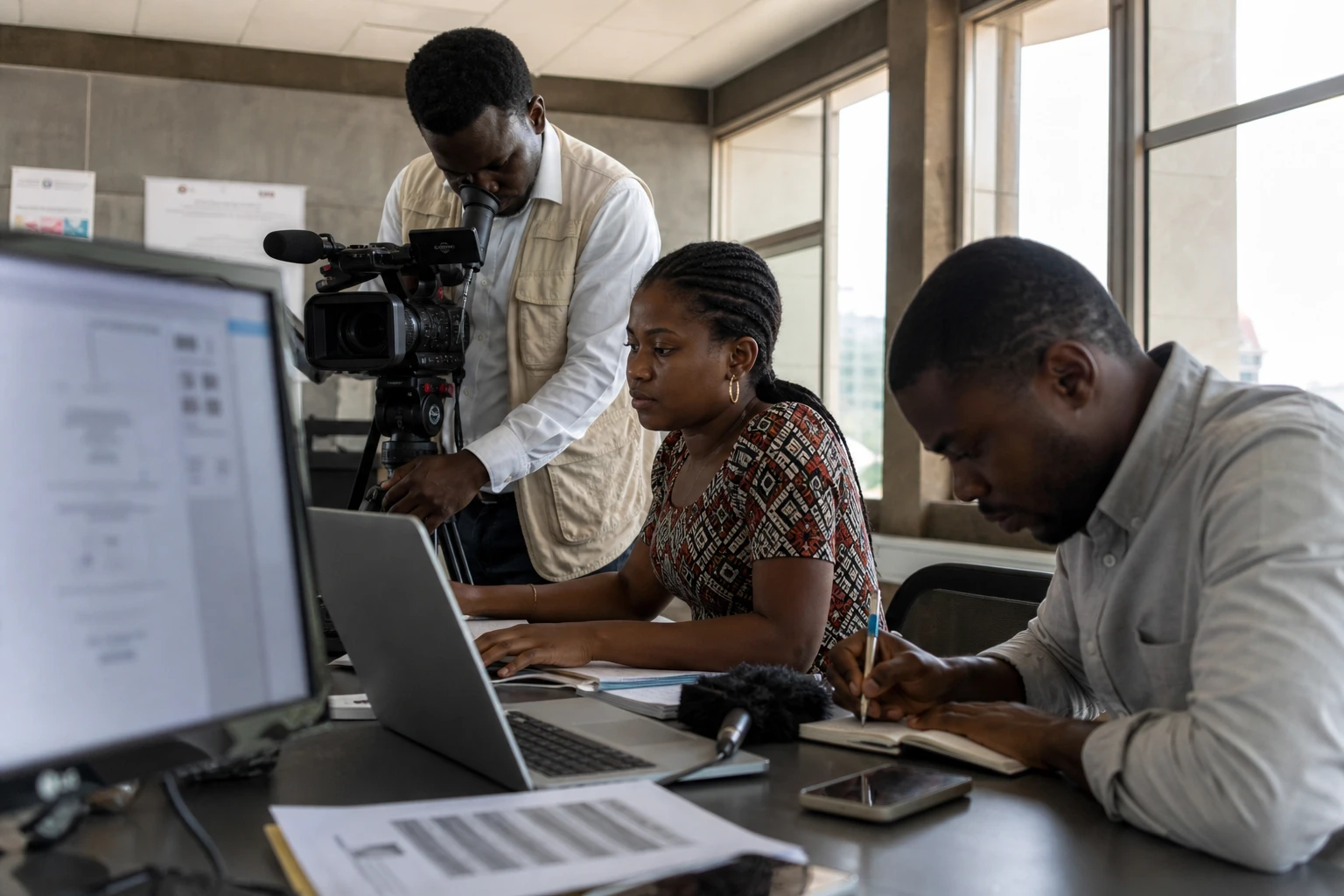
A more tightly regulated phone market, as informal purchases remain widespread
In Cameroon, the mobile phone is no longer just a communications tool. It has also become a fiscal, customs and digital issue all at once. In Yaoundé and other major commercial cities, the question is no longer just which model to buy, but whether the device will continue to work on local networks without being regularised.
It is against this backdrop that the Cameroonian authorities are taking a tougher line. The Directorate General of Customs confirmed in spring 2026 that it was implementing the blocking of devices without customs clearance on national networks, under the reform launched in 2023 and using the official IMEI verification platform. The Ministry of Finance and Customs say the devices concerned are those that were not declared on import and are connecting to the Cameroonian network without having been regularised.
The process is simple in theory, but affects a very large market. In Cameroon, phones are sold through formal channels as well as parallel imports, cross-border purchases and neighbourhood retailers. The reform therefore targets public revenue as much as device traceability. It is part of a regulatory approach already visible in other digital government services in the country, where the IMEI is used as an entry point to identify a device and check its compliance.
What Customs says, and why the September date matters
In the latest developments, Cameroon’s Customs authorities said on 18 August 2026 that phones without customs clearance would be blocked “in the coming days”. They said the measure applies to devices connected from 1 April 2026 and requires users to regularise their status with the customs authorities. The same system is presented as an extension of the regulations adopted in March 2026 to govern the collection of duties and taxes on imported phones, tablets and other digital devices.
The timetable cited by the Ministry of Finance and reported by the national press now puts the start of the blocking rollout at 1 September 2026. The devices concerned are those without customs clearance that connect to a local network for the first time; those that have already received warning messages after 1 April 2026 without any response from their owners; and devices activated in groups using the same SIM card after that date which have not since been used continuously. Camtel, MTN Cameroon and Orange Cameroon are expected to enforce the measure.
The authorities also say they have gauged the scale of the problem. In April 2026, they announced that they had identified nearly 700,000 new devices connected without prior customs clearance in less than a month. This figure, reported by the Cameroonian press, gives an idea of the size of the parallel market and the logistical challenge facing the administration. It also shows that the reform does not affect a small, discreet segment, but a large number of consumers, small traders and informal importers.
A fiscal measure, but also a test of confidence in the digital economy
For the state, the issue is primarily a budgetary one. The system is intended to enable the collection of duties and taxes owed on the import of widely used equipment. Phones are no longer luxury goods. They have become tools for work, mobile payments, education and access to information. That is precisely why their taxation and traceability directly affect households as well as small businesses that depend on mobile phones in their daily operations.
For users, the reform brings a tangible change: a device bought without customs clearance may have its network access restricted, even if it is technically functional. The IMEI number, obtained by dialling *#06#, serves as a verification key on the official Customs platform, which also allows users to start the regularisation process. This procedure makes the phone an object visible to the authorities, rather than simply a consumer good that can be freely bought on the market.
For telecoms operators, the measure adds another layer of co-operation with the administration. It requires technical exchanges between Customs, the Ministry of Posts and Telecommunications, the ART, ANTIC, Camtel, MTN Cameroon and Orange Cameroon. In other words, phone regulation now involves a complete institutional chain, from the customs entry point to the mobile network. This is an important signal in a country where the digital economy is growing fast, but informality remains powerful.
A Cameroonian signal that reaches beyond national borders
This development also resonates across Central Africa. In the CEMAC region, where cross-border trade is constant and administrations are seeking to capture more revenue, Cameroon often serves as a testing ground. The announcement of foreign benchmarking visits around the system shows that the reform is being watched beyond Yaoundé. The issue therefore goes beyond customs alone: it concerns how African states want to regulate the flow of digital goods without cutting off access to connected devices for the wider population.
What happens next will depend above all on two things. First, the administration’s ability to explain the process clearly and avoid unjustified blocks. Second, the market’s response, whether through regularisation, circumvention or the adaptation of commercial channels. In Cameroon, as elsewhere on the continent, the battle over phones says something broader about the place states want to give fiscal sovereignty in a digital economy that has become essential to daily life.



